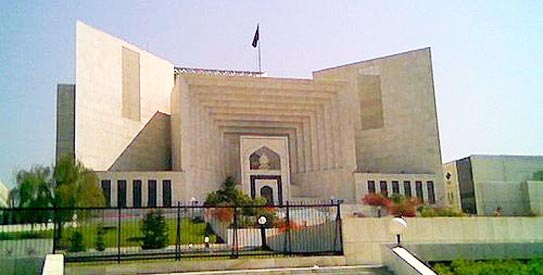
ISLAMABAD: The Supreme Court on Friday declared Rental Power Projects (RPPs) as illegal and also ordered them to be shut down, DawnNews reported.
The SC was announcing the verdict of the case of corruption in Rental Power Projects (RPPs) which had already been held in reserve on December 14, 2011.
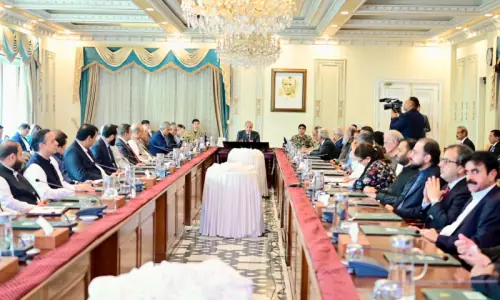
A two-member bench comprising of the Chief Justice Iftikhar Muhammad Chaudhry and Justice Khilji Arif Hussain was hearing the suo motu case.
The apex court said that the rules and regulations were violated in these projects due to which the national exchequer witnessed losses of billions.
Prior to RPPs, the electricity generation system had sufficient potential, but "instead of taking curative steps for its improvement,... billions of rupees were spent on BHIKKI and SHARAQPUR RPPs, which proved complete failures", read Friday's verdict.
The verdict further holds the finance ministry, WAPDA, PEPCO and GENCOs responsible for "causing huge losses to the public exchequer, which run into billions of rupees by making 7% to 14% down payments to, and purchasing electricity on higher rates, from RPPs."
Furthermore, the bench also declares the RPPs "incapable of meeting the demand of electricity on a short term basis."
Moreover, the SC ordered to initiate proceedings against the Former Water and Power Minister Raja Pervez Asharaf and all others involved in the case.
"The contracts of RPPs are ordered to be rescinded forthwith and all the persons responsible for the same are liable to be dealt with for civil and criminal action in accordance with law", adds the apex court's decision.
The verdict adds: "Functionaries of PEPCO, GENCOs, PPIB and NEPRA...who had derived financial benefits from the RPPs contracts...[were] involved in corruption and corrupt practices", and are also "liable both for civil and criminal action".
On December 15, 2011, chief justice had taken suo motu notice on applications of Housing Minister Syed Faisal Saleh Hayat and Khwaja Asif who alleged that corruption had been committed in the affairs of the RPPs.
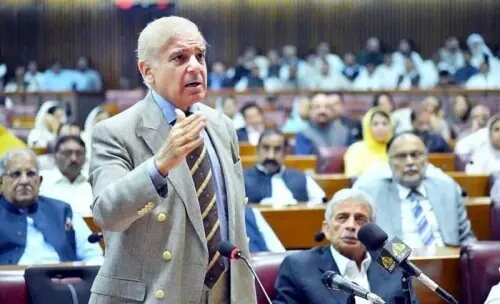
On Novermber 24, 2011, Raja Pervez Asharaf told the court that Pakistan needed an addition of 1200 MW every year as the power requirement would increase to 1,30,000 MW by the year 2030.
Appearing before the two-judge bench, comprising of Chief Justice Iftikhar Muhammad Chaudhry and Justice Khilji Arif Hussain, the former minister defended himself, saying the country’s power shortage solution was in in hydel power generation and not in thermal which was costly.