0
0

NEW DELHI, Oct 29: India said on Monday it is setting up a panel to resolve disputes over distribution and acquisition of land after violent protests by farmers who fear losing their land to build factories or mines.
Land has been at the centre of fierce stand-offs between farmers and government agencies trying to acquire farms for industry, a problem that some analysts say threatens India’s attractiveness as an investment destination.
The new panel will create policies, guide states and monitor the progress of land distribution and quick disposal of compensation disputes, a government statement said.
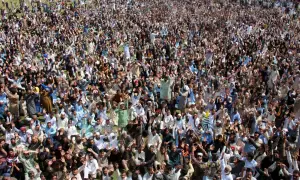
The decision came hours after about 25,000 protesters walked for a month to reach New Delhi on Monday demanding better land rights, but were stopped short of the parliament building by police.
“We want land,” said Banwari Lal, 40, a labourer from central India as he waited to march to parliament. “The government seems to have so much land to distribute to big industries but not us?” Many walked barefoot, waved flags, held placards and shouted slogans in the latest row over growing demands for land in India.
The protesters, who began their march in the city of Gwalior, reached the capital on Sunday after walking more than 300 km (185 miles).
Among the protesters were farmers and small landowners who fear losing their land to big-ticket projects and Indians demanding the government give them land so they can eke out a living, etc.
The new panel, whose recommendations will be non-binding, will include government officials and independent experts on land reforms.
Several big projects, including a $12 billion steel plant by South Korea’s Posco, face delays because of stand-offs with poor farmers unwilling to give up their land.
The protest reflects wider social tensions in India, where private investment to fuel its booming economy is often eyed with suspicion by villagers worried about losing their land to factories and traders. These confrontations have at times turned violent.
Millions of landless rural poor across India complain there has been little progress in identifying illegal ownership and distributing land equitably despite decades of reforms.—Reuters