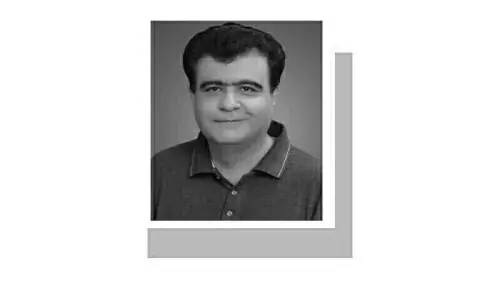
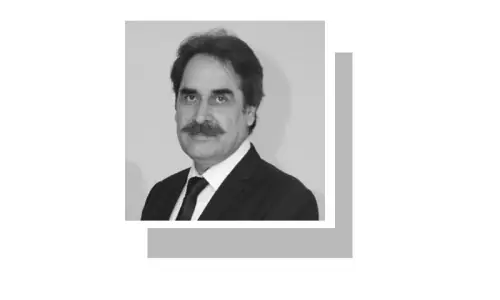
LAHORE, Aug 30: In an unprecedented move, the Securities and Exchange Commission of Pakistan on Wednesday appointed administrator for Crescent Standard Investment Bank Limited (CSIBL), suspending its board of directors and restraining Anjum Saleem from officiating as its chief executive officer.
CSIBL is sponsored by the Crescent Group of Companies, which owns the bank’s majority shareholding of 51 per cent.
“The action has been taken under Sections 282E and 282F of the Companies Ordinance, 1984 after months of exhaustive investigations into the bank’s affairs, which revealed severe and deliberate violation of the legal requirements and serious financial irregularities including but not limited to illegal maintenance of parallel accounts, concealment of the bank’s assets, unauthorised massive funding of group owned companies, unlawful investments in real estate and stock market, etc,” said an SECP announcement issued here.
This is for the first time that an administrator has been appointed for a financial institution by the regulators.
The announcement said the administrator had been appointed with a view to taking immediate action for protecting the interests of depositors and stakeholders and for stemming the fast eroding asset base of CSIBL. The SECP took the action for ensuring that the bank’s affairs were immediately managed in a clean, transparent, and professional manner through the appointment of the administrator, it added.
The regulators have also issued show-cause notices to the suspended board of directors, including a nominee of the state-owned NIT, the CEO and other relevant functionaries to take cognisance of irregularities committed at the bank.
The newly-appointed CSIBL administrator, Badr-Ud-Din Khan, a former chairman and CEO of NDFC and IDBP and ex-president and CEO of Gulf Commercial Bank Ltd, has been allowed by the country’s apex regulatory authority to exercise the powers of both the CEO and board of directors of CSIBL. He has initially been given six months to “come up with a plan to revive the company, preserve its assets and stop outflow of its resources”. The period of his appointment is extendable to up to three years under the law.
The announcement said the former management of the bank was afforded all the opportunity to address issues concerning viability of the company itself and protect the interests of depositors and stakeholders, a senior SECP official, who requested not to be named, told reporters.
But no measures were initiated, and it also repeatedly failed to honour any of its commitments made to the regulators in this regard. “The SECP also proactively engaged the bank’s sponsors and management in an effort to revive and recapitalise the bank, but all such efforts were frustrated by their deliberate non-cooperative stance,” the official said.
The SECP official said the regulators had detected irregularities in the running of the bank’s financial affairs in October last year during the routine scrutiny of the monthly and quarterly financial statements of various other financial institutions submitted to the commission under the rules and regulations governing the non-banking financial institutions.
“It was noticed that CSIBL, which was the country’s largest investment bank in October last year and planned to go global by opening branches in the Gulf states, had borrowed from other institutions to the tune of Rs5.5 billion, but it was nowhere reflected in the bank’s official accounts, neither as assets nor as liabilities.
It triggered the inspection of the bank’s affairs by the SECP during which it was discovered that the suspended management was actually maintaining a separate, parallel set of accounts for these loans to hide the company’s actual losses. Besides, it was found that these loans, obtained on as high interests rates as 25-55 per cent, were invested in violation of the rules and regulations governing NBFIs in the stock market and real estate through the majority shareholders’ group owned companies.
Thus bank’s resources were misused by the sponsors for the benefit of the group owned companies, and at one point in time its exposure to the group companies equalled Rs3.703 billion or 240 per cent of the bank’s equity. A group owned company with a paid-up capital of Rs20 only had made an off-balance sheet investment of Rs1.5 billion. Such was the complexity of the transactions that their examination took A F Ferguson & Co some six months to come up with its final report submitted to the SECP in May this year,” the official said, explaining the reasons that had led the regulators to the appointment of the administrator for the bank.
“The situation was brought to the notice of the board of directors and the sponsors after the conclusion of the first inspection in November. The sponsors and directors were asked that an injection of Rs1 billion could save the company as we believed that by the end of year 2005 its negative equity would be in that range,” the official said.
The sponsors were also told by the regulators to recover Rs1.5 billion from the group owned companies. But they did not take any step to rectify the situation and gave incorrect reports to the SECP. “The SECP was told in February by the sponsors that a sum of Rs800 million had been recovered from group owned companies. But another SECP inspection found the statement to be incorrect. The examination of recovery of Rs200 million revealed that CSIBL had actually pledged own shares to raise the sum and show it as recovery from the group owned companies,” the official said.
In June, CEO Anjum Saleem, an ex-chairman of Aptma, submitted merger plans to revive the bank. The scrutiny of these plans showed that the bank was to be merged with group owned companies at a swap ration which would result in loss to the minority shareholders and profit to the majority stakeholders, that is, the Crescent Group.
“In April, Anjum Saleem took over as CEO and it was hoped that he would take measures to revive the bank and stop bleeding of its resources. But the bank kept bleeding. Soon after taking over as CEO, the bank’s resources to the tune of Rs100 million were used illegally to the personal advantage of the CEO and his brother Altaf Saleem, a former federal minister in the previous military government and the incumbent head of the Earthquake Relief and Rehabilitation Authority (ERRA), for paying off their liabilities,” the official alleged.
The official defended the delay on the part of the regulators to take an early action against the former management of the bank, saying the SECP allowed time to the suspended management in the larger interest of the individual depositors whose total deposits with CSIBL stand around Rs1.6 billion, and the other stakeholders. “We wanted that they should revive the bank through the injection of further equity, recovery of funds transferred to the group owned companies and protect the interests of the stakeholders and depositors,” the official said.
The bank’s current assets are valued at about Rs8 billion against its liabilities of Rs9.5 billion, showing a gap of Rs1.5 billion. The bank has made illegal and unauthorised investment of Rs2 billion in stocks and another Rs2.5 billion in real estate, including in the files of DHA, Islamabad. The regulators, however, claim that there was not much difference between the bank’s actual investment in real estate and its current forced value price.