Amendment to imperial house law: recognising emperor as a symbol


 0
0

THIS change to the Imperial system is outrageous and riddled with too many flaws. It could pose a risk of nullifying ties between the people and the Emperor as a symbol — a bond that has been nurtured over the 80 years since the end of World War II.
The Diet and the government must promptly and squarely consider how to ensure the continuity of the current Imperial family and expedite efforts to amend the Imperial House Law again.
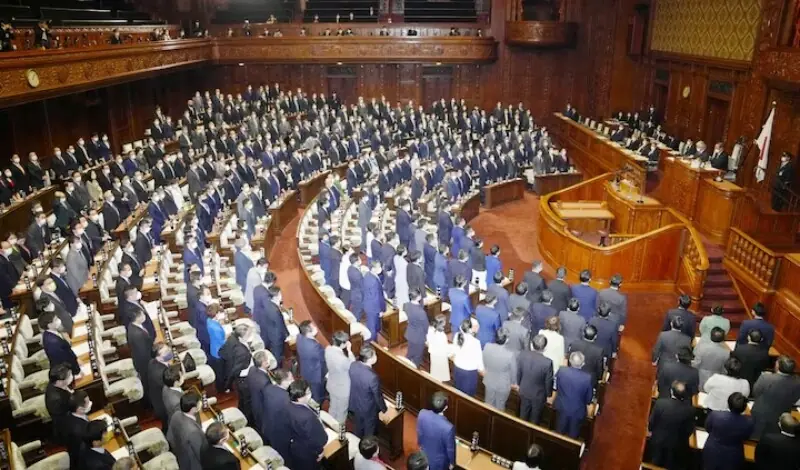
A bill to amend the law was enacted after being passed by a majority of votes in a plenary session of the House of Councillors. The revised law will be promulgated soon and take effect three months later.
Succession of Imperial line top priority
Under the revised law, female members can remain in the Imperial family after marriage, but only for their own generation. Their husbands and children will remain commoners.
On the other hand, the revised law will allow for adopting male commoners who are male-line descendants of former Imperial branches, which left the Imperial register after World War II, into the Imperial family. Male children born to such adoptees will be eligible to succeed to the Imperial throne.
The amendment ended up abruptly including provisions that address the status of the husbands and children of female Imperial members as well as the eligibility of adoptees’ children for the Imperial throne — but neither of these items had been included in the “consensus of the legislature” compiled by the heads and vice heads of both Diet chambers following discussions between the ruling and opposition parties.
Currently, Prince Hisahito, the son of Crown Prince Akishino, is the only male descendant in the male line eligible to succeed to the throne in the next generation after the Emperor.
If no son is born to Prince Hisahito, the current Imperial line will come to an end.
The system of adopting members of former Imperial branches into the Imperial family could even result in destabilizing the Imperial succession. Regarding the eligibility of adoptees’ children for the Imperial throne, a statement that the order of succession will be “based on the lineage of their biological families” has been abruptly included in the amended law.
Although former Imperial branches are now ordinary households, this statement treats them as if they are part of the Imperial family by the manner in which it refers to them as those in the lineage of their biological families. One cannot help but strongly feel something is off about this.
The former Imperial branches diverged from the line of the current Imperial family about 600 years ago during the Muromachi period, and their members became commoners nearly 80 years ago. Furthermore, men in the paternal line who left the Imperial register at that time are reportedly 36 to 38 generations removed from the current Emperor.
If adopted into the Imperial family, those from the former Imperial branches who were born and raised as commoners would face various restrictions on their daily lives and rights. Will there be anyone who would wish to be adopted into the Imperial family?
Despite the enactment of the amendment bill, there must not be hesitation in suspending the enforcement of the revised law.
Meanwhile, the system to allow female members, including Princess Aiko, the daughter of the Emperor and Empress, to remain in the Imperial family after marriage is reasonable. However, their line will end after one generation as their husbands and children will remain commoners and they are not entitled to create Imperial branches.
Consideration of ‘female branches’ crucial
Female Imperial family members are treated as though their role is only to share the burden of official duties. This appears to lack respect for them.
The postwar Emperors have consistently sought to fulfill their role as the symbol of the unity of the people — as stipulated under Article 1 of the Constitution. And Imperial family members, including the current Emperor and the Emperor Emeritus, have always stood by the people during crises such as disasters, praying for the people’s peace and happiness.
Such an attitude has earned them the respect and affection of the people and solidified the system that recognizes the Emperor as the symbol of the state.
Adoptees would become Imperial family members from being commoners. If their descendants were to become Emperor and form a new Imperial lineage in place of the current line, the image of the Imperial family that people will see would be completely changed. Would such a change gain public understanding?
The system of adopting members from former Imperial branches should be scrapped and thoroughly reconsidered.
The Diet and the government must discuss measures to ensure an Imperial succession that do not rule out the creation of female Imperial branches and the possibility of the nation having female and matrilineal Emperors.
The government insists that the purpose of this law amendment is to ensure a sustainable number of Imperial family members to share official duties. Regarding the stabilization of the Imperial succession, a supplementary provision has been included in the amended law, stating that the issue will be considered in the future.
If so, a panel of experts should be set up to discuss the stabilization of the Imperial succession. A report compiled in 2005 by a government panel of experts ruled out the restoration of Imperial status to former Imperial branch members, saying that this would be “extremely difficult.” It stated that it is essential to pave the way for female and matrilineal Emperors.
Given the law amendment, if an adoption is finalized and a son is born to the adoptee, the eligibility of an adoptee’s descendants for the Imperial throne could become a fait accompli. There is no time to be slow in making moves.
Avoid inviting divisive debates
Public opinion has been divided over the adoption system. The ruling and opposition parties shared a common view that a “calm environment” was necessary for discussions, but in reality, discussions were made hastily, and both Diet chambers ended their deliberations for the amendment bill within a single day.
There must have been fears that if more time had been spent on the deliberations, the Diet would be split, making it impossible for the legislature to reach a “consensus,” and possibly causing the foundations of the amendment bill to collapse.
Published in Dawn, July 20th, 2026