Trump reimposes blockade on Iran, eyes Hormuz tolls
• Trump says MoU ‘was a test’ that Iran did not honour; claims they will be hit hard in the coming days
• Claims Washington will be ‘guardian’ of Hormuz, suggests rate at ‘20pc’ of cargo shipped
• Araghchi ‘agrees’ with Trump over imposition of toll, insists strait will be managed by Tehran
• US bases in Jordan, Bahrain, Kuwait and Oman come under Iranian fire
• Centcom claims targeting Bandar Abbas, Khuzestan and Bushehr
• American missions in UAE suspend consular appointments
TEHRAN / WASHINGTON: In a break with its traditional stance of maintaining toll-free passage through Hormuz, the US on Monday announced its intention to take over the strait, charge a 20 per cent fee, and reinstate its blockade of Iranian ports.
The US Navy-led Joint Maritime Information Centre said the blockade would take effect at 2000 GMT on Tuesday, and apply to all vessel traffic regardless of flag, covering the entire Iranian coastline including ports and oil terminals.
It said the measure would not impede neutral transit passage through the strait to or from non-Iranian destinations, and that humanitarian shipments would be permitted subject to inspection.
The move came as traffic in the crucial waterway fell to its lowest level in two months, amid intense missile and drone strikes across the region.
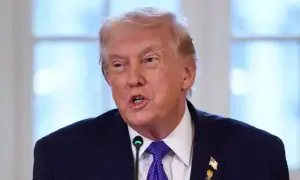
Meanwhile, US President Donald Trump indicated that Iran would be hit hard in the coming days, and accused the Iranians of not honouring the Islamabad Memorandum of Understanding (MoU).
The Iran MoU was a test, they did not honour it, he said on the Hugh Hewitt Show. During his appearance, he also talked about bombing one of Iran’s nuclear sites.
“We’re going to take out Pickaxe Mountain. Tell the Iranians to be ready. We’re watching it closely. We see no activity there. They’re not doing well with their nuclear situation. Every time we hear about it, we blow it up. So they don’t like talking about it. But we’ll probably give Pickaxe a shot relatively soon,” Trump said.
The mountain, located near Iran’s heavily damaged Natanz uranium enrichment facility, is a heavily fortified site that hosts two deeply buried tunnel complexes that experts assess as beyond the reach of the most powerful bunker buster bombs in the US arsenal.
Hormuz tolls
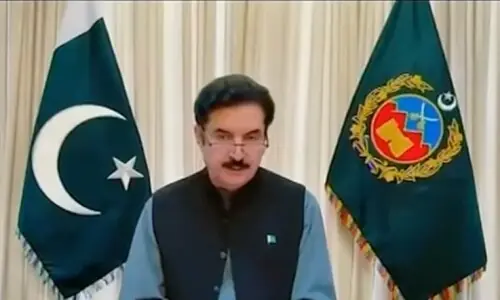
Earlier on Monday, Trump wrote on his Truth Social platform that Hormuz would remain open “with or without Iran”, and that US forces would stop Iranian ships and customers from entering or leaving it by enforcing the blockade.
“The U.S.A. will be, from this point forward, known as ‘THE GUARDIAN OF THE HORMUZ STRAIT’, but as such, and as a matter of FAIRNESS, will be reimbursed, at the rate of 20% on all cargo shipped,” he wrote. “The process and formation will begin immediately,” he concluded.
Earlier, he told Fox and Friends that wealthy nations would have to reimburse the US. “We’re going to get paid for guarding it. A lot of money, but we just want to be reimbursed for doing all of this, for putting our people in danger.”
The plan was also opposed by the UN’s International Maritime Organisation, saying there was no legal basis for introducing mandatory tolls.
Trump’s statement came after Iran’s Revolutionary Guards struck US military targets and bases in Jordan, Bahrain and Kuwait in retaliation for another wave of strikes against Iran that hit dozens of targets, including coastal radar sites, at multiple locations.
Both sides continue to attack each other, despite calls from world leaders for de-escalation and compliance with the Islamabad agreement they signed last month.
Iran has long sought to establish a permanent fee and permit system of its own for vessels using the waterway.
In a sarcastic response, Iranian Foreign Minister Abbas Araqchi wrote on X that Trump was absolutely right, and that whoever “provides secure and safe passage of commercial vessels through the Strait of Hormuz should be compensated for this service”.
Tehran was the guardian of the strait and would remain so “forever”, he said, adding tongue-in-cheek: “20% is of course too much. We will be fair.”
According to the Iranian foreign ministry, their efforts to agree on a joint mechanism with Oman for the Strait of Hormuz were hindered due to the US pressure on Oman.
IRGC spokesman Hossein Mohebi said Washington had “seriously endangered the security of the world’s oil and gas supply and must be held accountable”. He said Tehran “will continue to exercise sovereignty over and management of the Strait of Hormuz”.
Iran’s Khatam al-Anbiya military command said that it would not allow the US to interfere in the management of the Strait of Hormuz under any circumstances. Its spokesperson Ebrahim Zolfghari said that the US and the countries cooperating with its military “bear full responsibility for all insecurity and the escalation” of the war in the region.
Heavy attacks across Gulf
Meanwhile, the IRGC said it had struck US military targets and bases in Jordan, Bahrain and Kuwait.
According to local media, Iranian forces targeted attacked Prince Hassan Air Base in Jordan, a US military drone command centre in Bahrain and airbases including Ali Al Salem in Kuwait.
They claimed to have targeted a US surface-to-surface missile base in Kuwait, “setting fire to two HIMARS missile launchers and missile-packed warehouses, completely destroying them”.
Oman was also targeted, where Iranian forces claimed to have struck a long-range aerial radar and a vessel detection radar.
It claimed the radar systems in Oman had been destroyed. Jordan’s military said it intercepted and downed “four missiles that entered Jordanian airspace” and came from Iranian territory.
The attacks also prompted the US Embassy in Abu Dhabi and the US Consulate General in Dubai to cancel consular appointments from July 13 to 15. “If you have an appointment on those dates, Americans should not come to the embassy or consulate, we will contact you to reschedule,” the mission said in a statement.
On the other hand, US Central Command said it struck Iranian military air-defence systems, coastal radar sites, missile and drone capabilities, and small boats using US fighter aircraft, naval vessels, one-way attack aerial drones, and one-way attack sea drones.
In attacks on Sunday night, Centcom said it had struck a submarine and ship maintenance facility in Iran with one-way surface drones.
“Three Corsair unmanned surface vessels hit the port at Bandar Abbas Naval Base, marking the first time American forces have employed sea drones in combat operations,” it said in a post on X.
According to the Iranian media, explosions were reported in southern Iran near the Strait of Hormuz at midday explosions near Bandar Abbas and the island of Qeshm.
The US then struck two water pumping stations in Iran’s southwestern Khuzestan and southern Bushehr provinces, temporarily disrupting water supply to Kharg Island, Iranian media reported, adding that two people were killed and three injured after a US projectile struck an agricultural water pumping station in Mahshahr, Khuzestan province.
Media and residents also reported having heard explosions near Bandar Abbas and the island of Qeshm, the Mehr news agency said.
In the early hours of Tuesday, IRGC said it had intercepted and destroyed two American Lucas drones in Bandar Abbas and Lar.
Published in Dawn, July 14th, 2026