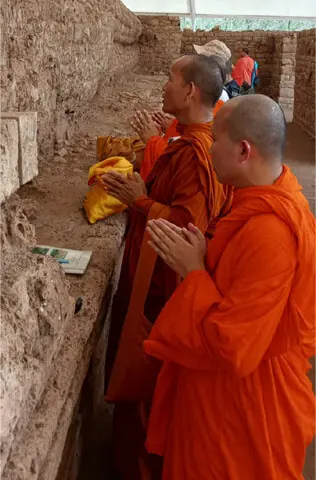
TAXILA: The atmosphere at the ancient Dharmarajika Stupa turned profoundly spiritual as the Thai monks gathered around the sacred monument to perform centuries-old Buddhist religious rituals.
Clad in saffron robes, they offered flowers, lit incense, chanted verses from the Buddhist scriptures and sat in silent meditation, creating an aura of serenity and devotion that deeply moved everyone present. In an emotionally moving display of devotion to the sacred Buddhist heritage of Gandhara, a delegation of six Thai Buddhist monks visited the ancient archaeological sites of Taxila on Saturday.
Led by Professor of Buddhist studies at Mahachulalongkornrajavidyalaya University (MCU) in Thailand , the delegation comprised Phramaha Teerawat, Sisouk Salirmkhoun, Sompone Sipaseuth, Phouangpasert Phoumavong and Phanthong Phomyxay, the visit was organized by Karakorum Quest.
The rhythmic recitation of sacred parittas echoed through the historic ruins, transporting visitors back to the glorious days when Taxila flourished as one of the world’s foremost centres of Buddhist learning and pilgrimage. Many officials, museum staff and visitors watched in respectful silence as the monks bowed before the stupa believed to have once enshrined the sacred bone relics of Lord Buddha.
The deeply emotional ceremony reflected the enduring spiritual bond between Buddhists across the world and the ancient land of Gandhara, where the message of peace, compassion and enlightenment once spread far beyond the frontiers of South Asia.
For the visiting monks, the moment was not merely a religious observance but the fulfilment of a cherished lifelong pilgrimage, while for onlookers it served as a powerful reminder that Taxila remains a living symbol of the universal teachings of Lord Buddha and a sacred destination that continues to inspire faith, reverence and hope more than two millennia after its founding.
Dharmarajika occupies a unique place in Buddhist history. Built during the reign of Emperor Ashoka in the 3rd century BCE, the stupa was constructed to enshrine sacred relics of Lord Buddha and remained a major centre of Buddhist learning and pilgrimage for centuries. Archaeological excavations later confirmed the discovery of relic caskets containing Buddha relics, making the site one of the most sacred Buddhist monuments in the region.
Talking to journalists during the visit, delegation leader Phramaha Daosayam Klalod described Taxila as “a sacred land where the light of the Buddha’s teachings once illuminated the hearts of countless seekers.”
“Standing before the Dharmarajika Stupa fills every Buddhist with profound humility. This is not merely an archaeological monument; it is a living symbol of the Buddha’s compassion, wisdom and message of universal peace. Offering prayers here is a deeply spiritual experience that connects us with more than two thousand years of Buddhist history,” he said.
The senior monk also appreciated Pakistan’s efforts to preserve its Buddhist heritage, saying the conservation of Gandhara’s archaeological treasures reflected respect for the shared spiritual legacy of mankind.
Published in Dawn, July 12th, 2026