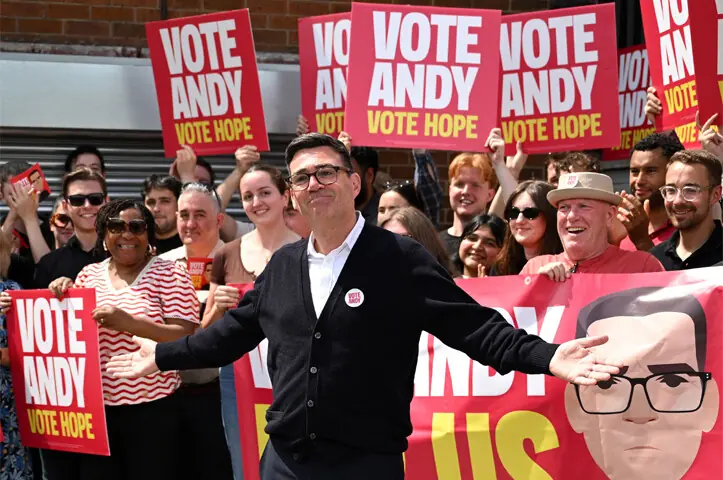
• Nominations open with Burnham the only declared candidate
• If unchallenged, set to become Labour leader on July 17, PM three days later
• Promises sweeping devolution, higher living standards, fiscal discipline; seen as Labour’s strongest bet against Farage’s Reform UK in 2029
LONDON: Veteran politician Andy Burnham took another step toward becoming the UK’s next prime minister on Thursday as nominations to replace Keir Starmer as Labour leader formally opened.
The 56-year-old is the only Labour member of parliament to publicly say he is a candidate to succeed Starmer, who announced he was quitting last month. A steady trickle of MPs entered Labour’s parliamentary office on Thursday morning to nominate the person they want to lead Britain’s ruling party.
In the absence of a contest, Burnham is expected to be crowned Labour’s new leader — and prime minister-in-waiting — at a special conference July 17. Burnham, nicknamed the “King of the North” for winning three consecutive Greater Manchester mayoral elections, would replace Starmer at 10 Downing Street three days later.
“There’s no one else,” one Labour MP said Thursday on condition of anonymity after casting their vote.
If a contest does take place, the victor would be announced Aug 29 following a ballot of Labour members and affiliated unions. Burnham’s path to Downing Street looked increasingly assured after former armed forces minister Al Carns ruled himself out of the running late on Wednesday.
Carns said he had hoped a leadership contest would give the party the “opportunity for a proper debate.”
“But months of internal Labour politics isn’t what the country needs right now. We’ve got to get on with the job,” Carns said, throwing his support behind Burnham.
Burnham needs the support of 81 of Labour’s 402 MPs to become a formal candidate, a tally he will surpass easily. He vowed in a keynote speech in June to “bring about the biggest rebalancing of power our country has seen”.
He pledged to put power “in the hands of the people and places who can use it best”.
“We need a new determination to raise living standards of every single person in this land,” he added. “And we must accept that to do that, to fix the economy and the country, we need to change politics and we need to do it now.”
Starmer, under pressure for months over policy U-turns and questions about his judgement, announced June 22 that he was resigning after losing the support of Labour MPs.
His move came after Burnham won a by-election allowing his return to parliament to launch a widely expected leadership challenge. Following his swearing-in, some 200 Labour MPs feted Burnham during a group photo in Westminster.
Former health minister Wes Streeting also announced he was dropping his intention to run and backing Burnham.
Seen as slightly to the left of the more centrist Starmer, Burnham is Labour’s most popular politician, surveys show. Many MPs feel he is the party’s best chance of clawing back support from Nigel Farage’s anti-immigrant Reform UK party before the next general election, expected in 2029.
Reform has led Labour in national opinion polls for well over a year, although the gap has narrowed recently amid questions over Farage’s finances.
Burnham has pledged fiscal discipline and to reduce the country’s ballooning welfare bill, having sought to calm markets by committing to current borrowing limits. He also proposed the creation of a “No. 10 North” to coordinate devolution.
One Labour MP, speaking anonymously, said the party was right to “roll the dice” on Burnham.
“I hope he’s a breath of fresh air,” the lawmaker said. Another backed Burnham but expressed concern he will only have a few weeks to prepare for government.
Published in Dawn, July 10th, 2026