• FO acknowledges serious implementation difficulties, rejects categorisation as ‘failure of mediation’
• Insists peace route remains open once escalation ends
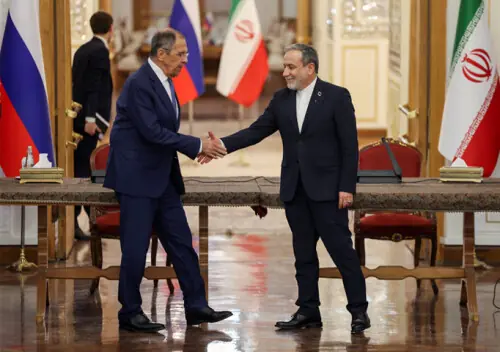
ISLAMABAD: Pakistan on Thursday urged the United States and Iran to return to the framework agreed under the Islamabad Memorandum of Understanding and its implementation roadmap, insisting that despite mounting challenges and renewed hostilities, the agreement remained the only viable template for restoring peace between the two adversaries.
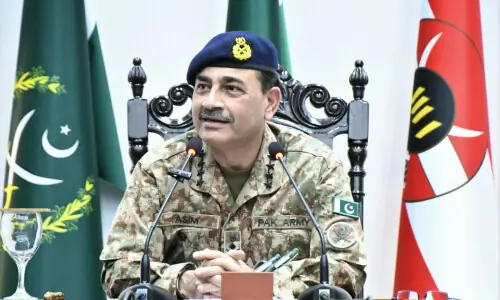
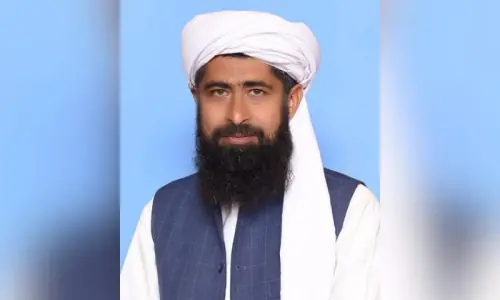
“We call upon the parties to return to the formula that was agreed upon in the form of the Islamabad MoU and the implementation roadmap in the Pakistan-Qatar Joint Statement of June 22, 2026,” Foreign Office spokesperson Tahir Andrabi said at the weekly media briefing.
Mr Andrabi’s comments came as the conflict entered another volatile phase after renewed hostilities erupted on July 7, when Iran attacked commercial shipping in the Strait of Hormuz, including a Qatari liquefied natural gas tanker, accusing the US of violating the understanding. The attack prompted multiple waves of US strikes on Iranian military targets.
Washington subsequently targeted air defence systems, missile and drone facilities, coastal radar installations and naval assets across southern Iran, while Tehran retaliated with missile and drone attacks against facilities associated with the US military presence in Bahrain, Kuwait and other Gulf states.
Describing the memorandum as “an enduring framework for promoting peace, mutual respect and shared prosperity”, Mr Andrabi acknowledged that its implementation was facing serious difficulties but rejected suggestions that Pakistan’s mediation effort had failed.
“The logic of Islamabad MoU still exists,” he said. “Whenever the parties feel that their logic of escalation is exhausted, the return to peace will be through a template provided in the Islamabad MoU. Peace never dies, and, in the same vein, the relevance of the Islamabad MoU continues.
“We hope that rationality of peace and dialogue will overcome the logic of escalation,” he maintained.
He said Pakistan would continue encouraging both sides to end the violence and resume technical-level talks in accordance with the memorandum and the implementation roadmap agreed with Qatar on June 22, adding that Islamabad remained actively engaged with regional capitals in support of de-escalation.
The spokesperson recalled that, besides publicly urging both sides to de-escalate and return to diplomacy, Pakistani leaders have over the past week spoken to the Iranian president, the Qatari emir and the Iranian and Saudi foreign ministers on the matter.
Meanwhile, faint diplomatic signals have continued to emerge. Iran this week released Iranian American detainee Dena Karari in what US President Donald Trump described as a “gesture of goodwill”. In contrast, senior Iranian officials, including Parliament Speaker and lead negotiator with the US, Bagher Ghalibaf, have repeatedly said the door to negotiations with Washington remains open despite the renewed fighting.
The Islamabad MoU, signed on June 17 after weeks of intensive diplomacy led by Pakistan with support from Qatar and other regional partners, had generated optimism that one of the most dangerous confrontations between Washington and Tehran in decades had finally been contained.
That optimism, however, proved short-lived. Within weeks, both Washington and Tehran began accusing each other of violating the agreement.
President Donald Trump declared the memorandum “dead” following renewed hostilities after accusing Tehran of violating its commitments, although Iran has stopped short of formally abandoning the agreement, maintaining instead that it suspended implementation because of what it says were prior US violations.
Diplomats and analysts say the agreement’s difficulties stemmed largely from the ambiguity built into several of its provisions.
While that ambiguity made it possible to secure a ceasefire by allowing both sides to interpret key clauses according to their own political and strategic priorities, it later complicated implementation as disputes emerged over issues ranging from the future administration of the Strait of Hormuz to sanctions relief, frozen assets and sequencing of reciprocal obligations.
Despite the collapse of implementation, Foreign Office spokesman Andrabi insisted Pakistan saw no need for an entirely new diplomatic initiative.
“I doubt there is a need for any fresh initiative, or even, if not an initiative or a fresh template for peace. The template exists,” he said. “Whenever the parties exhaust the logic of escalation, the formula for peace is up for the taking. We will continue to advocate for that formula.”
Published in Dawn, July 17th, 2026