Basic health issues can only be tackled by local government: health minister
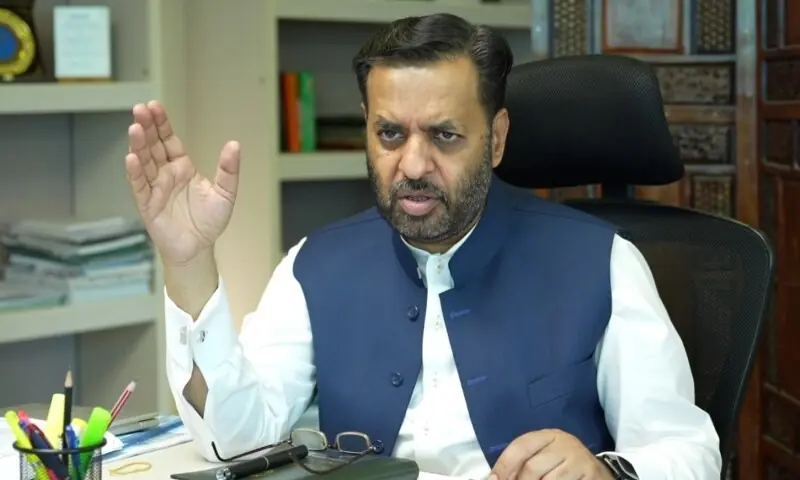
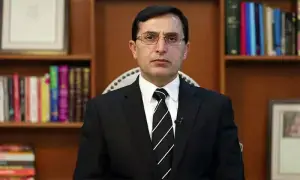
ISLAMABAD: Federal Health Minister Mustafa Kamal on Tuesday said that only the local government can address most of the issues of the federal capital and in provinces.
Inaugurating Phase-I upgradation of Pakistan Institute of Medical Sciences (Pims) Cardiac Centre, he also called for stronger primary healthcare to reduce disease burden.
Mr Kamal said that the true objective of decentralisation was to ensure that public issues were resolved promptly at the Union Council level. He reaffirmed that a strong, efficient and empowered local government system was indispensable for achieving lasting improvements in public health and ensuring equitable access to quality healthcare across Pakistan.
The minister also said that he did not oppose the 18th Constitutional Amendment, but had concerns over its incomplete implementation. He explained that while resources had been transferred from the federal government to the provinces, an effective mechanism for further transferring funds from the provinces to districts and local governments had not been established. He noted that approximately Rs8.848 trillion was transferred to the four provinces during the last fiscal year, yet a strong local government structure to ensure the effective utilisation of these resources at the grassroots level remained absent.
He said that once resources were transferred directly to neighbourhoods and local governments, essential public services such as safe drinking water, sanitation, sewerage and other basic civic facilities would improve significantly, leading to a substantial reduction in the burden of disease. He reiterated that the real solution to Pakistan’s health challenges lies not only in building hospitals but in preventing diseases through a strong and effective local government system.
Mr Kamal observed that the absence of an effective local government system had also created challenges in building public awareness and trust regarding polio and other immunisation programmes. He explained that locally elected councillors were residents of the communities they represent and were directly accountable to the people, making them more trusted voices.
“This enables health programmes to be implemented more effectively at the community level and helps strengthen public confidence in vaccination initiatives”, he added.
He also remarked that the current administrative system relied on only a few hundred bureaucrats to manage the entire governance structure, whereas a robust local government system would significantly expand the reach of governance and public service delivery by engaging millions of people at the grassroots level.
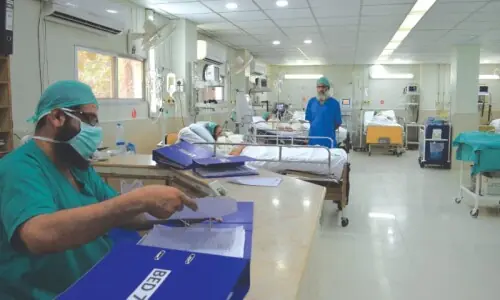
At Pims, the minister also inaugurated the Patient Facilitation Assistant Service in the Emergency Department to improve patient guidance and service delivery.
He said that Pims served as the largest referral hospital for patients not only from Islamabad but also from Azad Jammu and Kashmir, Gilgit-Baltistan, a large part of Khyber Pakhtunkhwa, and other remote areas of the country.
“Pims receives approximately 7,000 to 9,000 patients every day, and when attendants and family members are included, between 30,000 and 40,000 people benefit from the hospital daily. This is equivalent to the size of a major public gathering every single day, reflecting both the immense trust people place in Pims and the extraordinary burden on the institution,” he remarked.
The minister observed that the overwhelming patient load on Pakistan’s public teaching and tertiary care hospitals was largely due to the ineffective functioning of the country’s primary healthcare system.
Published in Dawn, July 8th, 2026