
Forty thousand acres in a corner of landlocked Utah in the United States. A proposed data centre and power campus planned here is projected, at full scale, to require nine gigawatts of power — reportedly more than double Utah’s current average electricity demand.
Two thousand miles west, in Lake Tahoe, a utility company serving around 49,000 customers has been told it must find replacement supply by May 2027, after its Nevada-side supplier said it would no longer provide the same level of power service.
These are not unrelated stories. They are the same story, told twice.
For most people, “data centre” still sounds harmless. A warehouse where the internet lives. A giant refrigerator for emails, wedding videos and office PDFs. At the scale planned in Utah, that explanation collapses. Nobody needs nine gigawatts of power to store family photographs from Murree or quarterly reports from Karachi.
Something much larger is being built.
The old empires conquered land. The new one seeks something more intimate: your attention, your behaviour and, increasingly, your mind…
The polite term is artificial intelligence [AI] infrastructure. The more honest term is closer to this: a planetary prediction machine. Not a single machine in the Hollywood sense, with blinking lights and a villain’s voice. Something duller, more distributed and, for that reason, more frightening — a civilisational nervous system stitched together from chips, fibre, satellites, biometric scans, search logs, financial trails and the entire archive of recorded human behaviour.
The ambition is no longer to store what humanity has done. It is to predict what humanity will do next.
THE INTERIOR OF THE HUMAN BEING
This is where capitalism finds its new frontier.
Earlier frontiers required ships, armies, flags, missionaries, trading companies and maps. The old empires crossed oceans looking for land, spices, slaves and minerals. Today’s empire does not need to discover new continents. It has discovered the interior of the human being.
Your attention is land. Your behaviour is mineral. Your emotion is oil. Your private life is a mine. Every like. Every share. Every pause over a video you never even reacted to. Every location ping. Every food order, every late-night search, every photograph uploaded, every face tagged, every word typed and deleted.
For two decades, this data has been gathered, indexed and monetised. We were told it was about convenience — better recommendations, faster maps, personalised feeds. “Improving user experience,” as the corporate priests like to say.
Now the archive meets the algorithm.
THE ADVANTAGE OF MEMORY
The US has a structural advantage in this contest that China cannot easily copy. Not because China is technically backward — it is not. China builds factories at speed, fields its own search engines, social platforms, payment systems and AI models, and holds more behavioural data on its own citizens than most countries have on theirs.
But China’s digital empire remains more territorially contained. The US’s is ambient.
The phone in your pocket likely runs on a US operating system. The maps you trust may be drawn by a US company. The cloud holding your bank’s customers’ files may sit inside a US digital ecosystem. The language model you ask, late at night, for medical, legal or professional advice may also be American. The English-language internet — which is to say, much of the global internet — is still shaped by US platforms, US software, US cloud infrastructure and US memory.
China may have the factory. The US still has the memory. And memory, in this game, is what matters.
Data is not merely “information”. Data is accumulated behavioural power. It tells you what people fear, envy and obey. It tells you which rumour travels faster than its correction, which insecurity can be monetised, which identity can be weaponised.
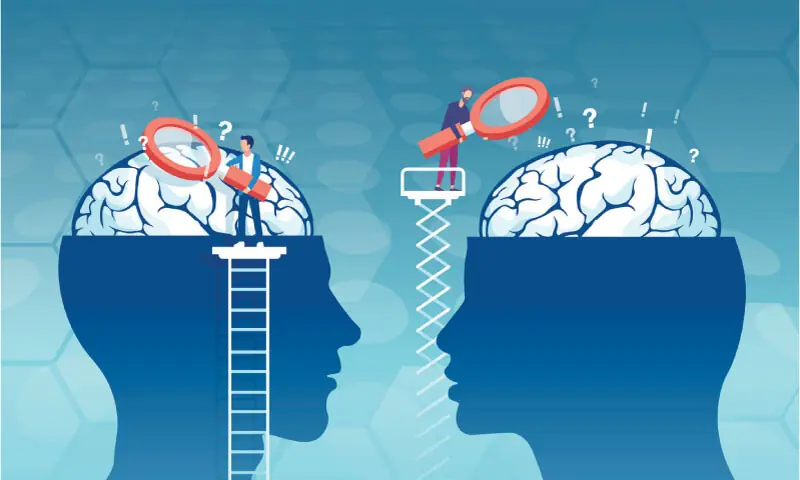
Until recently, most people gave platforms this data passively. They scrolled, clicked, bought, moved and left footprints. With AI, people have started handing over something more intimate: their reasoning.
They submit legal drafts, business plans, family disputes, medical fears, office politics and professional strategies. They no longer just reveal what they do. They explain how they think. They ask the machine to help them decide, write, argue, apologise, complain, plan and remember.
Social media knew your behaviour. AI begins to know your mind. That is the difference.
THE WHISPER, NOT THE LOUDSPEAKER
A search engine waits for a query. A feed manipulates attention. But an AI assistant enters into dialogue. It argues with you. It flatters you. It becomes patient when humans are not. It learns your tone, helps you draft the email, frame the idea, sharpen the complaint, soften the apology.
It feels like help because it is help. That is precisely why it is powerful.
The danger of AI will not arrive only as a robot army or as mass unemployment. It may arrive more quietly — as a dependency so intimate that we stop noticing where our agency ends and the system begins. The machine will not need to command us. It will advise us. It will not need to censor thought. It will rank it, rephrase it, soften it, amplify it, redirect it, pre-empt it. It will not need to ban dissent. It will drown dissent in better content.
Twentieth-century propaganda was crude by comparison. Posters. Slogans. Television. National anthems. Manufactured enemies. Repetition. The new propaganda will be conversational. It will know your politics, your class anxieties, your humour, your wounds, your intellectual vanity, your fears about your children, your secret need to be seen as intelligent.
It will not shout at everyone from one loudspeaker. It will whisper separately into every ear.
That is far more dangerous.
THE ENCLOSURE OF COGNITION
Capitalism has always survived by finding new things to fence off. Land became property. Labour became wage work. Nature became resource. Time became productivity. Attention became advertising inventory. Cognition itself is now being enclosed.
And like every earlier enclosure, it will be sold as progress.
We will be told AI will cure disease, improve education, optimise cities, increase productivity and democratise knowledge. Some of that will even be true. Every empire builds roads. Every machine has useful functions. The British built railways in India too — and presided over the famines. The existence of utility does not erase the structure of power.
The question is not whether AI is useful. Of course it is useful.
The question is: who owns it, who feeds it, who pays for it, who is displaced by it, who is watched through it, and who becomes governable because of it.
A nine-gigawatt data centre is not merely a building. It is a declaration. It tells us that the next economy will be powered not only by oil, gas, uranium and silicon, but by human behaviour at scale. It tells us that the future is being planned around machines that require the electricity of cities in order to predict, automate, persuade and manage the rest of us.
Perhaps this will keep capitalism afloat for another generation. Perhaps it will give it another golden age. But it will not solve capitalism’s old moral failure. It may sharpen it.
The worker will be monitored more closely; the consumer predicted more accurately; the citizen profiled more completely. The poor country will rent intelligence from the rich one. The small business will depend on cloud landlords. The student will think through rented tools. The state will buy behavioural systems from private corporations. And the individual will mistake convenience for freedom.
Somewhere in a dry Utah valley, a data campus the size of a small city may soon hum through the night, drinking electricity and water, while ordinary people elsewhere are told to adjust, conserve, relocate or pay more.
The old empires conquered territory. The new one will not need it. It will conquer probability.
The writer is an essayist concerned
with power, politics and culture. He can be
contacted at suhaib.ayaz@gmail.com
Published in Dawn, EOS, May 31st, 2026