US-Iran deal in sight as CDF wraps up trip
• ISPR says ‘intensive negotiations’ resulted in ‘encouraging progress’ towards agreement
• Trump claims MoU on peace deal ‘largely negotiated’, will only sign when ‘we get everything we want’
• Tehran says accord in ‘finalisation’ stage
• Ghalibaf asserts Iran has rebuilt military capabilities during lull in fighting
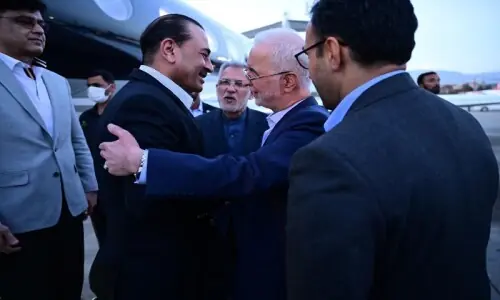
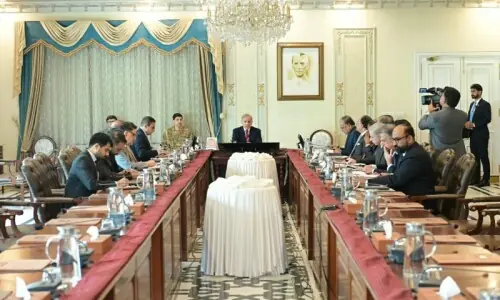
ISLAMABAD: Chief of Defence Forces Field Marshal Asim Munir concluded a high-stakes visit to Tehran on Saturday after intense negotiations that produced encouraging progress towards a final understanding between Iran and the United States to end the conflict.
The two-day visit marked the most consequential mediation effort since the direct talks hosted by Pakistan last month. According to the Inter-Services Public Relations (ISPR), Field Marshal Munir had held “high-level engagements” with the Iranian leadership “as part of ongoing mediation efforts aimed at promoting de-escalation and constructive engagement”.
“The discussions remained focused upon expediting the consultative process underway to support peace and stability in the region and to reach a conclusive agreement,” the ISPR said in a statement. “The intensive negotiations over the last twenty-four hours have resulted in encouraging progress towards a final understanding.”
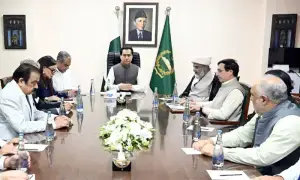
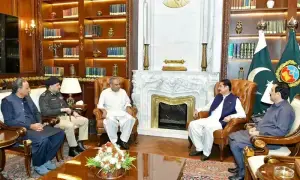
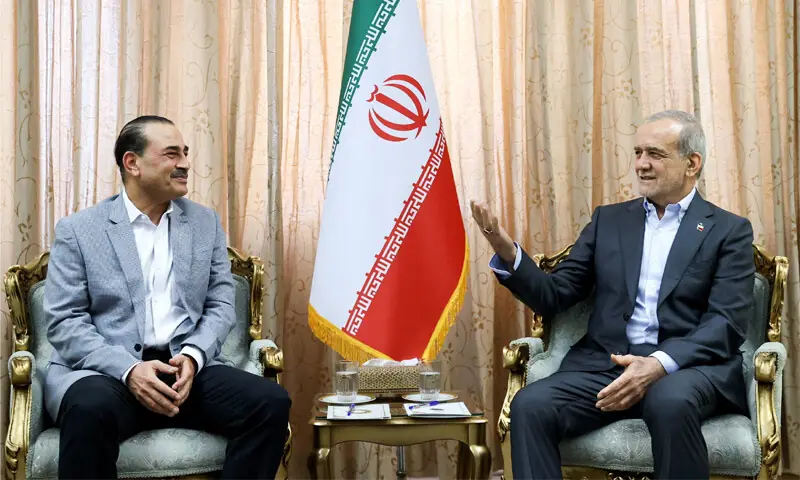
FM Munir met Iranian President Masoud Pezeshkian, parliament speaker and chief negotiator Bagher Ghalibaf, Foreign Minister Abbas Araghchi and Interior Minister Eskandar Momeni. The statement stopped short of announcing any breakthrough, but midnight media reports suggested that an agreement was within reach.
In a post on Truth Social on Saturday night, President Trump said that a memorandum of understanding on a peace deal has been “largely negotiated” with Iran and will open the Strait of Hormuz, with details to be unveiled soon. “Final aspects and details of the deal are currently being discussed, and will be announced shortly,” the US president wrote on social.
Speaking about the negotiations, US President Donald Trump told CBS News that Washington and Tehran were “getting a lot closer” to reaching an agreement. “Every day, it gets better and better,” he said, adding that any potential deal would ensure Iran’s enriched uranium was “satisfactorily handled”, though he declined to elaborate further. “I will only sign a deal where we get everything we want,” he said.
Iranian Foreign Ministry spokesman Esmail Baghaei, meanwhile, said negotiations had entered the “finalisation stage” of a memorandum of understanding. “The issues that are being discussed at this stage are generally focused on ending the war,” he said. “The issue of ending the US naval aggression and issues related to the release of blocked Iranian assets are among the main issues that are addressed in this memorandum of understanding.”
“Within a reasonable period of 30 to 60 days, the details of these points will be discussed and a final agreement will ultimately be concluded. We are currently in the process of finalising these memoranda of understanding,” he told state broadcaster IRIB.
US Secretary of State Marco Rubio also said that some progress had been made on Washington’s dispute with Iran and that the US might have “something to say” on the issue in the coming days. “There’s been some progress done, some progress made, even as I speak to you now, there’s some work being done. There is a chance that, whether it’s later today, tomorrow, in a couple days, we may have something to say,” he told reporters during his visit to New Delhi.
The Iranian comments reinforced growing indications that the current diplomacy was geared towards an understanding meant to stabilise the situation while harder disputes are negotiated later.
Meanwhile, Iran and Pakistan submitted a revised proposal to the United States to end the war and reopen the Strait of Hormuz, Reuters reported, quoting two Pakistani sources familiar with the negotiations.
According to diplomats, the likely contours of a proposed framework included continuation of the ceasefire, partial easing of the naval blockade, guarantees for maritime navigation in the Strait of Hormuz, limited economic relief and subsequent negotiations over Iran’s nuclear programme and sanctions architecture.
Reporting in Iranian media suggested Tehran could show flexibility on its plan for maritime tolling arrangements, though Iranian officials continued to insist the Strait’s management remained fundamentally a regional matter involving littoral states. That issue has increasingly emerged alongside the nuclear file as one of the central disputes in the negotiations.
Lingering uncertainty
As the talks continued, the military environment also remained volatile. US aerial refuelling operations near Saudi and Emirati airspace continued through the week, signalling that Washington was maintaining operational readiness even as talks intensified.
US President Donald Trump added to the uncertainty by saying he was “solid 50/50” on whether diplomacy would succeed or bombing would resume. Iranian officials, meanwhile, coupled diplomatic flexibility with hardline public messaging aimed at domestic audiences.
Iranian speaker Ghalibaf, who was recently reappointed head of Iran’s negotiating team, warned during his meeting with Field Marshal Munir that Iran had rebuilt its military capabilities during the ceasefire.
“If Trump commits a stupidity and the war starts again, it will definitely be more devastating and bitter for America than the first day of the war,” he said. “We will not compromise on the rights of our nation and country.”
Mr Ghalibaf also accused Washington of violating earlier understandings. “We were negotiating when America started the war and now it says let’s negotiate to end it,” he said.
Published in Dawn, May 24th, 2026