Pakistan flays India for sealing Srinagar mosque, again
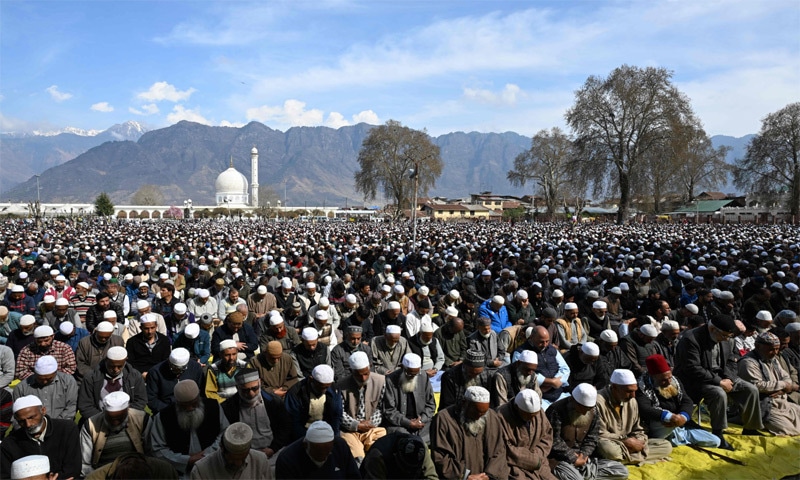
• Jamia Masjid’s doors locked, Mirwaiz placed under house arrest
• Foreign Office, AJK minister condemn restrictions on worshippers in Ramazan
MUZAFFARABAD: Pakistan has strongly condemned the continued closure of the Jamia Masjid in Srinagar on the last Friday of the holy month of Ramazan.
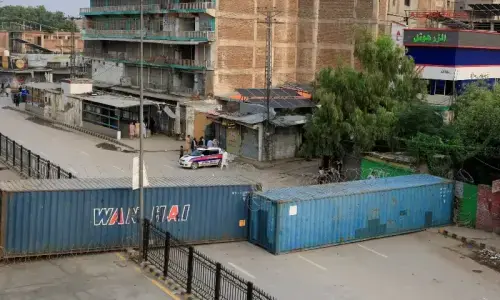
According to the Kashmir Media Service, the administration of occupied Kashmir sealed the historic mosque for a second consecutive week, preventing worshipers from offering Jumatul Vida prayers.
Authorities have barred all access routes with barbed wire and locked the mosque’s doors.
A post on the X account of All Parties Hurriyat Conference leader Mirwaiz Umar Farooq said that this was the seventh consecutive year that authorities had locked the gates of the historic mosque from all sides and had placed the Mirwaiz, who is also the chief religious scholar at the 15th-century mosque, under house arrest and prevented him from delivering the sermon and leading prayers on this sacred occasion.
“Our hearts bleed,” the post said, adding that it was deeply shameful that the houses of Allah are being locked against the faithful.
The Anjuman Auqaf Jamia Masjid Srinagar also condemned the continued closure of the mosque on the occasion of Jumatul Wida.
In a statement, Pakistan’s Foreign Office spokesperson condemned the move, saying: “Preventing worshipers from offering congregational prayers at one of the most revered mosques in the Valley constitutes a serious violation of religious freedom and fundamental human rights in Indian Illegally Occupied Jammu and Kashmir.”
“Such restrictions on religious practice, particularly during the sacred month of Ramazan, are deeply concerning,” he added.
“Pakistan calls on the international community, including the United Nations and human rights organisations, to take notice of these actions and urge India to ensure the freedom to practise religion as a fundamental human right in Indian Illegally Occupied Jammu and Kashmir,” the statement said.
Meanwhile, in Azad Jammu and Kashmir, Minister for Information and Religious Affairs Chaudhry Muhammad Rafique Nayyar also condemned the Indian ban on congregations at Srinagar’s Jamia Masjid.
In a statement, he said preventing Muslims from offering Friday prayers at the historic mosque during the holy month of Ramazan was extremely regrettable and an act of extremism that constituted a blatant violation of not only fundamental human rights, but also internationally recognised principles of religious freedom.
Mr Nayyar said that extremist India, after unleashing some of the worst atrocities in human history in Indian-occupied Kashmir, was attempting to suppress the voice of the Kashmiri people through force while continuously curbing their religious and social freedoms.
Commenting on the situation, Mr Nayyar said that restrictions on mosques in the occupied territory, preventing the offering of Friday prayers and banning religious gatherings exposed the “ugly face” of the Indian extremist government, which, he added, was pursuing a malicious policy aimed at suppressing the religious freedom and fundamental human rights of Kashmiri Muslims through coercive means.
He maintained that the faith, identity and religious freedom of the Kashmiri people could not be suppressed through force.
The minister urged the international community and global human rights organisations to take immediate notice of the restrictions on religious freedoms and the grave human rights violations in India-held Kashmir.
Published in Dawn, March 14th, 2026