War forces Mideast energy facility closures
LONDON: A US-Israeli war on Iran has severely disrupted Middle East energy exports, collapsing oil production in Iraq and shutting down the entirety of Qatar’s natural gas facilities, choking off a shipping artery that handles a fifth of the world’s supply.
The conflict has forced widespread production stoppages and shipping closures, with Kuwait announcing output cuts over the weekend. Analysts predict that Saudi Arabia and the United Arab Emirates will soon be forced to follow suit as they run out of oil storage.
The most severe impact has been felt in Iraq, where oil production from its main southern oilfields has fallen by 70 per cent, three industry sources said on March 8.
Output has plummeted to just 1.3 million barrels per day (bpd) from 4.3m bpd before the war, as the country’s primary export route through the Strait of Hormuz remains shut.
Separately, several companies in Iraqi Kurdistan have stopped production at their fields as a precaution, halting a flow of 200,000 bpd that went to Turkey in February.
The disruptions have extended across the region’s top producers. Qatar stopped all operations at its liquefied natural gas (LNG) facilities on March 2 and declared force majeure two days later, halting supply from a source that accounts for about 20pc of global LNG.
In Kuwait, the Kuwait Petroleum Corporation began cutting its oil output and declared force majeure on March 7 due to the war shutting its export capabilities.
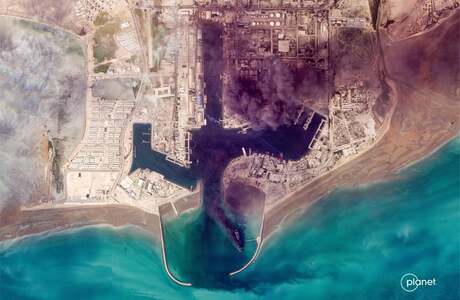
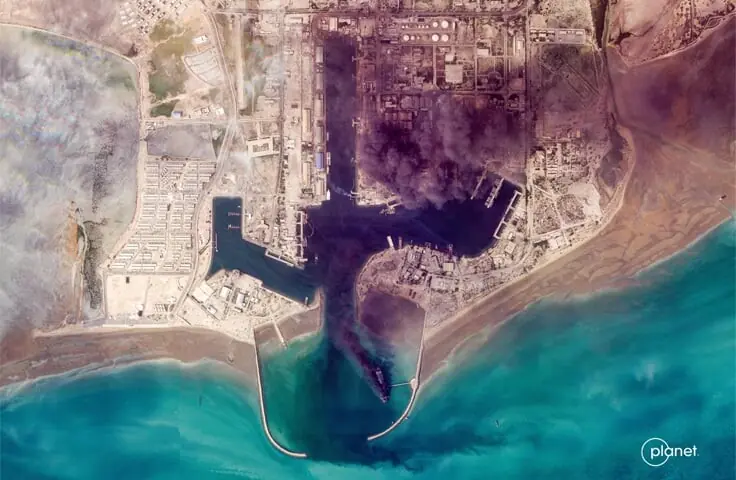
Saudi Arabia, the world’s top oil exporter, suspended output at its 550,000-bpd Ras Tanura refinery and has started rerouting crude loadings from its eastern ports to Yanbu on the Red Sea.
The refinery was struck again on March 4, “without damage,” the Saudi defence ministry said. The Abu Dhabi National Oil Company said on March 7 that it was actively managing its offshore output to preserve “operational flexibility.”
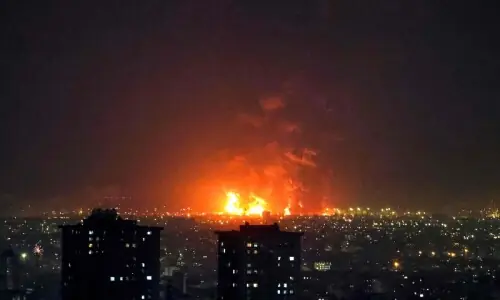
The conflict is also hitting energy infrastructure directly. Iran’s Revolutionary Guards said on March 7 that they had targeted an Israeli refinery after Iran’s Tehran refinery was hit, according to state media. While air raid sirens sounded in the Haifa area, there were no immediate reports of damage.
A senior Iranian Revolutionary Guards official declared the strait closed on March 2 and warned that Iran would “fire on any ship attempting to pass”, state media reported.
The Guards said on March 7 they had hit a Marshall Islands-flagged tanker in the strait. The United Kingdom Maritime Trade Operations has reported several attacks against ships in the region since March 1, including a tanker off Kuwait.
In response, major marine insurers are cancelling war-risk coverage for vessels in the area.
Published in Dawn, March 9th, 2026