Police driving schools train over 2,800 students annually in Rawalpindi


 0
0
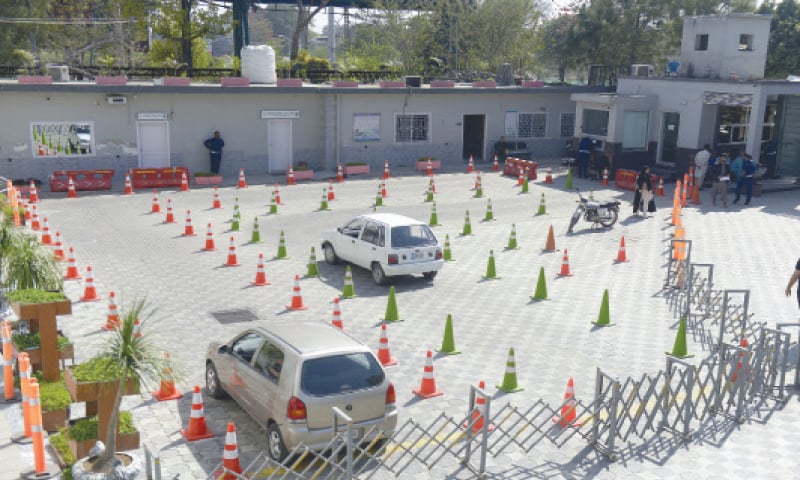

Trusted by over 2,800 students a year, police driving training schools are emerging as institutions that offer a standard programme divided into classroom and behind-the-wheel sessions under a 15-day course.
The police driving training school offers a 15-day course, comprising three days of theory classes and 12 days of practical behind-the-wheel lessons, delivered by experienced instructors.
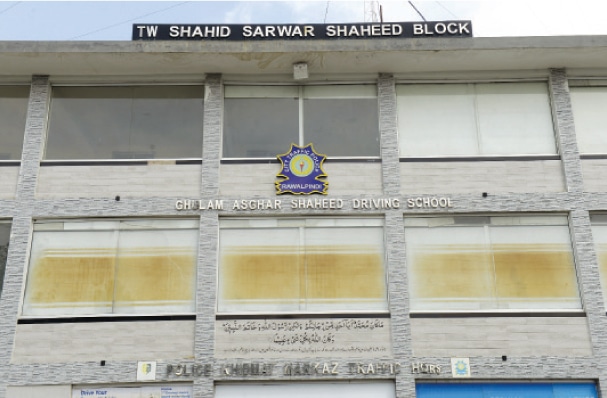
Two driving training schools are located at the City Traffic Police Headquarters and Satellite Town, while one each is operating in Gujar Khan and Kallar Syedan.
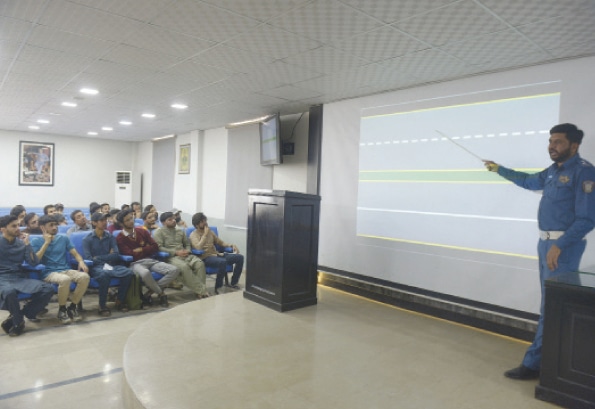
Students can enrol in the 15-day course at a fee of Rs5,000, provided they have a valid learner’s permit and CNIC. The school offers two such courses each month, each comprising three days of theory and 12 days of practical training.
During the three-day theory course, students are given lectures on road safety, traffic signs, traffic rules and two-wheel handling techniques. During the remaining 12 days, the students receive practical training in driving cars, bikes and scooties.
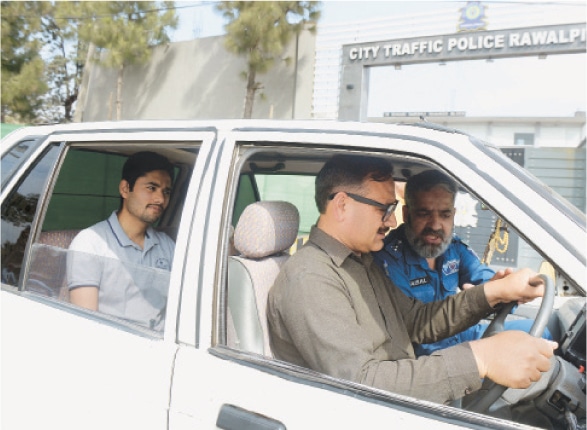
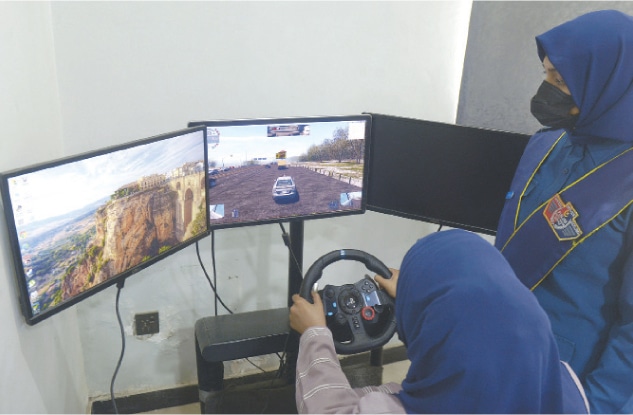
Faisal Gillani, education in-charge at the driving school, said for the first time, “driving simulators” had also been introduced at the school to provide improved driving training to students. One simulator is used for training car drivers, while the other is for training Light Transport Vehicle (LTV) drivers.
The driving simulator is locally made and equipped with manual gear, reverse gear, clutch, accelerator, steering and foot brake, providing a complete road-driving experience.
The simulator also helps students overcome their fears and concerns regarding driving vehicles on the road and teaches them how to follow traffic signs.
The City Traffic Police have also conducted workshops for heavy-duty vehicle drivers as part of road safety awareness and commercial licensing and safety measures.
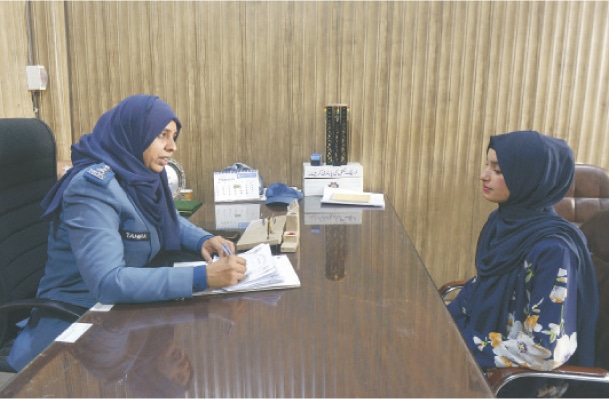
The education in-charge further said 2,558 students were imparted driving training for motor cars in 2025, while 300 female students received scooty driving training during the same year.
He said the number of female students receiving scooty training had been increasing day by day, although participation had initially been discouraging.
“The traffic police driving training school operates on a ‘no profit, no loss’ basis only to provide the best training to people. The enrolment fee for female students for the bike or scooty course is Rs 3,000,” the instructor said.
At the police driving school, a special course has also been started for female students who wish to receive scooter driving training. Earlier, a similar course titled ‘Women on Wheels’ (WoW) had been introduced. The programme was launched in Punjab to empower women and provide them with freedom of mobility so they can become socially and financially independent.
To empower women by providing them with driving skills and self-reliance, the then chief traffic officer (CTO) launched the Women on Wheels (WoW) programme at Girls Guide House in 2 024.
The City Traffic Police had stated that anyone from the Girls Guide House who wanted to receive scooter or motorcycle training under the Women on Wheels programme should contact the City Traffic Police Rawalpindi. Lady traffic assistant instructors were selected to train students in scooter driving under the Women on Wheels programme.
The programme was launched so that women do not face problems in travelling to school, college, university and offices. Driving licences will be issued to them in a short time, so that only licence holders can drive scooties on the road.
Saqib Rizwan, in-charge of the driving school, said the traffic education wing provided awareness about road safety, zebra crossings, stop lines, traffic signals, seat belts, the use of helmets and other traffic rules to students and teachers in educational institutions.
Chief Traffic Officer (CTO) Farhan Aslam said the police driving training school imparted training according to Standard Operating Procedures (SOPs) during a 15-day course divided into classroom and behind-the-wheel sections.
However, he added, “Even if they have learned to drive, their driving sense is lacking. Half of the drivers do not drive properly.”
Published in Dawn, March 9th, 2026