There was a moment — brief but powerful — where we began to believe we had finally slain an old giant.
It came with the rise of platforms that promised to “democratise” media, to give voice to every individual, to let every athlete, thinker, activist, executive or celebrity broadcast their own story, without the filters of legacy institutions. Elon Musk said as much when he spoke about decentralising media, opening it up to everyone with a phone and an internet connection. No more gatekeepers. No more old hierarchies. Just pure, unmediated truth.
And, at first, it felt liberating.
Every podcast became a direct line to the person who actually lived the narrative. Every social media platform turned into a newsroom and every public figure into their own anchor. We were told to reject “mainstream media” — that it was biased, outdated, elitist — and embrace instead the beautiful chaos of direct testimony. Fake news, they said, wasn’t the problem; controlled narratives were. And now those narratives could be toppled by the digital mob. The story would finally come “straight from the horse’s mouth.”
Except the horse wasn’t just mouthy — it was lying.
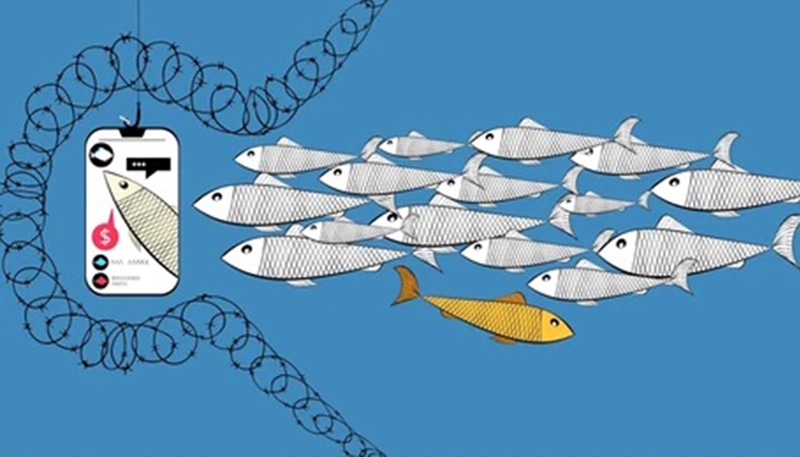
Without filters, the loudest or most charismatic or most monetised voice wins — not the most accurate one. The chaos of decentralised media has exposed why journalism’s gatekeeping still matters…
There’s a fundamental mistake baked into this confidence in self-broadcasted truth: just because someone says they’re telling the truth doesn’t mean they are. On the contrary, we now live in a world where everybody has a megaphone, but almost nobody is accountable. Every person with a microphone has skin in the game — whether that game is fame, influence, brand building, fundraising, reputation management or self-preservation.
And inside this ecosystem, fake news travels like wildfire.
Spreading fake news is easy, almost frictionless. It costs nothing. One share, one forwarded message, one dramatic voice note, and it multiplies. It flatters our biases, hits our emotions first and logic last. Countering it is the opposite experience — slow, careful and expensive. Fact-checking requires time, energy, verification, documents, calls, expertise and, sometimes, legal risk.
By the time fact-checkers finally arrive with receipts in hand, the fake news has already done exactly what it was designed to do: inflame, mislead, damage reputations, harden prejudices, or swing public mood. The correction never travels as far as the lie. Lies sprint; facts limp after them.
Podcasts and social feeds don’t announce their biases; they celebrate themselves as authenticity incarnate. But authenticity without accountability is just another form of spin.
This shift has reshaped how we think about truth. We’ve grown comfortable with narratives that come from sources who are, when you strip away the gloss, deeply invested in controlling their own stories.
Think about it: an athlete with a podcast isn’t just telling you about their career, they’re shaping their legacy. A celebrity interview isn’t spontaneous conversation — it’s curated public relations (PR) disguised as spontaneity. When the storyteller has everything to gain from how the story lands, how much can we really trust what they say?
This isn’t just a theoretical worry — it has real consequences. When someone with influence lies or obfuscates, the damage ripples out across society. A false narrative can obscure accountability, protect the powerful from scrutiny or insulate them from consequences. It can distort public understanding of events and, worse, shift the entire frame through which we interpret history.
And once a false narrative takes hold — especially one that feels good or confirms what we already want to believe — it becomes nearly impossible to dislodge.
That’s where journalism still matters — now more than ever.
But not just any journalism.
Not the press release republication disguised as reporting.
Not the commentary masquerading as analysis.
Not the influencer-friendly, softball interview that gives access in exchange for good optics.
What we need — what society must have — is independent, objective, neutral and, when necessary, adversarial journalism.
At its best, journalism serves three essential functions: verification, contextualisation and accountability. It is not enough to hear a claim; it has to be checked. Facts must be placed into context rather than thrown into the public square naked. Power must be confronted rather than politely quoted. When journalists ask hard questions, push back and interrogate the versions of truth offered by powerful figures — that is adversarial journalism.
Some see that adversarial element and recoil from the term because “adversarial” sounds combative. But it shouldn’t. Adversarial journalism isn’t about hostility — it’s about accountability. It’s the difference between accepting what someone wants you to think and asking what the evidence actually shows.
Without that, we don’t have truth — we have broadcast narratives. We have curated realities. We have brand management, not reporting.
This is why filters, in the media sense, are not a luxury — they are a necessity. Filters are the processes that separate signal from noise. They are the editorial standards, the fact-checking, the ethics, the commitment to evidence that shape what is broadcast into something more than just a shout in the void.
A social media feed without filters is a chaos of voices and, in that chaos, the loudest or most charismatic or most monetised story often wins — not the most accurate one.
That’s not democracy; that’s the tyranny of attention.
The danger of unfiltered truth broadcasting becomes clearer when we recognise that every person who tells their own story also shapes it in ways that serve them. Even when they don’t intend to mislead, the very act of self-narration invites bias. We remember better the version of events that suits our self-image, our ambitions, our brand. We edit, we omit, we frame.
This is why independent journalism — even adversarial journalism — is essential. Because journalists ask “What’s missing?” and not just “What’s said?” They evaluate, cross-verify and analyse contradictions, and they don’t stop asking questions just because the person in front of them is famous or powerful.
And yes, journalism itself isn’t perfect. It has biases and blind spots. It can be captured by interests. It can fail to live up to its ideals. But the ideal of independent journalism — rigorous, evidence-based, accountable — is still worth defending. The alternative is a media age dominated by personal narratives that feel authentic but may be deeply misleading.
So, when we reflect on the current media landscape — with every celebrity hosting a podcast, every athlete broadcasting their “truth” and every influencer claiming authenticity — we should remember this: truth doesn’t broadcast itself. It is uncovered, verified and reported. That’s what journalism does.
And that is why journalism — real journalism — still matters.
The writer is a banker based in Lahore.
X: @suhaibayaz
Published in Dawn, EOS, March 8th, 2026