0
0
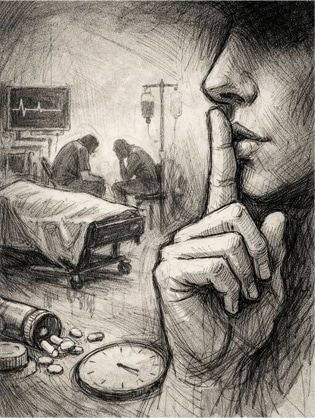
THE recent arrest of a district health officer (DHO) in Balochistan for allegedly stealing medicines meant for Washuk district caught public attention, but only for a short time because it was considered a minor issue. The fact is that it is a big thing that is plaguing not just the province, but the whole country.
This is something very serious for the common man who cannot afford private healthcare. For people living in most neglected districts of Balochistan, the incident only confirmed what they already knew: the public health system is controlled by middlemen, protected by silence, and free from real accountability.
Washuk is one of the least developed districts in Balochistan. Poverty is wide-spread, roads are limited, and access to education and healthcare is poor. In such areas, government hospitals and basic health units (BHUs) are not an extra facility; they are the only option. When medicines disappear from these centres, the effect is immediate.
Patients are forced to buy medicines from private medical stores even though these medicines were already purchased with public money. For many families, this extra cost is simply unaffordable.
On paper, the system is straightforward. The government purchases medicines and stores them at the medical store depot (MSD). District health offices send their requirements, receive supplies, and distribute medicines to hospitals and BHUs. This process is meant to ensure fair and need-based distribution.
In reality, the health system often works differently. Medicines meant for districts are reportedly taken out of the supply chain soon after they reach the district level. Instead of reaching hospitals and BHUs, these medicines are sold through brokers. In some cases, medicines are sold back to the MSD through unofficial channels. This sets in motion a cycle in which medicines keep moving on paper, but patients never receive them.
Medicines clearly marked as ‘Govern-ment property’ or ‘Not for sale’ continue to circulate between districts and the MSD. For example, a medicine purchased by the government for Rs300 may be sold illegally for Rs150 or 200. The MSD then shows a shortage of that medicine. When the government buys it again, the price is higher, sometimes Rs450 or more. What looks like a shortage on record is often a shortage created from within the system.
Oversight systems that should stop this have also weakened. Both internal and external audits in many districts are largely ineffective. Audit visits are often brief and treated as routine formalities. In some cases, ‘hospitality’ and ‘informal meetings’ with local officials are enough to settle audit observations. Once reports are signed, serious problems disappear from record. In remote areas, where visits are rare, this makes misuse even easier.
There are also allegations that govern-ment vehicles, including ambulances, are used to move medicines out of the public system. Brokers play a role, but such activities cannot continue without cooperation from inside the department. This is not a small problem, it is a system that allows loss and rewards silence. The result is visible across Balochistan, and, indeed, Pakistan.
Solving the problem requires more than suspensions after arrests. Medicine supply chains must be tracked digitally from purchase to delivery. District-wise stock data should be available for public review. Independent inventory audits must be regular and free from local influence.
Also, staff who report misuse must be protected. All official postings should be solely based on performance and service delivery, not politics. These steps are critical for the welfare of the people.
Dostjan Noor
Quetta
Published in Dawn, March 7th, 2026