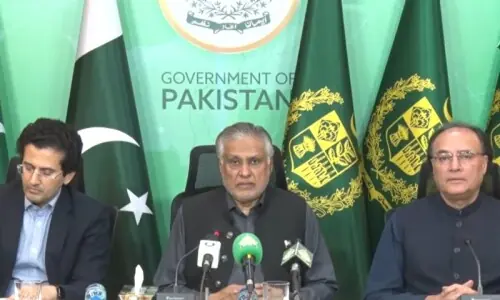
WITH looming energy shortages due to the US-Israel war on Iran, the government has revived a range of Covid-era measures — excluding health-related precautions — to conserve fuel, along with a shift to weekly petroleum price revisions for market stability.
The decision reflects the gravity of the regional crisis. With the war entering its second week, devouring the Gulf region and disrupting shipping routes through the Strait of Hormuz, Islamabad appears to be bracing for energy shortages and the economic fallout from oil price hike that are likely to follow.
Pakistan’s heavy reliance on imported energy leaves it acutely vulnerable to external shocks. Nearly all of its petroleum requirements are met through imports, much of which pass through one of the world’s most important maritime routes. Disruptions to shipping through the Strait of Hormuz, a corridor that carries roughly a fifth of global oil supplies, are not only tightening fuel availability but also driving up prices in international energy markets.
For a country already struggling with a fragile external account, even a modest increase in freight costs, insurance rates and ‘war premiums’ being charged by shipping companies can translate into significant financial pressure and rapidly drain its meagre foreign exchange reserves. The combination of higher insurance costs, limited shipping availability and increased competition for cargoes in Asian markets could make it harder for Pakistan to secure supplies in the coming weeks.
In this context, the government’s plan to revive such demand-management steps from the Covid era as work-from-home arrangements, distance learning and carpooling is crucial to conserve fuel and foreign exchange, given that the war may not end soon. Seemingly drastic, these steps nevertheless reflect a recognition that early restraint can limit disruptive interventions.
Equally notable is the shift from fortnightly to weekly petroleum price adjustments to pass through fluctuations in global prices and logistics costs more rapidly. Although this could mean more frequent changes at the pump for consumers, the alternative — large price distortions — could destabilise supply chains and discourage imports by oil marketing companies. At the same time, strict enforcement against hoarding and illegal storage is essential to prevent artificial shortages.
Ultimately, however, the present situation exposes a deeper structural vulnerability: Pakistan’s overwhelming dependence on imported fossil fuels. Each regional crisis, whether political or economic, morphs into domestic instability because we lack adequate energy buffers and strategic reserves.
While emergency steps may help navigate the present turbulence, the longer-term lesson is the same. Pakistan must step up efforts to diversify its energy mix, expand domestic resources and build larger strategic fuel reserves. Without such reforms, every external shock will continue to place the economy and ordinary people on an increasingly precarious footing.
Published in Dawn, March 7th, 2026