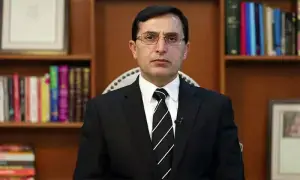
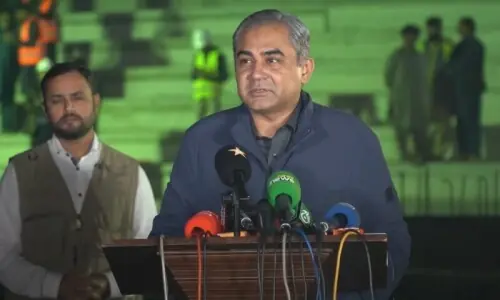
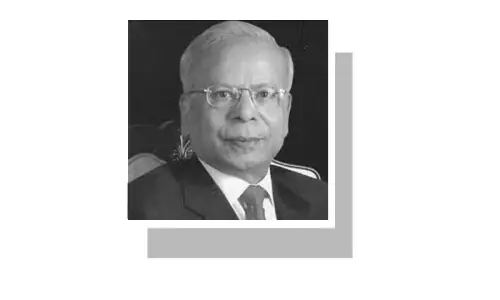
ISLAMABAD: Newly appointed Chairman of the Higher Education Commission, Prof Dr Niaz Ahmad Akhtar, on Thursday expressed confidence that initiatives being undertaken by the commission would help position Pakistan’s universities to better serve national development and compete effectively in the global knowledge economy.
In his maiden press conference, Dr Akhtar shared a roadmap for the future and highlighted his first month’s performance, stating that the government was committed to undertaking robust reforms in the higher education landscape in order to enhance the sector’s alignment with national needs and emerging global trends. He said the commission was pursuing a comprehensive plan to address existing challenges and lead the sector towards holistic development.
He highlighted HEC’s resolve to strengthen applied research and promote entrepreneurship within universities, emphasising the need to translate academic research into practical solutions, innovative products and economic opportunities for the country.
Sharing details of the reforms, Dr Akhtar said HEC had made a three-credit-hour course on Artificial Intelligence mandatory for undergraduate programmes across universities in Pakistan. The initiative aims to equip students of all disciplines with foundational knowledge of emerging technologies and prepare graduates for the evolving demands of the digital economy.
He said HEC had also established a Committee for Outcome-Based Education (OBE) to develop recommendations for making university education more purposeful, productive and result-oriented. The committee will deliberate on key aspects such as curriculum design, clearly defined learning outcomes and assessment practices.
The HEC chairman further said the commission had constituted a committee to strengthen the Offices of Research, Innovation and Commercialisation (ORICs).
“The committee will review existing mechanisms and propose measures to improve research management, enhance industry-academia collaboration, and promote intellectual property generation and commercialisation of research outcomes,” he said.
Underlining HEC’s efforts towards digital transformation, the chairman announced that the commission would shift the attestation of documents from a physical to a fully online system. “Once implemented, applicants will no longer need to visit HEC offices in person, as the process will be completed digitally,” he said.
Dr Akhtar said that to improve Pakistan’s visibility in global academia, HEC had constituted a ranking committee that would guide universities on strategies to enhance their performance in international university ranking systems such as the QS World University Rankings and the Times Higher Education World University Rankings.
Referring to interprovincial and interdepartmental coordination for the uplift of the higher education sector, the chairman said coordination between HEC and provincial higher education departments had improved. He said provincial committees on higher education reforms had been constituted.
He said the committee of each province would have representation from provincial HECs, Higher Education Departments (HEDs), one female vice chancellor, one vice chancellor from the private sector and a representative from HEC Pakistan. Their recommendations would help enhance coordination, prevent overlaps and promote mutual support.
He said that by establishing the P-5 strategic consortium, HEC would position emerging engineering and technology institutions to become global leaders. Through sustained engagement and shared innovation, these universities would help redefine Pakistan’s academic landscape.
The chairman said HEC had also constituted sector-specific academic committees to review the quality and relevance of degree programmes in key disciplines. These include committees on engineering and technology, medical education and agriculture. He said these bodies would examine existing academic programmes and propose improvements in line with international standards and national development requirements.
The newly appointed chairman said that while recognising the importance of merit-based admissions, HEC was working on improving testing mechanisms for undergraduate admissions to ensure greater transparency, standardisation and fairness in the intake of students across universities. “The quality of a university’s intake ultimately determines the quality of its graduates,” he said.
The chairman said he had written to the Speaker of the National Assembly and the chairman of the Senate, requesting that legislative enactment for new universities should not be undertaken without a No Objection Certificate (NOC) from HEC, which sometimes leads to regulatory and operational challenges.
Hinting at governance and administrative challenges, the chairman said HEC had also written to universities, urging them to fill vacant administrative positions at the earliest to ensure efficient institutional governance and smooth academic operations.
Dr Akhtar said that under the ongoing phase of the government’s laptop initiative for students, 65,000 laptops had already been distributed, while the remaining laptops would also be distributed soon. He added that a selection board was also being conducted at HEC to fill vacant positions at different levels, in addition to the process for filling various positions at the senior management level.
Published in Dawn, March 6th, 2026