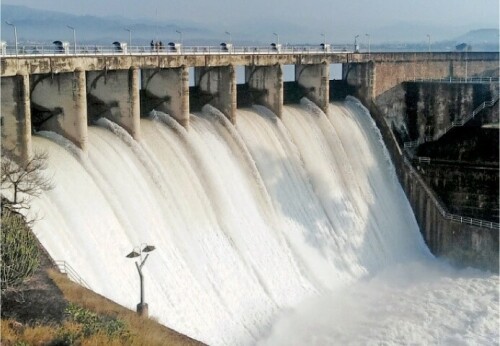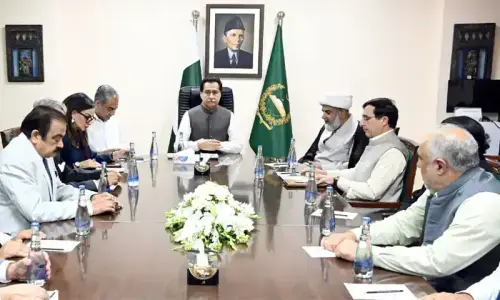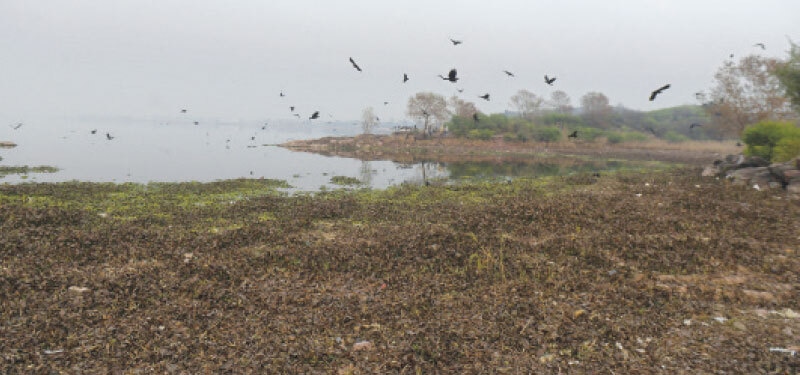
Islamabad: Federal Minister for Climate Change and Environmental Coordination, Dr Musadik Malik, chaired a high-level meeting to review the water quality situation of Rawal Lake and discuss measures to address contamination concerns.
The meeting was attended by Secretary of Climate Change and Environmental Coordination Aisha Moriani, Secretary of the Ministry of Water Resources Syed Ali Murtaza, Director General of the Environmental Protection Agency (EPA), Director General of the Rawalpindi Development Authority (RDA), Managing Director of Wasa, along with senior officers from relevant federal and provincial ministries and departments, said a press statement issued by the ministry.
During the briefing, the minister was informed about the three major water streams flowing into Rawal Lake, Korang, Lake View, and Jinnah streams. Some of these streams had been contaminated due to the discharge of untreated sewerage from nearby residential areas and planning for the installation of three sewerage treatment plants (STPs) at Simli Road, Bari Imam, and Shadrah was underway to address and eliminate this contamination.
Dr Musadik Malik emphasised that access to clean and safe drinking water was a fundamental right of every citizen. He stated that while the Ministry of Climate Change and Environmental Coordination did not have direct jurisdiction over water supply and sewerage management, it would extend full facilitation and coordination support to the relevant departments to ensure timely and effective action.
The federal minister directed EPA and Wasa to conduct comprehensive water quality testing at multiple points along the water inflows to and outflows out of Rawal Lake to accurately identify sources, points, and the extent of contamination. He stressed the importance of evidence-based interventions, stating that precise data is essential for designing effective remedial measures.
Raising a critical concern, Dr Musadik Malik remarked, “We must ask ourselves whether this is water we are comfortable feeding to our children.” The minister further called for strengthened coordination among federal and provincial departments to fast-track the installation of sewerage treatment plants and ensure the provision of clean drinking water to the public at the earliest.
Published in Dawn, January 16th, 2026