Ex-IHC judge set to appeal against his dismissal
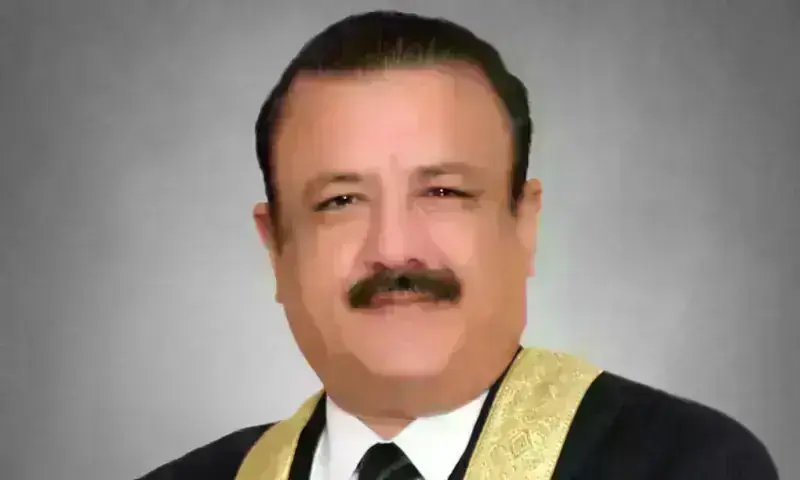
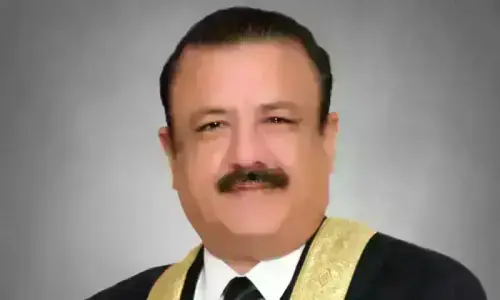
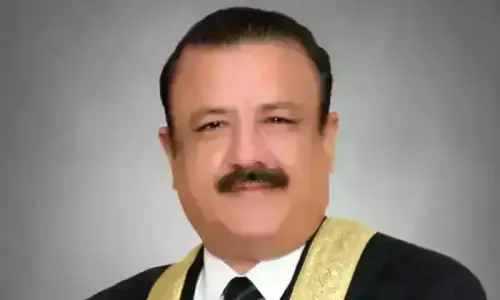
ISLAMABAD: Former Islamabad High Court (IHC) judge Tariq Mehmood Jahangiri is set to challenge his removal from office before the Federal Constitutional Court (FCC) next week, sources close to the development told Dawn on Friday.
His legal team has finalised a constitutional petition to contest the IHC’s December 18 verdict that declared his appointment unlawful on the basis of an allegedly invalid LL.B. degree, the sources said.
A division bench comprising IHC Chief Justice Sardar Muhammad Sarfraz Dogar and Justice Muhammad Azam Khan had issued a short order directing the law ministry to de-notify Justice Jahangiri. President Asif Ali Zardari subsequently approved the de-notification on the advice of the prime minister, and Justice Jahangiri’s name was removed from the IHC website.
Sources indicate the upcoming petition will argue that the IHC verdict was premature and violated principles of judicial propriety. A key contention will be that the Sindh High Court (SHC) had already suspended the Karachi University (KU) notification cancelling Justice Jahangiri’s degree. The petition will assert that the IHC could not have delivered a final judgement on the validity of his appointment while the foundational issue regarding his degree remained sub judice before another high court.
The challenge is also expected to reiterate grave allegations of bias against Chief Justice Dogar. A day before his removal, Justice Jahangiri had filed a formal complaint with the Supreme Judicial Council (SJC) against the chief justice. He accused CJ Dogar of violating the judicial code of conduct by discussing the pending case with him and suggesting that a post-dated resignation could help “prorogue” the proceedings. His application seeking the recusal of CJ Dogar and two other judges, citing a history of litigation between them, was rejected by the bench hours before the final verdict.
The IHC proceedings were marked by sharp controversy. During arguments in the degree case, Justice Jahangiri’s counsel, Advocate Muhammad Akram Sheikh, had strongly objected to the bench’s composition. He pointed out that Justice Jahangiri had earlier challenged CJ Dogar’s transfer to the IHC before the Supreme Court, creating an adversarial relationship that, he argued, disqualified the chief justice from hearing the case.
Justice Jahangiri’s legal team further contended that a superior court judge could only be removed through a reference to the SJC under Article 209 of the Constitution.
The IHC bench, in its order, distinguished proceedings relating to misconduct from those concerning eligibility. It stated that “ample opportunity” had been provided for a response, which was not furnished. The bench concluded that without a valid LL.B. degree — a prerequisite for enrolment as an advocate — Justice Jahangiri was never eligible for elevation under Article 175-A of the Constitution, rendering his appointment “without lawful authority.”
Islamabad High Court Bar Association former president Riasat Ali Azad said that Justice Jahangiri had a strong case. He criticised the order as “tainted with malice” and questioned the bench’s composition. “It is unprecedented in judicial history that an unconfirmed judge was included on a bench examining the appointment of a judge who was third in seniority,” he said, referring to Justice Azam Khan, who is an additional judge.
Published in Dawn, December 27th, 2025