Rohingya rue Myanmar polls from exile
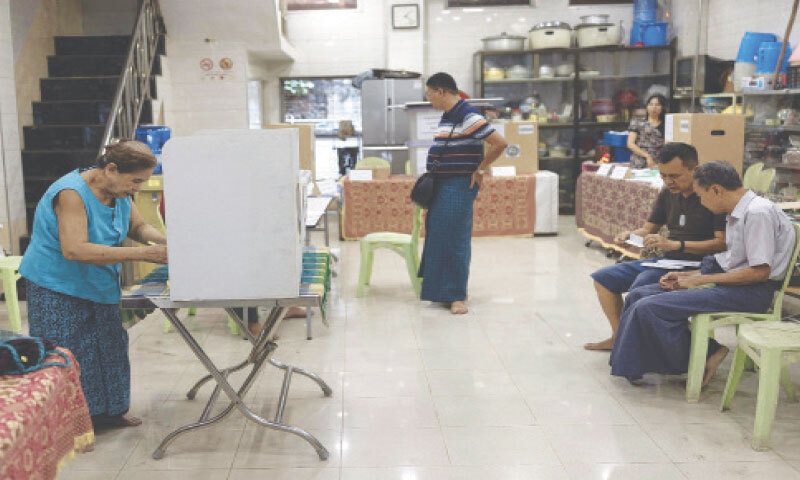

COX’S BAZAR: Myanmar’s military portrays its general election as a path to democracy and peace, but the vote offers neither to a million Rohingya exiles, evicted from their homeland by force.
Heavily restricted polls are due to start Sunday in areas of Myanmar governed by the military, which snatched power in a 2021 coup that triggered civil war.
But for the Rohingya minority, violence began well before that, with a military crackdown in 2017 sending legions of the mostly Muslim group fleeing Myanmar’s Rakhine state to neighbouring Bangladesh.
The month-long election will be the third national poll since they were stripped of their voting rights a decade ago, but comes amid a fresh exodus fuelled by all-out war.
“How can you call this an election when the inhabitants are gone and a war is raging?” said 51-year-old Kabir Ahmed in Bangladesh’s Kutupalong, the world’s largest refugee camp complex.
Ahmed once served as chairman of a village of more than 8,000 Rohingya in Myanmar’s Maungdaw township, just over the border from Cox’s Bazar in Bangladesh.
After their eviction, the area is now a “wasteland”. “Who will appear on the ballot? Who is going to vote?”
Today 1.17 million Rohingya live crammed in dilapidated camps spread over 8,000 acres in Cox’s Bazar.
The majority came in the 2017 crackdown, which is now the subject of a UN genocide court case, with allegations of rampant rape, executions and arson.
Civil war has brought fresh violence, with the Rohingya caught between the warring military and separatist group the Arakan Army, one of the many factions challenging the junta’s rule.
Both forces have committed atrocities against the Rohingya, monitors say. Some 150,000 people fled the persecution to Bangladesh in the 18 months to July, according to UN analysis.
The UN refugee agency said it was the largest surge in arrivals since 2017.
Successive military and civilian governments in Myanmar have eroded the citizenship of the Rohingya, dubbing them “Bengali” as descendants of immigrants who arrived during British colonial rule.
Published in Dawn, December 27th, 2025