CRICKET: A BITTER LEARNING OPPORTUNITY
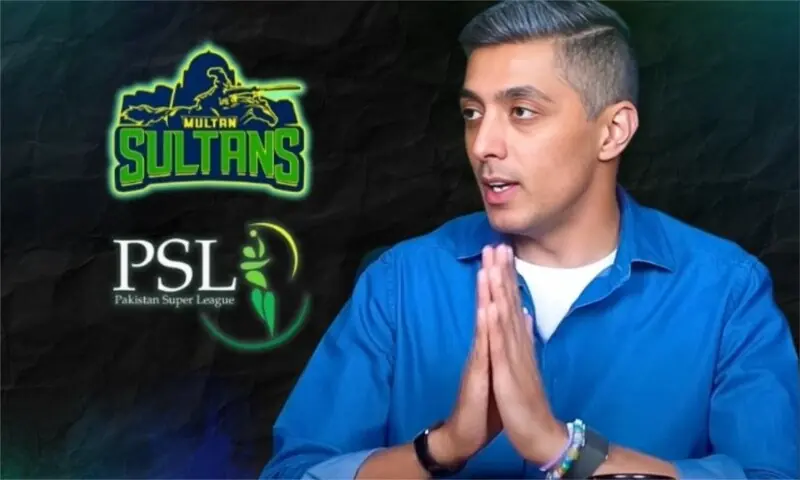


After last week’s Pakistan Super League (PSL) soap opera, we now enter what could be a decisive week — one that will shape the league’s future and the financial health of Pakistan cricket.
The outcome will determine whether Multan Sultans’ contract, the PSL’s most expensive franchise, is terminated or extended. The Sultans have contributed approximately 7.2 billion rupees to the Pakistan Cricket Board (PCB) in over seven years and given Southern Punjab a much-needed sense of belonging in the Pakistan cricket ecosystem.
Either way, the PSL should never have reached a point where its supporters are left guessing about the future of one of its teams. The other five franchises, regarded as the “well-behaved” ones, are all set to receive new 10-year contracts.
The PSL — a league that helped revive international cricket in Pakistan in 2019 and is proudly branded as the country’s own — deserves better. Instead of trading barbs and leaking stories last week, both sides could have used the time to plan for next year’s event, particularly to re-engage Karachi crowds that stayed away this season and to develop fresh and creative ideas that could reignite global interest, attract players and engage fans.
Unfortunately, recent PCB decisions and priorities often defy logic. A new ODI captain was announced during a Test match day’s play. Babar Azam was recalled to the T20I squad without any T20 performance since his dropping, before the start of a crucial fourth day’s play. And shortly after an eight-wicket Test defeat, the captain was suddenly appointed ‘Consultant International Cricket and Player Affairs.’
The war of words between the PSL management and the owner of the Multan Sultans franchise is a result of a massive clash of egos, and a failure of partnership and process by both sides, says a former Pakistan cricket team captain
And the craziest part? Fans — whom previous PCB administrations proudly called “the biggest and most valuable stakeholders” — still don’t know the reasoning behind any of these moves. Has accountability, once a cornerstone of cricket governance, quietly vanished?
Returning to the PSL, which is headed by chief executive Salman Naseer, the question is how and why the PCB finds itself serving a legal notice to its biggest investor. This happened nearly five months after the event in 2025 concluded on May 19, and the half-baked stories only surfaced last week, five weeks after the notice had been issued. The situation was sensationalised as a suspension or termination when, in fact, neither has yet occurred.
Having dealt with cricket administrations during turbulent times, I’m clear on one thing: this crisis is a result of a massive clash of egos, and a failure of partnership and process by both sides.
This crisis began last year when Multan Sultans’ owner Ali Tareen made sarcastic and critical social media comments about the league’s management and delivery. While his comments may have reflected legitimate frustrations shared by many observers and were widely reported, they also breached the expected commercial decorum between business partners.
The real question is what the PSL management did to defuse the situation. Their response — privately circulating misleading information instead of direct or indirect engagement with Multan Sultans — was unprofessional. Instead of introspection, they sought scapegoats and resorted to blame games.
In doing so, the PSL administration forgot a basic principle of sports management — sponsors and franchise owners are not adversaries; they are partners and lifelines for growth and sustainability. The breakdown of professional communication has now pushed the league into disarray for the wrong reasons, with talk of terminating the contract of its most expensive franchise.
Let me be clear: this is not a defence of the Multan Sultans’ owner Ali Tareen. We must equally hold him accountable for the method and platform of his protest. As a PCB partner and a key financial steward of the league, he had a fundamental obligation to show restraint, control emotions and exhaust all avenues of constructive dialogue behind closed doors before resorting to public criticism.
Neither the sport nor the league belongs to any individual, and public sparring only damages the brand they both profit from.
Just as in a cricket team, when a match-winning player loses focus or gets distracted, the captain or coach doesn’t throw him out immediately. The wiser approach is to counsel, discipline and reintegrate. That requires leadership, man-management and administrative skills — qualities the Director PSL-led PSL leadership has unfortunately failed to demonstrate in this episode. Instead of asserting authority with wisdom and intelligence, it chose a show of strength.
If Multan Sultans’ contract is eventually terminated, it will be a setback. While the show will and must go on, the question is: will the PSL find another investor willing to pay $6.35 million annually for the next decade in today’s economic climate?
How will they convince the new investor on a good return on investment after Multan Sultans has claimed they have lost 5.5 billion rupees in the past seven years? If not, who will account for the financial shortfall that would directly affect infrastructure development, pathways programmes and other cricket-related activities?
Equally, and in the scenario of a new investor, how can the board ensure there won’t be a repeat of 2018, when the Schon Group’s franchise was terminated for non-payment? Furthermore, termination would potentially trigger a lengthy legal battle from the Multan Sultans’ side — benefitting only the lawyers from either side, while hurting the PSL brand.
As a long-time supporter of the league, I firmly believe compromise remains the best path forward. The PSL management and its franchise owners should treat this as a bitter learning opportunity: establish a clear Code of Conduct for Public Discourse, agree on a 10-year strategic plan, and commit to collective growth.
Both parties must look beyond egos and focus on the bigger picture. Ali Tareen must formally commit to upholding commercial confidentiality and professional conduct; the Director PSL-led PSL management must show that it welcomes constructive feedback and respects those who invest millions.
Above all, both must remember: the PSL doesn’t belong to any board or owner — it belongs to the people of Pakistan.
All is not lost. The management wants the league to thrive, the franchises seek fair returns, and Pakistan cricket needs stability and investment to rise again. The solution lies not in confrontation but in collaboration.
It’s time for all stakeholders to bury their differences, unite their energies and work with renewed purpose. The PSL can achieve what it was destined for — if those leading it have the humility, resolve and resilience to make it happen.
Good luck to the PSL, its management, Multan Sultans and — most importantly — Pakistan cricket.
The writer is a former Pakistan cricket team captain
Published in Dawn, EOS, November 2nd, 2025