SBP slows dollar buying to ease market pressure
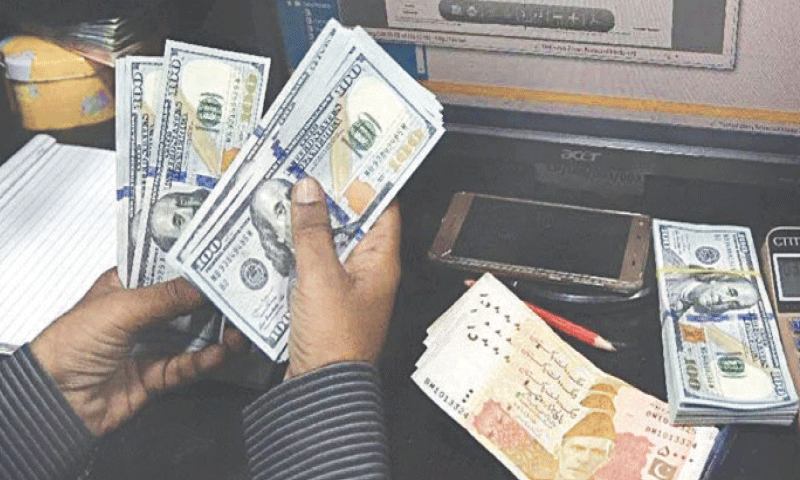

KARACHI: Currency dealers say the State Bank of Pakistan (SBP) has slowed down its dollar purchases from the interbank market in an apparent effort to maintain liquidity and contain pressure on the exchange rate amid a growing trade deficit.
“The SBP is buying dollars much slower than last year, when it purchased $7.8bn to boost its foreign exchange reserves,” said a currency dealer, adding that higher import demand has led to exchange rate management becoming more active in recent weeks.
While the rupee has remained relatively stable, market experts warned that this stability may be short-lived if the current account remains in deficit for September. A deficit for the third consecutive month would mean the entire first quarter of FY26 has been in the red.
“If the first quarter ends with a current account deficit, pressure on the exchange rate could increase and impact import dynamics,” said another dealer. He noted that opening letters of credit has become easier in recent months, contributing to the widening trade gap.
Currency dealers say central bank acting cautiously amid rising import demand
Pakistan’s trade deficit in July-August FY26 rose by 29pc as imports totalled $11bn, nearly double the $5bn in exports. Import growth during the period was over 14pc, while export growth remained under 1pc.
Faisal Mamsa, CEO of Tresmark, said that while continued deficits are a concern, broader regional developments may cushion the impact. “I don’t see a major negative fallout for now. Pakistan has improved its position through a defence pact with Saudi Arabia and by enhancing its image with China,” he said. He added that Panda bonds and the expected rollover of Chinese loans could support the external account.
However, rising food imports, particularly palm oil (up 30pc), have raised concerns among analysts. The broader food group imports jumped by 37pc in July-August, with wheat and sugar imports expected to increase further in the coming months.
“This trend suggests a continued current account deficit in September, which would increase dollar demand and add pressure on the rupee,” said Atif Ahmed, a currency dealer.
He said that while regular inflows remain stable, charitable donations and aid linked to flood relief efforts have helped remittances stay near $3bn per month.
SBP reserves edge up
The SBP’s foreign exchange reserves increased by $22m during the week ending Sept 19, reaching $14.379bn. The central bank did not specify the source of the inflows.
The country’s total liquid foreign reserves stood at $19.793bn, with commercial banks holding $5.413bn.
Published in Dawn, September 26th, 2025