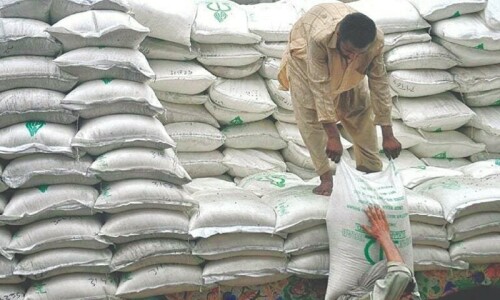
KARACHI: The Pakistan Sugar Mills Association (PSMA) has raised concerns over the Federal Board of Revenue’s (FBR) decision to halt sugar sales through the portal across the country, calling it contradictory to the continued import of sugar.
A spokesperson for PSMA, in a statement on Saturday, warned that such a policy would lead to a severe market crisis, with rising prices due to sugar shortages. The association urged the government to allow sugar mills nationwide to sell sugar freely in the market.
According to the Sensitive Price Index (SPI) data for the week ending September 18, 2025, the national average price of sugar has remained unchanged at Rs177-195 per kg this month.
However, consumers paid up to Rs200 per kg in July and August. The spokesman clarified that all sugar mills are selling sugar at Rs165 per kg ex-mill, and the country has sufficient sugar stocks until mid-November 2025. Retail prices in Punjab are between Rs175 and Rs177 per kg.
Express concern over FBR ban on sales via online portals
He added that while mills control ex-mill prices, retail prices are generally determined by market forces.
When questioned about sugar imports despite ample local stocks, the PSMA representative stated that such decisions were within the government’s jurisdiction, though the industry could only advise on the matter. The government’s plan to import 500,000 tonnes of sugar, with the Trading Corporation of Pakistan (TCP) recently issuing tenders for 100,000 tonnes, has raised concerns in the market.
Market traders have expressed surprise at the government’s shifting stance, allowing sugar exports before reversing course and permitting imports. Exports of sugar reached 765,734 tonnes ($411 million) in FY25, compared to just 33,101 tonnes ($21m) in FY24. In July-August FY26, exports were halted.
The PSMA spokesperson argued that sugar exports had no direct impact on domestic prices, as they were based on surplus stocks carried over from previous years and additional production during the 2023-24 crushing season. Despite this surplus, mills were forced to sell sugar below the production cost, leading to financial losses.
Before the export decision, official estimates had suggested a good sugarcane yield for the upcoming season. Still, climate change and global warming have since reduced both sugarcane production and its sucrose content, affecting overall sugar output.
During the previous crushing season, the price of sugarcane reached Rs700 per maund, up from Rs425 per maund in the 2023-24 season.
While this price increase benefited farmers, it significantly raised the sugar industry’s production costs.
Published in Dawn, September 21st, 2025