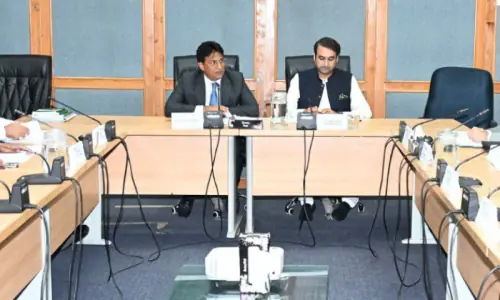
ISLAMABAD: Law Minister Azam Nazeer Tarar issued a word of caution on Wednesday, urging Supreme Court judges to raise internal grievances within private forums — such as tea rooms, the Chief Justice’s chambers, or committee rooms — instead of expressing them publicly through letters.
“In view of the sensitivities attached to the highest institution like the judiciary, it is my humble request to all honourable judges that the best forums for expressing grievances are their tea rooms, the chambers of the Chief Justice of Pakistan (CJP) Yahya Afridi, or the committee rooms,” he said.
This marked the minister’s first response to a recent series of letters written by several Supreme Court judges — a development he termed “unfortunate” and part of a troubling trend that has emerged in recent months.
Speaking informally to the media after attending a ceremony outside the Federation of Pakistan Chambers of Commerce and Industry in Islamabad, the law minister recalled that even during the New Judicial Year ceremony earlier in the week, apex legal bodies such as the Pakistan Bar Council (PBC) and the Supreme Court Bar Association had advised judges to resolve such issues privately rather than through public correspondence.
“This is not in the interest of the judiciary, as such tendencies erode the dignity and reputation of the top court,” he remarked.
He added that if the concerns raised in these letters were genuinely reflective of the internal situation, it was all the more reason to resolve them within institutional boundaries. “Bar councils have always been at the forefront when it comes to safeguarding the judiciary,” he noted, suggesting that lawyers’ bodies remain the appropriate avenue for internal accountability.
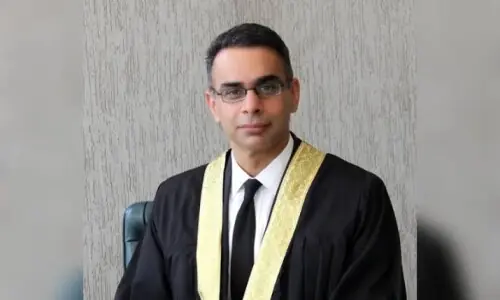
The minister’s comments come in the wake of a recent letter by senior puisne judge Justice Syed Mansoor Ali Shah, along with Justices Munib Akhtar, Ayesha A. Malik, and Athar Minallah, criticizing the convening of Monday’s full court meeting to approve the new Supreme Court Rules 2025 as a mere “cosmetic exercise.”
“The convening of the full court at this stage is not only puzzling but also fallacious,” the judges wrote, alleging that the meeting was intended to give a “veneer of legitimacy to an otherwise invalid process.” In a prior letter, Justice Shah questioned whether the CJP was fostering judicial independence or seeking compliance to turn the court into a “regimented force.”
He expressed reluctance in writing the letter but felt compelled by what he described as an “unavoidable institutional duty.” “What compels me to write is your persistent and complete indifference,” he wrote, lamenting that his repeated letters and communications on crucial matters had gone unanswered.
Published in Dawn, September 11th, 2025