Death toll climbs to 6 in Karachi warehouse blaze


Four more people were confirmed on Friday to have died in a fire that broke out in a warehouse in Karachi the previous day, bringing the total death toll to six, according to rescue officials.
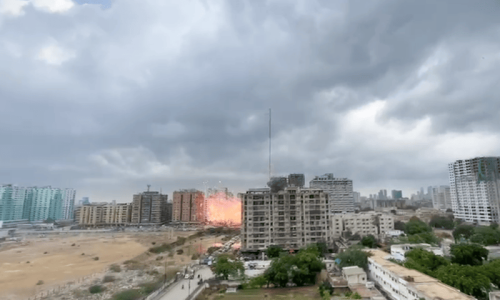
A massive explosion took place inside a warehouse in a densely populated area near Karachi’s Taj Medical Complex on MA Jinnah Road yesterday afternoon, in which 33 people were injured and two were confirmed to have lost their lives.
Rescue 1122 said today that the number of deaths from the incident had risen to six after a fourth body was retrieved. South Deputy Inspector General of Police (DIG) Syed Asad Raza said earlier today that two people had died during treatment, while three bodies were recovered from the site.
Police surgeon Dr Summaiya Syed told Dawn.com that the deaths occurred because of “multiple crush injuries and suffocation”. She said one died owing to suffocation, and two other deaths occurred from multiple crush injuries, while the autopsy of two other bodies could not be conducted.
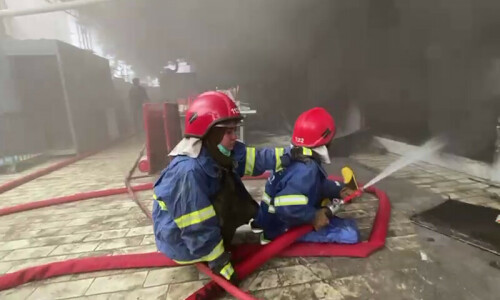
Meanwhile, Rescue-1122 spokesperson Hassaan Ul Haseeb Khan told Dawn.com that the fire was extinguished on Thursday around 5pm, but cooling operations were still underway today. He said the Bomb Disposal Squad has examined the warehouse where fireworks were stored.
DIG Raza said Preedy Police registered a case against the two brothers who owned the facility — one of whom was injured — under Sections 34 (acts done by several persons in furtherance of common intention), 285 (negligent conduct with respect to fire or combustible matter), 286 (negligent conduct with respect to explosive substance), 287 (negligent conduct with respect to machinery), 322 (punishment for manslaughter), 324 (attempted murder), 427 (mischief causing damage) and 435 (mischief by fire or explosive substance with intent to cause damage) of the Pakistan Penal Code.
As per the first information report, the suspects had stored fireworks in “excessive” quantities in a haphazard manner without any precautionary measures, and their negligence and carelessness caused loss of precious human lives and injuries and substantive damages to property.
It added that one suspect was injured in the incident, while another was present during the time of the blast and had managed to escape from the spot in his car.
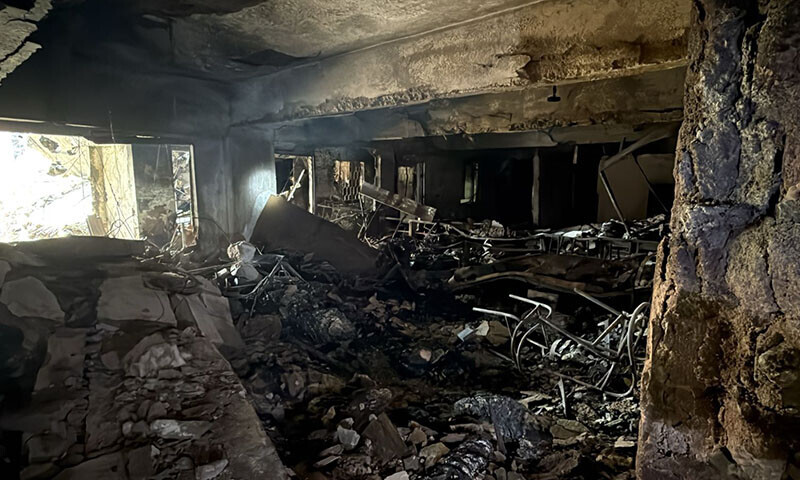
Sharing findings of experts, Raza said during inspection of the warehouse, nearly 300 cartons weighing 500 kilogrammes of fireworks material were burnt due to some “mishandling”. The building was “badly” damaged, while the blast also caused serious effects spread over 180 metres in the surrounding area.
The DIG said about 5,000kg of fireworks material was still lying in the building’s three godowns in two containers, while other material was also lying outside the building in an open place in “dangerous condition” which required urgent demolition or disposal, as per findings of the BDS team.
“We are removing and disposing of the rest of the explosives with the help of concerned agencies,” he said.

Haseeb had told Dawn.com that the facility was situated in the basement of a three-storey commercial and residential building in Saddar.
“Raw material used for the preparation of firecrackers was stored [in this facility],” Khan said. “During the initial probe, it was suspected that a short circuit triggered a fire in the store, and a huge explosion took place because of the presence of highly inflammable material.”
However, Counter-Terrorism Department (CTD) senior official Raja Umer Khattab had told reporters that the facility contained explosive material, not raw material for fireworks.
“CTD had seized two tons of explosive material in this area in the recent past,” he said, noting that the raw material in fireworks could also be used in bombs.
The rescue spokesperson added that the building’s pillars and walls were damaged, while thick concrete blocks had fallen on parked vehicles nearby. Windows in nearby buildings were also smashed.
Fires frequently erupt in buildings across Pakistan due to a mix of poor infrastructure, weak enforcement of safety regulations, and widespread negligence. Many structures lack proper fire exits, alarms, and emergency protocols, while faulty wiring and overloaded power systems increase the risk of electrical short circuits.
Earlier this month, a massive blaze at a factory in the Karachi Export Processing Zone (KEPZ) near Landhi that injured eight people and damaged at least three other factories was brought under control after hours of efforts.