0
0
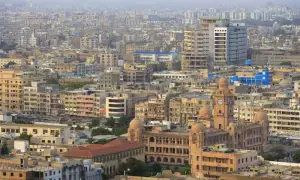
NOT all buildings constructed in Karachi before the independence of the country are sturdy — some of them really are, by the way — which is why the government needs to keep an eye on them in case they are not fit for occupation after a certain period of time. On Aug 18, 1975 it was reported that portions of three residential buildings — two of which were already declared dangerous by the Karachi Municipal Corporation (KMC) — had collapsed in the last 24 hours following the rains that had lashed the city a couple of days back. There was no loss of life as residents had already moved out of those structures. Two rooms on the second floor of a three-storey work of construction in Kharadar came down in the early hours of Aug 17. The Rain Emergency Squad of Land and Architecture Department of the KMC rushed to the spot to demolish the remaining structures. The roof of one of the rooms on the top floor of Noorani Building in Ranchore Lines had caved in a day earlier. It was inhabited by 16 people. One person lived in the damaged portion who was luckily away when the incident took place. Considering the seriousness of the issue, KMC officials had requested the families living in the remaining ‘dangerous part’ of the building to move out of it.
On Aug 20, another piece of pre-independence architecture made the headlines but for a good reason. The Sindh Minister for Health, Population Planning and Works, Abdul Waheed Katpar, said that soon a survey team would be formed to prepare a feasibility report regarding the funds required for renovation and repairs of the Sindh Madressatul Islam (SMI). He was speaking at the 80th death anniversary of eminent educationist Khan Bahadur Hassanally Effendi (who founded the institution) organised under the auspices of the Sindh Muslim Jamaat at the madressah. He remarked that the SMI was a historical educational institution of the province which produced men of letters of high calibre such as the Father of the Nation, Quaid-i-Azam Mohammad Ali Jinnah, Dr Umer bin Mohammad Daudpota and A K Brohi. Paying tribute to Mr Effendi, the minister commented, “Effendi was a true reformist who spent his life for Muslims’ awakening. He was second Sir Syed.”
Education has a lot to do with the written word. Sometimes, words can make the authorities concern think about whether to let them get printed or not. On Aug 22, Dawn brought to light that a four-member commission investigating into proscribed Urdu and Sindhi magazines had recommended to the Sindh government banning of a Karachi-based Urdu weekly Film Aur Fashion. The commission headed by Kazi Mohammad Akbar also recommended cancellation of the magazine’s declaration and sealing of its press with immediate effect. Later, Mr Akbar told newsmen that cases of three other publications had been referred to the commission as well to probe into their contents. They were: weekly Taziana published from Karachi, monthly Sada-i-Baloch (Karachi) and daily Yadgar which came out from Sukkur.
Published in Dawn, August 18th, 2025