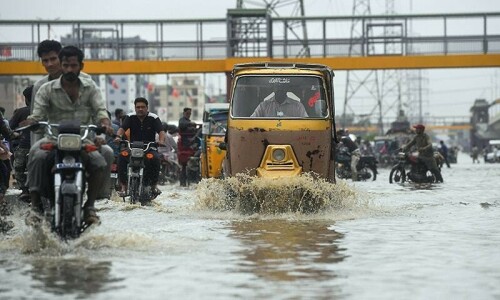
WEEKS of monsoon rains since late June have culminated in catastrophe.
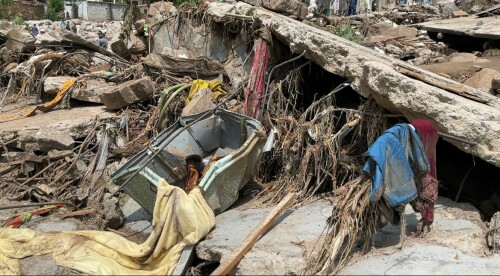
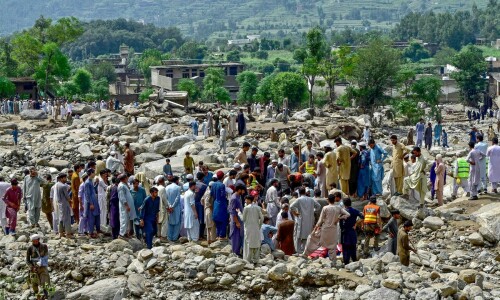
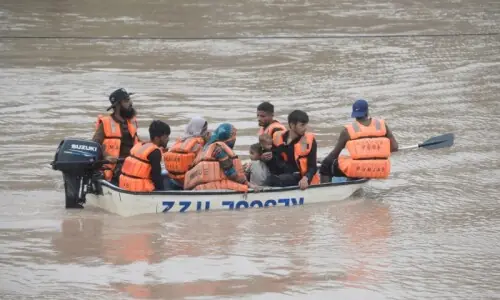
In just two days, torrential downpours and cloudbursts unleashed flash floods across KP, killing more than 300 people. Entire villages have been erased from the map. A provincial rescue helicopter crashed in Mohmand during operations, claiming the lives of five crew members.
In Azad Kashmir, mudslides buried whole families, while in Gilgit-Baltistan glacier-fed torrents destroyed homes, bridges and farmland. Nationwide, the National Disaster Management Authority has reported at least 645 deaths and 905 injured since the start of the season, with KP bearing the brunt. With fresh rains forecast, the full scale of devastation is yet to be counted.
This is not some freak weather event. Pakistan is enduring the second massive flooding crisis in just three years. The 2022 floods, caused by record monsoon rains, submerged one-third of the country, killed 1,700 people and displaced 33m.
Those floods were described as a “climate catastrophe”, drawing global attention to Pakistan’s vulnerability. Today, the scenes from Buner and Ghizer echo that same nightmare — except the destruction is concentrated in the north, where steep terrain turns cloudbursts into deadly torrents. Could this scale of loss have been prevented? Scientists have long warned that climate change is making Pakistan’s monsoons more erratic, cloudbursts more violent, and glacier melt more destructive.
While no state can stop the rain, much of the tragedy stems from human failure. The Met Department’s Aug 12 advisory did warn of heavy rain in KP, AJK and GB but it was scant on details for preparedness. Then there is the lack of land-use planning and weak enforcement of building restrictions in flood-prone areas. And our disaster response mechanisms leave much to be desired.
With more rain on the way, immediate measures are essential. Relief corridors must be cleared, with the army’s engineering units building temporary bridges and restoring communication lines. Schools and mosques should be converted into evacuation centres, stocked with dry food and medicines. Wireless radios should be distributed where towers are down.
In the longer term, adaptation must be treated as a survival priority, not an afterthought. The state must invest in a national observatory app, providing instant alerts and safety tips. With mobile penetration above 80pc, even simple voice-based or pictorial warnings could save lives. Alongside this, the Met Department must be upgraded with real-time monitoring capacity.
Local governments need to build resilient housing, enforce safe construction zones, and strengthen embankments. Disaster insurance and relocation options for high-risk settlements are also overdue. The floods of 2010, 2022 and now 2025 mark an unbroken chain of escalating disasters. If Pakistan is to break this cycle, adaptation must move from rhetoric to reality. Lives depend on it.
Published in Dawn, August 17th, 2025