India’s Modi unwilling to compromise on agriculture as US tariff war escalates



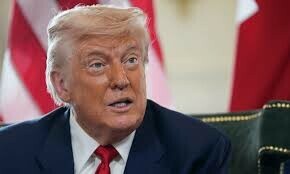
Prime Minister Narendra Modi said Thursday he would not compromise on the agriculture sector, a day after United States President Donald Trump announced 50 per cent tariffs on Indian goods.
Washington announced the hike in levies on Wednesday, citing New Delhi’s purchasing of Russian oil, a key revenue source for Moscow’s war in Ukraine.
For New Delhi, one of the main sticking points in trade negotiations has been Washington’s demand to access India’s vast agricultural and dairy market.
India has remained steadfast about its labour-intensive agricultural sector, unwilling to risk angering farmers, a powerful voting bloc.
“We will not compromise with the interests of our farmers, our dairy sector, our fishermen,” Modi said during a speech at a conference in New Delhi, his remarks widely seen as his first public response to the tariffs.
“I know I will have to pay a personal price for this, but I am ready for it,” he added, without giving further details.
India has also refused to allow the import of genetically modified products.
Additionally, New Delhi fears that allowing the import of dairy products may upset the cultural and religious sensitivities of India’s majority Hindus, who revere cows as sacred.
It seems a far cry from India’s early hopes for special tariff treatment.
In February, Trump said that he found a “special bond” with Modi when he visited Washington — complimenting Modi as being a “much tougher negotiator” than he was.
Successive US administrations have seen India — the world’s most populous nation and fifth-largest economy — as a key partner, with like-minded interests in the face of powerful China.
India and neighbouring China have long been intense rivals competing for strategic influence across South Asia.
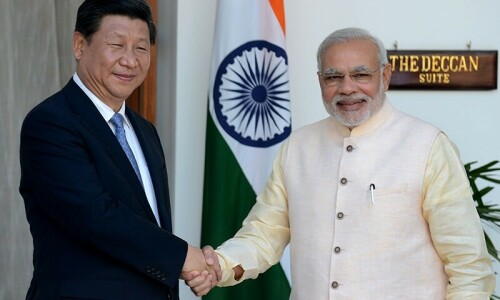
Modi, meanwhile, according to Indian media but not confirmed by officials, may visit China in late August, which would be his first visit since 2018.
Modi and China’s President Xi Jinping last met in Russia in October 2024.
Indian exporters warned that additional US tariffs risked making businesses “not viable”.
Stocks opened marginally lower on Thursday, with the benchmark Nifty index down 0.31 per cent after an initial 25pc US tariff came into effect.
India is the second-largest buyer of Russian oil, saving itself billions of dollars on discounted crude.
India’s foreign ministry condemned Trump’s announcement of further tariffs, calling the move “unfair, unjustified and unreasonable”.
S.C. Ralhan, president of the Federation of Indian Export Organisations (FIEO), said he feared a troubling impact.
“This move is a severe setback for Indian exports, with nearly 55pc of our shipments to the US market directly affected,” he said in a statement.
“The 50pc reciprocal tariff effectively imposes a cost burden, placing our exporters at a 30–35pc competitive disadvantage compared to peers from countries with lesser reciprocal tariff.”
Ralhan said “many export orders have already been put on hold” as buyers reassess sourcing decisions.
For “a large number” of small to medium-sized enterprises, profit “margins are already thin”, he said.
“Absorbing this sudden cost escalation is simply not viable,” he added.
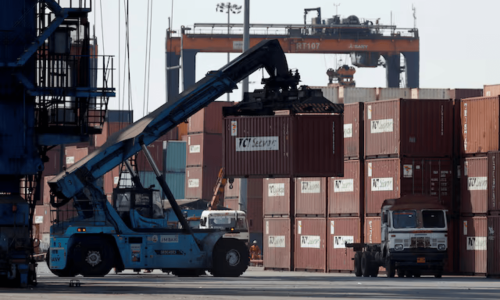
India is bracing for a bumpy ride, as the US is its largest trading partner, with New Delhi shipping goods worth $87.4 billion in 2024.
“If the extra 25pc tariff that President Trump has announced on imports from India remains in place, India’s attractiveness as an emerging manufacturing hub will be hugely undermined,” Shilan Shah of Capital Economics said in a note.
US spending drives around 2.5pc of India’s GDP, Shah said.
But a 50pc tariff is “large enough to have a material impact”, he added, with the resulting drop in exports meaning the economy would grow by closer to 6pc this year and next, down from the 7pc they currently forecast.