0
0


ALL over the world, heritage is usually considered to be a building. In Karachi, it is normally a 19th- or early 20th-century structure. Its age is determined by the mortar that is used in its structure. If it is lime mortar, then it is late 19th-century and if it is cement mortar then its post 1910. It is almost always a stone building and that too Gizri stone. If it is an important building, then parts of it maybe embellished with pink Rajasthani stone and perhaps some of its cornices and other details may be of Rajasthani stone as well.
The Gizri stone was used for most of the construction that was undertaken in Karachi for over 200 years. It was extracted from the Gizri and Jheel Park quarries. The Gizri quarries are located near Khadda Market in Defence. The Gizri quarriers lived in the Gizri village. They still do but quarry no more. The Jheel Park quarriers lived on Hill Park but were shifted by the government towards Baloch Colony and they too quarry no more. Quarrying and dressing stone has become a very expensive process and so stone is no longer used for construction in Karachi. Instead, concrete blocks have replaced it and this is plastered over with cement plaster. The change from stone to concrete blocks and plastering has also changed the nature and design of architecture in Karachi.
However, apart from the physical aspects related to building material there are also working skills that changed because of the change in materials. The old craftsmen skilled in the use of stone slowly vanished as builders. They worked together as community organisations belonging to one large biradri originating from Rajasthan in India. Another group was of Baloch origin and also worked together as a biradri. Perhaps the finest product of both these communities was the graveyards that they made for their ancestors. These can be seen at Mewa Shah and still need to be identified as heritage. You might perhaps add the Jewish graveyard to this list although in architectural terms it is not so outstanding.
These buildings, or groups of them, need to be seen in the larger context of the physical environment to which they belong. This is an aspect that Yasmin Cheema has emphasised for a long time and written about in a book The Historical Quarters of Karachi. She refers to this manner of looking at heritage as area conservation. Taking this thinking further, there is a whole world which is related to buildings and their neighbourhoods and the activities that have taken place within them.
Buildings must be seen in the larger context of their physical environment.
In 1997, I took a family from India to their original home in Ramswami area. The two men in the group sat down in the courtyard and spoke politics. But the women in the group spoke about life in Delhi, the food they ate, their relations with their husbands and the education of their children. They opened up a new world of heritage for me to look at.
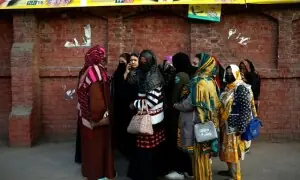
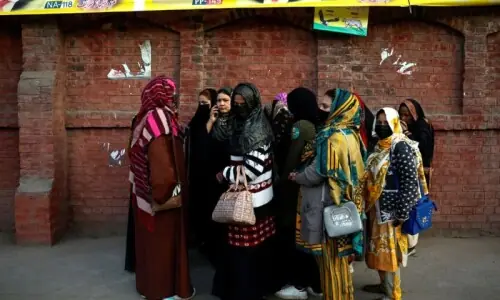
As a member of the UN’s advisory group on forced evictions, I noticed the same thing: women discussing their world of relationships and the problems of displacement and the sorrows that displacement brought with it, and men discussing the politics of displacement rather than its problems. Indian women visiting Karachi talk about whether or not rituals are being performed at ruined Hindu temples while the men talk about the need to restore them. In a relocation scheme in Istanbul, the women were concerned about a play area for their children and the men for the strength of the building they had been moved into.
For many years, I watched cricket matches during Ramazan at night in the old city of Karachi. Young boys played cricket and older women made jalebis and paani ki botal. I often wondered about their relationship and how it created the nature of the space it took place in and what happened when Ramazan was over. One of the young girls who played cricket with her siblings wanted to become Sana Mir, and with a change in social values she probably will.
Looking at this world, my view on heritage conservation has changed completely. The building is not important; the activities that have taken place in it and the people related to those activities and those who have lived with them are what determine how heritage should be conserved.
In the process of looking at buildings in this manner, I have come to the conclusion that heritage is female. I proposed this many years ago at a gathering of representatives of all schools of architecture but, unfortunately, there was no bias.
The writer is an architect.
Published in Dawn, July 29th, 2025