0
0
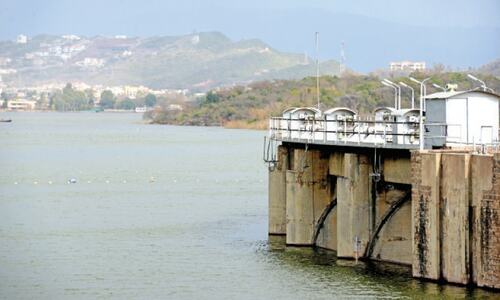
RAWALPINDI: The Punjab government has taken up the issue of untreated sewage being discharged into Rawal Dam, directing the commissioner Rawalpindi to take urgent action against municipal negligence contributing to water pollution.
In a letter addressed to the commissioner on July 17, Secretary Housing, Urban Development and Public Health Engineering Department Noorul Amin Mengal expressed grave concern over the ongoing discharge of untreated domestic sewage into Rawal Dam, the main water reservoir serving Rawalpindi.
An inspection conducted by the Pakistan Environment Protection Agency (Pak-EPA) confirmed that multiple unregulated sewage outlets from Bhara Kahu and adjoining housing schemes were directly contaminating the reservoir.
Despite the presence of a sewage treatment plant (STP) established in the past, the report noted that its operational coverage had remained limited, allowing massive inflow of untreated domestic wastewater into the lake.
Commissioner directed to take urgent action against municipal negligence
“The discharge of untreated sewage into Rawal Dam is not only an environmental hazard but a serious public health threat, especially for Rawalpindi residents who rely on it for drinking water,” wrote the secretary. He instructed the commissioner to coordinate with local administrations, initiate immediate remedial action and share a compliance report within 15 days.
The letter underscores Punjab’s broader commitment to protecting water sources, aligning with Chief Minister Maryam Nawaz’s environmental priorities, which include water conservation, smog control, and urban sustainability.
Under Chief Minister Maryam Nawaz Sharif’s leadership, Punjab has emerged as a frontrunner in environmental governance. The province recently launched Pakistan’s first Environmental Protection Force, implemented a ban on single-use plastics and equipped 1,500+ construction sites with dust suppression systems in Lahore alone.
Furthermore, efforts to rehabilitate and expand sewage treatment plants in key cities, including Rawalpindi, Lahore and Faisalabad, are already in motion under a multi-billion-rupee environmental endowment.
The situation at Rawal Dam is not merely a bureaucratic failure it is a test of political will, administrative coordination and public health commitment. Unless addressed immediately, Rawal Dam risks becoming a cautionary tale of environmental neglect at the heart of the national capital.
The move comes just days after the Gilgit-Baltistan government announced a five-year construction ban near key lakes, including Attabad and Borith following reports of sewage and solid waste being dumped by hotels directly into the water bodies. Authorities in GB cited health and environmental risks and suspended NOCs for all new lakeside construction projects.
Published in Dawn, July 20th, 2025