DERA GHAZI KHAN: Tribal chief Jamal Khan Leghari has launched an initiative to reintroduce the Sulaiman Markhor (Capra falconeri jerdoni) in Dera Ghazi Khan and Rajanpur districts, calling it a step towards fulfilling the vision of his late father, former president Farooq Leghari, to promote biodiversity conservation in the region.
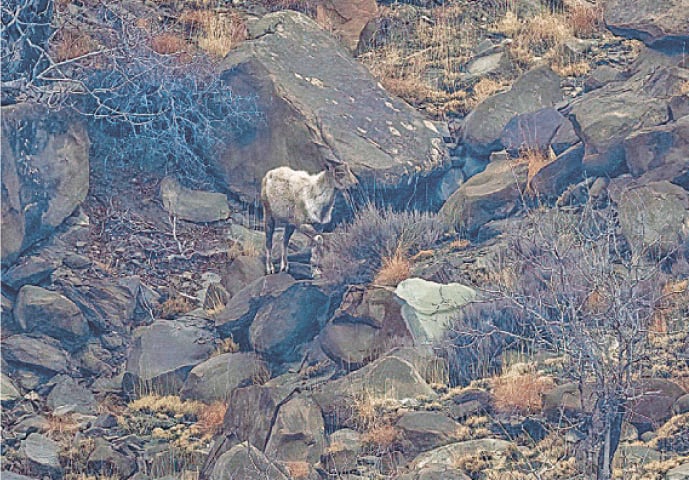
As part of the initiative, a team of wildlife enthusiasts led by Mr Leghari and Nawabzada Amir Khusro Jogezai recently documented a herd of over 30 Sulaiman Markhors in the rugged terrain of Tor Ghar, Qila Saifullah, Balochistan.
The rare footage, captured in extreme weather conditions, offers a glimpse of these elusive wild goats, a prized species of the Sulaiman Mountain Range.
According to Mr Leghari, the 12-member expedition set out early in the morning, navigating difficult slopes and loose gravel while enduring deteriorating weather conditions. Despite visibility dropping to as low as 20 metres due to thick clouds and persistent rain, the team managed to locate the Markhors deep in a valley, nearly 1,300 metres away.
“This is the moment I waited 59 years for,” said Mr Leghari.
“I want to replicate the success model of Tor Ghar, which was a joint effort decades ago by the late Sardar Naseer Tareen and Sardar Mehboob Jogezai.”
The Balochistan Wildlife Department, along with the Tor Ghar Community Committee, has played a role in the conservation of the Sulaiman Markhor through a trophy hunting programme, which has helped stabilise the population of the once-endangered species. The Sulaiman Markhor remains listed as “near threatened” due to habitat loss and illegal poaching.
The reintroduction project focuses on multiple conservation strategies, including community awareness campaigns through Seraiki and Balochi folklores, poetry, and street theatre. Other key aspects include habitat restoration, anti-poaching measures and scientific research.
Educational initiatives in schools and collaborations with tribal leaders and NGOs aim to promote awareness and long-term conservation efforts.
Additionally, habitat assessments, reforestation, and partnerships with government bodies are planned to provide ecological support. The project also seeks to develop sustainable tourism and eco-friendly economic opportunities for local communities, ensuring that conservation efforts benefit both wildlife and the people living in the region.
Published in Dawn, March 2nd, 2025