• Pakistan, Egypt and Qatar renew efforts to bring Washington, Tehran back to negotiating table
• Shehbaz wants Pezeshkian to honour Islamabad MoU
• Trump says Iran ‘asked for talks’; insists ceasefire ‘is over’
• Iranians remain defiant, vow to never surrender
• Iran steers clear as UNSC discusses its N-programme
TEHRAN / WASHINGTON: Pakistan, Egypt and Qatar — three of the states who helped broker a previous ceasefire between the US and Iran — on Friday urged both sides to resume negotiations.
The urging coincided with another surge in diplomacy, as leaders and officials engaged with Washington and Iran in an effort to cool tensions that have afflicted the global economy, and put the wider Middle East in a precarious position.
US President Donald Trump, who has blown hot and cold over the Iran issue in the past couple of days, said on his Truth Social platform on Friday that Tehran had asked the US to continue the talks.
“We have agreed to do so, but the United States has stated to them, in no uncertain terms, that the Cease Fire is OVER!” he added.
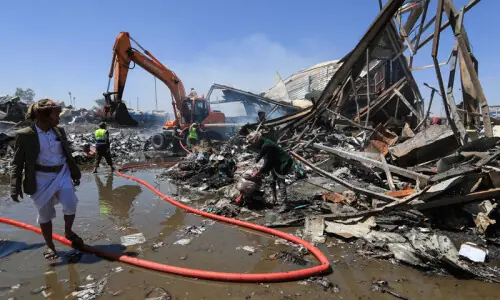
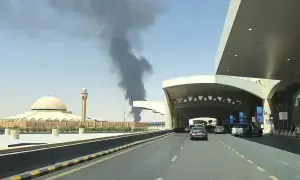
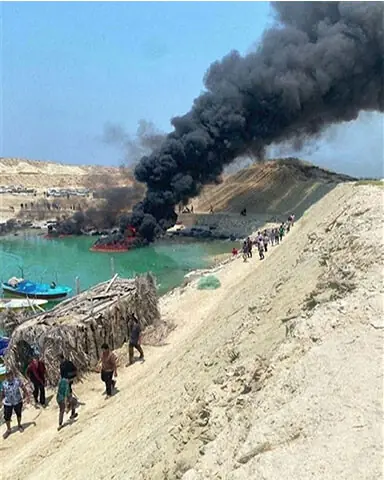
The two sides have exchanged fire on several occasions this week, with Tehran targeting commercial ships, Washington carrying out strikes in response and Iran attacking US assets in Gulf countries with drones and missiles.
In a phone call, Egypt’s Badr Abdelatty and Qatari PM Sheikh Mohammed bin Abdulrahman Al Thani “urged all parties to give priority to the language of diplomacy and dialogue and to return to the negotiating table”, Cairo’s foreign ministry said in a statement.
They also called for “implementing the Memorandum of Understanding signed between the US and Iranian sides, as a prelude to reaching a final agreement between the two sides, in a manner that contributes to de-escalation and to enhancing regional security and stability”, the statement added.
In a separate statement, Qatar’s foreign ministry said Sheikh Mohammed stressed “the need for all parties to commit to dialogue and diplomacy” and to implement what had been agreed under the US-Iran memorandum of understanding, including “ensuring freedom of navigation in the Strait of Hormuz” to preserve regional security and stability.
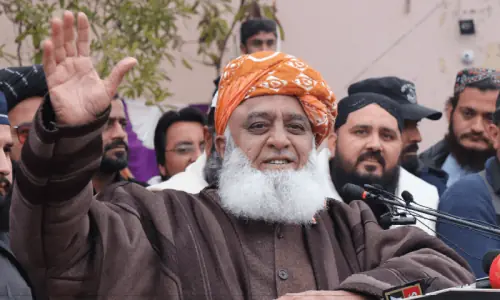
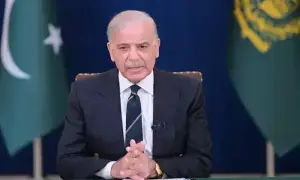
Then, in a call with Iranian President Masoud Pezeshkian, Pakistan’s Prime Minister Shehbaz Sharif called on Iran and all other parties to “exercise restraint and refrain from any action that could jeopardise the hard-earned peace gains achieved over the past few months”.
According to a readout issued by the PM’s Office, he also also stressed the importance of upholding commitments under the Islamabad Memorandum of Understanding (MoU), calling it “an enduring framework for promoting mutual understanding, respect and shared prosperity in the region and beyond”.
PM Shehbaz “expressed deep concern over the recent escalation in tensions in the region and underscored the urgent need to restore regional peace and stability,” the statement said.
He also assured Dr Pezeshkian of Islamabad’s readiness to continue playing an “honest and sincere role” in facilitating dialogue in facilitating dialogue between Washington and Tehran.
Later, speaking to Qatari emir Sheikh Tamim bin Hamad Al Thani, PM Shehbaz reiterated “the need for restraint, dialogue and diplomacy to preserve regional peace”, and thanked him for Doha’s “steadfast support for peace efforts that led to the Islamabad MoU”.
Iranian media said a delegation from Qatar had arrived in Iran on Friday for talksfollowing the latest escalation with the US.
Rhetoric war
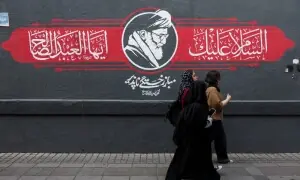
Not backing down, Tehran vowed on Friday to “respond to any attack against its infrastructure, including by striking Israel”.
“Any attack on infrastructure will be retaliated against, and the criminal Zionist regime responsible for these atrocities will not be safe from the response of our fighters,” Mohammad Bagher Zolghadr said in a statement carried by state TV.
Seaprately, Iran’s lead negotiator and Parliament Speaker Mohammad Bagher Ghalibaf said the conflict with the US will never end with Tehran’s surrender, adding that Iran is ready to defend itself if Americans walk back from the memorandum of understanding, Al Jazeera reported.
“At any moment the Americans betray the understanding, we are ready for full-scale defence and will stand firm against them and defend the rights of the Iranian people,” he says.
“Ending the war is a priority for the countries of the world, but everyone should know that this conflict will never end with Iran’s surrender.”
He also said that Muslim nations must “stand up” and unite against the US and Israel.
UNSC meeting
Meanwhile, at a UN Security Council meeting convened to discuss the ongoing conflict in the Mideast, Pakistan called for renewed diplomacy to resolve the Iran nuclear dispute, warning that any interruption in the ongoing diplomatic process could complicate efforts to reach a mutually acceptable settlement.
“Pakistan urges all sides to uphold their respective commitments under the Islamabad MoU which remains an enduring foundation for understanding, mutual respect and shared prosperity for the region and beyond,” said Pakistan’s UN Ambassador, Asim Iftikhar Ahmad.
At the outset of the meeting, the Russian and Chinese delegates objected to the holding of the session, arguing that Security Council Resolution 2231 – which endorsed the Joint Comprehensive Plan of Action (JCPOA) on Iran’s nuclear programme and was used to convene the meeting – was no longer in force.
She said that some UNSC members continued to flout the rules by requesting meetings on agenda items “that simply do not exist” for narrow political reasons, and requested a procedural vote on whether the meeting should be held.
Since procedural matters are not subject to veto, the meeting proceeded after a procedural vote was passed with 11 members voting in favor, while Pakistan and Somalia abstained.
Iran did not make a statement as they no longer recognise the resolution that was used to call the meeting.
UN Under-Secretary-General for Political and Peacebuilding Affairs Rosemary DiCarlo warned that the international community had suffered a “lost continuity of knowledge” about Iran’s nuclear programme following recent US and Israeli strikes, raising concerns over transparency and the ability to monitor Tehran’s activities.
US Ambassador Tammy Bruce also stressed the importance of sustaining diplomatic engagement, telling the council that “the door to diplomacy remains open and is our preferred path to resolve concerns related to Iran’s nuclear programme.”
Bahrain’s Ambassador Jamal Fares Alrowaiei said the region had experienced “one of the most dangerous waves of escalation in its modern history” due to Iran’s actions.
He said Tehran had failed to uphold commitments under Security Council resolution 2231 (2015) and the Islamabad Memorandum of Understanding, adding:
“For Iran, diplomacy is not a path for resolving disputes but rather a means of managing crises and gaining time.”
Published in Dawn, July 11th, 2026