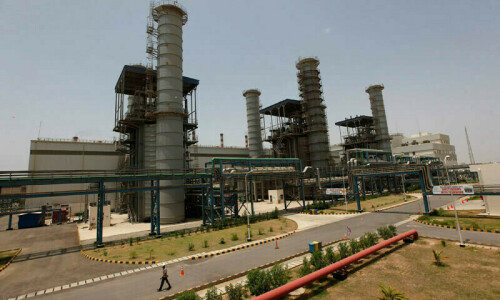
KARACHI: The Pakistan Business Council (PBC) has warned the government that the $60bn export target by 2027 is unlikely to be achieved after a massive hike in gas tariffs for the captive power plants (CPPs).
The government notified an increase in the price of gas for CPPs followed by the imposition of additional levies through a presidential ordinance issued on Sunday, which will take the cost of gas to Rs4,200 per mmBtu or $15 from Rs2,400 mmBtu or $8.8.
At $15 per mmBtu, the cost will be more than double the amount charged for gas to CPPs in Bangladesh. Once all the levies are implemented, the cost could even exceed the then-prevailing global cost of RLNG.
In a letter to the prime minister, PBC chief Executive Ehsan Malik said the competitiveness of manufacturing for the domestic market, which reduces reliance on imports, will also suffer due to the higher cost of gas.
The increase in gas prices comes as the US imposes tariffs on imports from China. With the higher cost of gas, he said Pakistan is unlikely to benefit from the diversion of orders from China.
The electricity tariffs for industry in Pakistan are already amongst the highest. At 17 cents/kWh, the industrial tariff in Pakistan is significantly higher than the 6 to 8 cents/Kwh in India and Vietnam and 9 to 10 cents/kWh in Bangladesh and elsewhere.
More than 50pc of Pakistan’s exports is produced in plants that rely on gas-fuelled captive power. He said that manufacturing provides jobs and generates exports is now Pakistan’s least attractive sector for investment and growth.
Making gas more expensive may also not achieve the objective of shifting industries to the grid. Some will not be able to gain access to the grid in the short time envisaged in the ordinance. Others will need to spend hefty amounts to obtain access on top of their earlier investment in modern captive power units when reliable power was unavailable from the grid.
Ehsan said it is unclear whether a return on the earlier investment will be considered when determining the levies envisaged in the ordinance. Most industries can be expected to increase their reliance on alternative energy, resulting in further outflow of precious foreign exchange on solar and other equipment.
Published in Dawn, February 5th, 2025