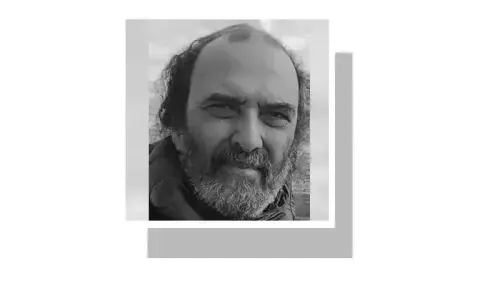
WASHINGTON: The nexus between power and plots in Pakistan has seriously affected the economy, says Princeton economist Atif Mian, while urging the government to shift its focus from non-reproducible to reproducible factors.
In a Thursday commentary on the current economic situation in Pakistan, the Pakistani-American economist warned that the power-plot nexus has led to a high-consumption, low-productivity economy.
Pakistan generates one of the lowest shares of revenue from land and property, which Mian describes as “inefficient.” He suggests increasing property tax to address this issue.
Commenting on the proposed increase, Pakistani investor Maaiz Khan argues that raising property tax could be “an unpopular position because it would disproportionately affect the elite.”
Another commentator, identifying himself as a data linguist from Harvard, says that Mian has pinpointed the core structural problems of Pakistan’s economy. “Pakistan is a simmering cauldron that could explode at any time if not managed through economic and political restructuring,” he warns.
Mian also mentions General Faiz Hameed’s arrest on charges of intimidating a land developer to extort valuable land, noting that “land is one of the favourite assets through which the powerful extract rents from the economy.”
He argues that even if the means to acquire land by the powerful are legal, it does not necessarily make them desirable or fair. “In fact, the entrenched nexus between power and plots in Pakistan is seriously damaging the economy,” he warns.
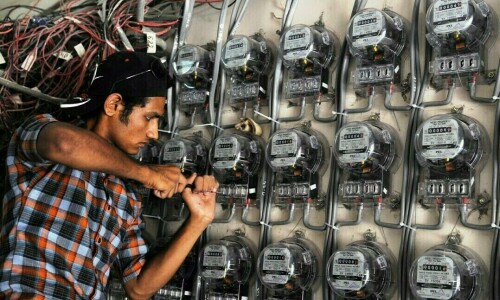
In another X message, Mian claims that Pakistan’s entire power sector has become a “zombie sector” that is “sucking the blood out of the rest of the economy”.
He points out that Pakistan is selling electricity at one of the highest prices in the world —about 21 cents per kWh (including taxes) — while the sector operates at a loss overall.
The actual market price of electricity should not exceed 8-9 cents per kWh, but “the government is charging an exorbitant price to keep the zombie alive,” he adds.
Mian suggests three practical ways to raise revenue through land value: auctioning public land in a competitive bidding process with proceeds going to public funds; pricing the increase in market value from up-zoning and directing the proceeds to fund public expenditure; and taxing a fraction of the market value of the land on an annual basis.
Mian cites China as “the most noteworthy example” of generating revenue from land, contrasting it with Pakistan, where the powerful have focused on pocketing land value through various schemes. Unlike China, almost none of the land value in Pakistan goes to the public exchequer, he adds.
According to Mian, Pakistan generates one of the lowest revenues from property — both as a share of GDP and as a share of total tax revenue.
“Rather than using land to raise much-needed public funds, an elaborate alliance of the powerful has developed over time to convert public land value into private property,” he points out.
“This is also likely why land value is protected from taxation. For example, despite extreme pressure due to the fiscal deficit, the recent budget protected property sales by army personnel and bureaucrats from taxation.”
Published in Dawn, August 30th, 2024