ISLAMABAD: The Ministry of Energy has instructed the Oil and Gas Regulatory Authority (Ogra) to finalise the framework for transferring the responsibility of determining petroleum prices to the oil industry.
In a letter issued on Wednesday, the ministry directed the Ogra chairman to convene a meeting today (Thursday) to discuss the analysis, implications, and way forward for deregulating petroleum products.
The letter referenced Prime Minister Shehbaz Sharif’s directive to delegate pricing responsibilities to oil marketing companies, but notably, the two main stakeholders — OMCs and dealers — have not been invited to the meeting.
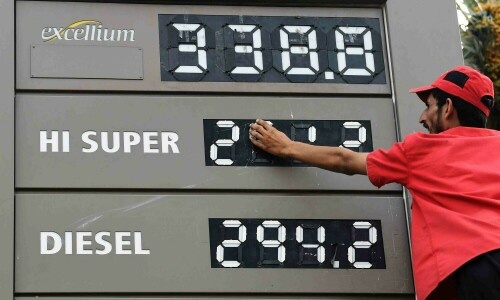
Currently, four of the eight petroleum fuels consumed in the country — jet fuels for air force and airliners, hi-octane, and furnace oil — are deregulated, while regulated products include petrol, high-speed diesel, light diesel oil, and kerosene.
Directs Ogra chief to convene meeting today; two key stakeholders not invited
The Oil Companies Advisory Committee (OCAC) has long advocated for the phased deregulation of the petroleum fuel sector, starting with LDO and kerosene. In August 2022, the government announced that the oil industry would be given a free hand to set petroleum product prices, with the deregulation mechanism to be implemented from Nov 1 of that year.
While oil marketing companies support deregulating the remaining fuels, dealers, including petrol pump owners, vehemently oppose the move, arguing that deregulation would place their commissions under OMC control.
Presently, OMCs earn a margin of Rs7.87 per litre for both petrol and diesel, while dealers earn around Rs8.70 per litre.
Amid pressure from both OMCs and dealers to increase their margins following the recent federal budget, the energy ministry has not included representatives from either stakeholder group in today’s meeting, which will be chaired by Energy Minister Musadik Malik.
Abid Ibrahim, an industry expert and former senior executive of an international OMC, told Dawn that the government has repeatedly shown confusion over the subject in the recent past.
“Deregulation means there is no set formula or percentage for setting margins for both OMCs and dealers. The IFEM or freight margins must be independent for each company, and each company should be free to pass on its import price,” Mr Ibrahim said.
He added that one consequence of deregulation could be varying petrol and diesel prices across different parts of the country and between stations of different companies. “But the positive side is that many companies would invest in quality and service, attracting customers willing to pay more for better fuel,” he noted.
Meanwhile, some OMC officials said the sudden move by the petroleum division to call the meeting on deregulation was an attempt to counter the companies’ demands to raise their margins.
Published in Dawn, July 25th, 2024