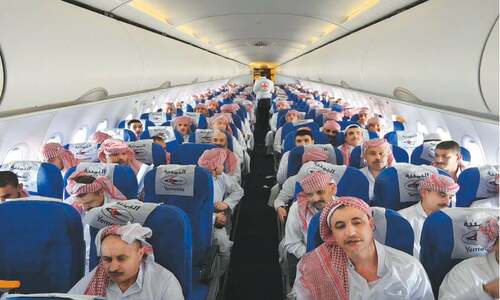
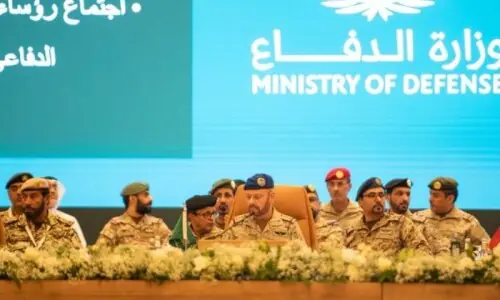
RIYADH: Saudi Arabia and the Iran-backed Houthi rebels put a positive spin on historic but inconclusive talks in Riyadh on Wednesday as diplomatic efforts increased to end Yemen’s bitter war.
The five days of talks were “positive”, Saudi officials and a senior Houthi said, after the rebel delegation ended the first public visit to the Saudi capital since hostilities broke out between the two sides.
Underlining the change in atmosphere, the delegation included Hosain Homood Ala’zi, who in 2017 appeared on a Saudi list of wanted Houthis with a $5 million reward for information leading to his arrest.
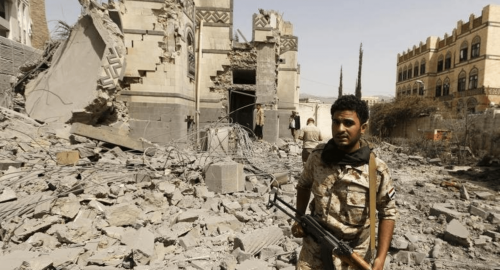
Riyadh mobilised an international military coalition against the Houthis in March 2015, months after the northern fighters with links to Tehran had seized the capital and threatened to overrun the country bordering southern Saudi Arabia.
Hundreds of thousands have died in the fighting or from its impacts, including famine, and millions have been displaced in what the United Nations calls one of the world’s worst humanitarian crises.
As the Houthis left, the top diplomats of the United States, Saudi Arabia and the United Arab Emirates — a key coalition member, and influential in Yemen’s government-held south — met on the sidelines of the UN General Assembly in New York.
US Secretary of State Antony Blinken, in his meeting with Saudi Foreign Minister Prince Faisal bin Farhan and the UAE’s Sheikh Abdullah bin Zayed, welcomed the Riyadh talks “aimed at achieving a roadmap to end the conflict through a Yemeni-led political process under UN auspices”.
“The secretary and the foreign ministers agreed that cooperation among the three governments and Yemen’s Presidential Leadership Council is essential to advancing UN-led peace efforts,” State Department spokesperson Matthew Miller said.
Ray of light
Separately, Sheikh Abdullah met the chairman of the Yemen government’s Presidential Leadership Council, Rashad al-Alimi, discussing “international efforts made to reach a political solution to the Yemeni crisis”, the UAE’s official WAM news agency said.
The Saudi-Houthi talks were the latest ray of light for Yemen, which has endured decades of instability and where three-quarters of the population is dependent on aid.
Optimism has increased since Saudi Arabia and Iran ended a seven-year rupture in ties in March, with nearly 900 prisoners released in an exchange deal soon afterwards and a Saudi delegation holding talks in Sanaa in April.
Meanwhile, a UN-brokered ceasefire is largely holding, despite officially expiring last October.
Houthi spokesman Mohammed Abdel Salam, who led the delegation, indicated both sides were looking for solutions to problems that were raised in the Yemeni capital in April.
“We discussed some options and alternatives to overcome the issues of disagreement that the previous round touched upon,” he said on X, formerly Twitter.
Saudi Defence Minister Prince Khalid bin Salman, younger brother of de facto ruler Crown Prince Mohammed bin Salman, said he “reaffirmed our commitment… to reach a comprehensive political solution under UN supervision” in talks with the Houthis.
“We look forward to the success of these critical discussions,” Prince Khalid wrote on X.
The process appears to have snagged on Houthi demands which include payment of their civil servants’ salaries by the displaced Yemeni government, and the launch of new destinations from Sanaa airport.
Ali al-Qhoom, a member of the Houthis’ political council, said “There will be a new round of negotiations”, but he also made no mention of any concrete achievements out of Riyadh.
Published in Dawn, September 21st, 2023