US space force plans to track North Korea projectiles


 0
0


SEOUL: The US and South Korean militaries want to more closely integrate their systems for tracking North Korean missile launches, an effort that may soon see more cooperation with Japan as well, US Space Force officials said on Wednesday.
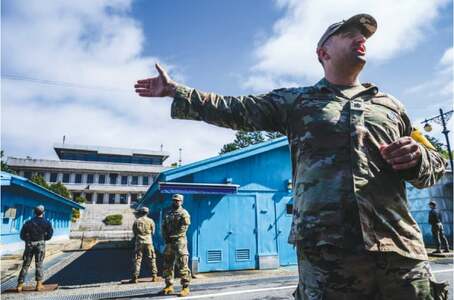
Led by a small contingent of US Space Force personnel — the branch’s first official component set up overseas — the allies see closer space integration as key to better tracking North Korean threats and responding to a conflict.
US President Joe Biden agreed with South Korean President Yoon Suk Yeol and Japanese Prime Minister Fumio Kishida at an Aug 18 summit that by the end of this year the three countries would share North Korea missile warning data in real time.
The exact details of that trilateral cooperation are being worked out at higher levels, Space Force officials told reporters at a briefing at Osan Air Base, south of Seoul.
Pyongyang conducts missile launch into sea
“My understanding is there are future bilateral agreements and possibly trilateral agreements that are in the works, especially on the missile warning piece... with sharing that data,” said Major Matt Taylor, deputy commander of US Space Forces — Korea.
There are gatherings planned for personnel to collaborate and share processes and procedures, he said. “None of those details and have been refined or decided at this point but those discussions are being had,” Taylor added.
So far the Space Force component in South Korea, which began operating in December, has focused on closer integration with the South Koreans and ensuring that US troops there have more access to space-based assets, the officials said.
Missile tracking data, including information from the US Space-based Infrared System (SBIRS), which can detect missile launches, is already being automatically shared with US allies through early warning systems, said Master Sergeant Shawn Stafford.
South Korea and Japan rely mostly on land and sea-based radars to track launches, but South Korean Air Force Space Operation Squadron commander Lieutenant Colonel Kim Jong Ha said that adding space-based capabilities would provide a “3D” view of the threats.
Coincidence
North Korea fired a ballistic missile towards the East Sea, also known as the Sea of Japan on Wednesday, the South Korean military told Yonhap news agency — a launch coinciding with joint military drills by the United States and South Korea.
South Korea’s military said it was still assessing the type of missile launched by Pyongyang, Yonhap reported.
The US-South Korea annual Ulchi Freedom Shield exercises always infuriate Pyongyang, which has conducted a record number of weapons tests this year.
The combined air drills involved at least one US B-1B strategic bomber flying above the Korean Peninsula earlier in the day, according to Yonhap.
US national security spokesman John Kirby, who was giving a briefing when news of the launch broke, declined to comment to reporters in Washington.
Published in Dawn, August 31st, 2023