Oil tanker hit by 'unknown projectile' in Strait of Hormuz region, says maritime agency
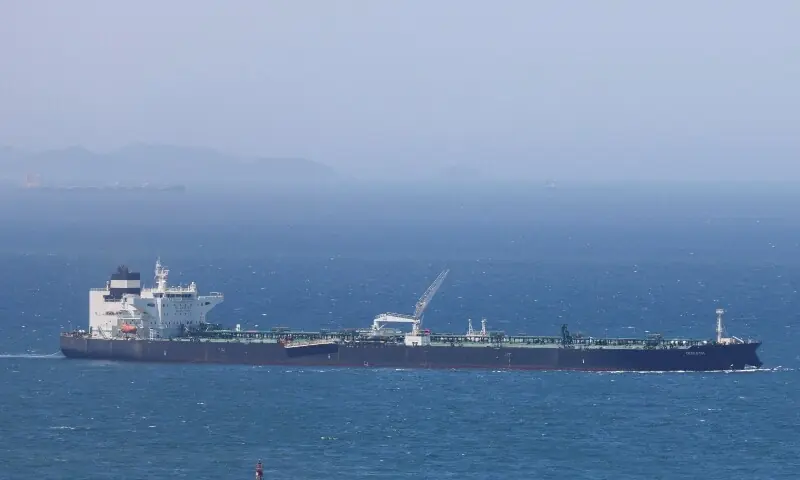

An “unknown projectile” struck and caused a fire on an oil tanker off the coast of Oman near the Strait of Hormuz on Monday, British maritime security agency United Kingdom Maritime Trade Operations (UKMTO) said.
The incident occurred near one of the world’s most important energy shipping routes, despite a ceasefire between the United States and Iran and ongoing efforts to secure a lasting peace agreement.
The maritime agency said the incident took place eight nautical miles east of Limah, Oman.
“A tanker has reported being hit by an unknown projectile on the port side causing a fire, whilst travelling southbound,” UKMTO said in a post on X. The agency said there were no reports of casualties or environmental damage.
“Vessels are advised to transit with caution and report any suspicious activity to UKMTO,” the agency added, saying authorities were investigating.
US news outlet Axios reported late on Monday that Iran had “fired at least two missiles at commercial ships”, citing two unnamed US officials. One of the officials told the outlet that a second ship was also struck, and had been damaged significantly.
AFP has not been able to independently confirm the Axios report. The Pentagon did not immediately respond to an AFP request for comment.
The Strait of Hormuz was at the centre of tensions during the Middle East war, when Iran blockaded the waterway and a number of commercial vessels came under attack, sending global energy prices sharply higher.
The United States responded with its own naval blockade and later launched retaliatory strikes against Iran after accusing Tehran of targeting commercial shipping.
Maritime traffic resumed after Washington and Tehran signed the Islamabad Memorandum of Understanding last month, aimed at ending the conflict and reopening the strategic route.
However, Iran has insisted there will be no return to pre-war arrangements, under which vessels could pass freely through the strait.
Tehran has warned ships against using routes outside a corridor it has authorised along its coastline.
The Strait of Hormuz is the main maritime gateway for energy exports from the Gulf to international markets, particularly in Asia.
Around 20 million barrels of crude oil passed through the waterway each day in 2024, accounting for roughly one-fifth of global crude, according to the US Energy Information Administration.