Pain, anger as Hawaii fire death toll climbs to 80



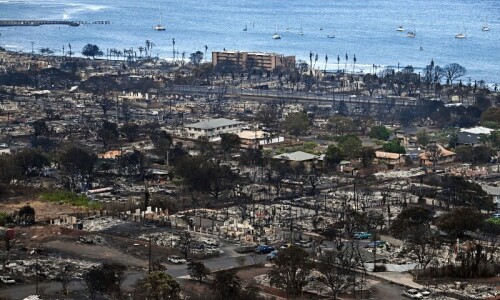
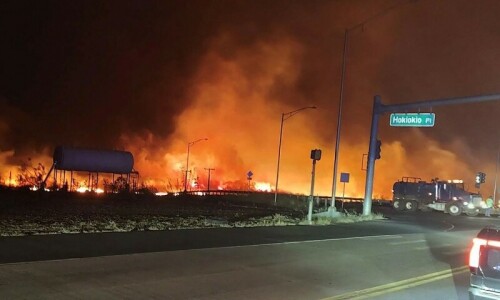
The death toll from a horrific wildfire in Hawaii climbed to 80 as residents confronted the devastation and criticisms grew Saturday over the emergency response.
Over 2,200 structures were damaged or destroyed in the fire, the Federal Emergency Management Agency said, estimating that it would cost some $5.5 billion to rebuild affected communities.
Hawaiian authorities said they were opening a probe into the handling of the fire as a congresswoman from the state’s Big Island acknowledged that officials had underestimated the dangers.
In the historic resort city of Lahaina on the island of Maui, resident Anthony Garcia said the fire had gutted the apartment he was renting and destroyed all his belongings and memories.
“It took everything, everything! It’s heartbreaking,” the 80-year-old California native, who has lived in Lahaina for three decades, told AFP.
“It’s a lot to take in.” The town of 12,000, once the proud home of the Hawaiian royal family, has been reduced to ruins, its lively hotels and restaurants turned to ashes.
A majestic banyan tree that has been the center of the community for 150 years has been scarred by the flames, but still stands upright, its branches denuded of green and its sooty trunk transformed into an awkward skeleton.

‘Underestimated the lethality’
Hawaii’s Attorney General Anne Lopez said her office would examine “critical decision-making and standing policies leading up to, during and after the wildfires on Maui and Hawaii islands this week.”
Late Friday, Maui County officials revised the death toll to 80 and Governor Josh Green warned that the number of fatalities was sure to rise further. Over 1,400 people were in emergency evacuation shelters.
“We underestimated the lethality, the quickness of fire,” Hawaii Congresswoman Jill Tokuda told CNN on Saturday morning.
Maui suffered numerous power outages during the crisis, preventing many residents from receiving emergency alerts on their cellphones – something, Tokuda said, officials should have prepared for.
“We have got to make sure that we do better,” she added.
The fires follow other extreme weather events in North America this summer, with record-breaking wildfires still burning across Canada and a major heat wave baking the US southwest.
Europe and parts of Asia have also endured soaring temperatures, with major fires and floods wreaking havoc. Scientists have said global warming caused by carbon emissions is contributing to the extreme weather.
‘It hurts’
For some of those who made it back into Lahaina, there was a momentary sense of elation when they tearfully reconnected with neighbours they feared might not have gotten out alive.
“You made it!” cried Chyna Cho, as she embraced Amber Langdon amid the ruins. “I was trying to find you.”
For some of the luckiest, there was joy — albeit tempered by the scale of the tragedy that counts among the worst natural disasters to hit the state of Hawaii.
“I just couldn’t believe it,” Keith Todd told AFP after finding his home intact.
“I’m so grateful, but at the same time it’s so devastating.” Todd, 64, discovered his house and his neighbor’s house untouched, and his solar panels providing electricity to the fridge, which was still dispensing ice on demand.
Fears of looting were also on residents’ minds, and county authorities said anyone accessing Lahaina would have to prove they lived or were staying at a hotel there, and that a curfew would be in place between 10 pm and 6 am.
Some of those who made it back to Lahaina wandered in stunned silence trying to take in the enormity of the destruction.
Anthony La Puente, 44, said the shock of finding his home burned to nothing was profound.
“It sucks not being able to find the things you grew up with, or the things you remember,” he told AFP of the house he had lived in for 16 years.
“The only thing I can say is that it hurts.”