Symposium on ‘safety and protection’ of journalists held in Karachi


 1
1


A collapsing criminal justice system, a state that is routinely accused of complicity and political and social instability means that those who murder journalists continue to get away scot-free. This culture of impunity has flourished and pervaded across tiers of society but can be combatted through unconventional solutions like a people’s tribunal.
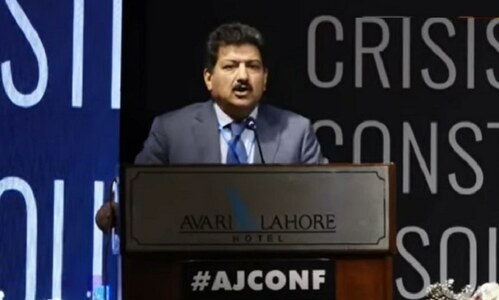
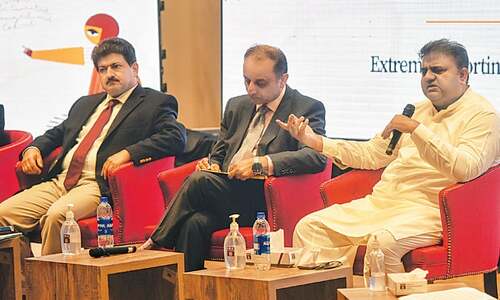
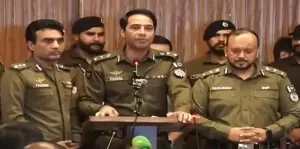
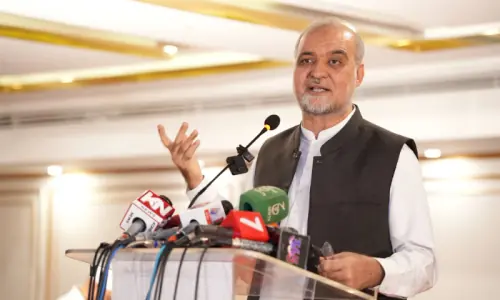
This was among the opinions expressed by journalists at a symposium on the safety and protection of journalists in Karachi on Monday.
It was organised by the Centre of Excellence in Journalism at IBA, Karachi, in collaboration with press freedom bodies Free Press Unlimited, Committee to Protect Journalists and Reporters Without Borders (RSF) as part of their global ‘A Safer World For The Truth’ project.
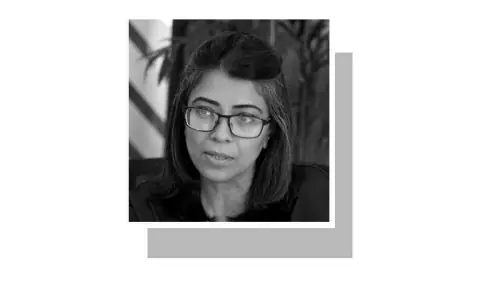
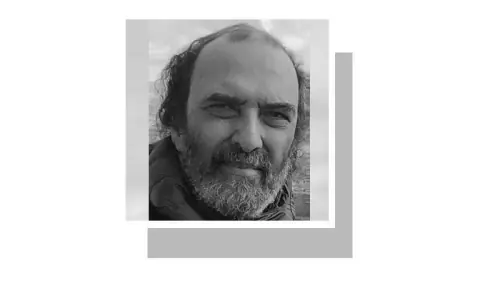
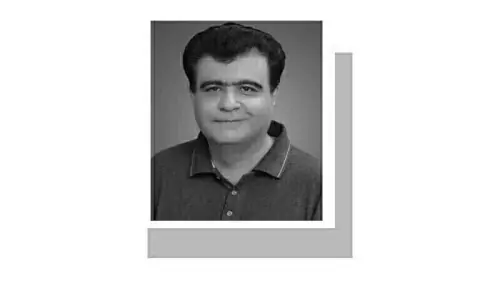
The panelists at the symposium included journalists Owais Tohid, Nazeer Laghari, and Mehmal Sarfaraz with Amber Rahim Shamsi moderating.
Journalist Hamid Mir, one of the panelists who joined the discussion virtually, cited the example of the people’s tribunal that was held at The Hauge earlier this year which investigated unsolved murder cases of journalists from around the world.
It included the case of Zubair Ahmed Mujahid, a Pakistani journalist who was murdered in Mirpurkhas in 2007.
Lawyer Faisal Siddiqi, another panelist who recently filed a plea for a fresh murder investigation on behalf of Mujahid’s family, said that the formation of judicial commissions and joint investigation teams in such matters is often an eyewash, with the perpetrators unlikely to be identified.
He cited Mujahid’s case, in which investigators had failed to identify a single suspect despite the passage of 15 years and multiple reinvestigations.
Jos Bartman — a research coordinator for ‘A Safer World for The Truth’ — who joined the discussion virtually from Amsterdam, said that the FPU-led investigation found major deficiencies in the investigation with the police not considering his journalistic work as a motive for murder.
The symposium also included a documentary on Mujahid’s murder.
Separately, the panelists paid tribute to journalist Arshad Sharif, who was brutally murdered in Kenya two months ago.
Journalist Munizae Jahangir, who also runs a digital platform, said it was important to ask questions about the murder of journalists.
She added that her platform documents those who file sedition cases against journalists and how it showed state complicity. “Everyone knows the nameless, faceless people behind the intimidation of journalists.”