0
0

 KARACHI, Nov 22: Marine scientists from Pakistan and the United Kingdom have jointly launched a three-year project to survey the abundance, diversity and habitat quality of key but “endangered” marine mammals of Pakistan.
Details of the project entitled “Cetacean Conservation Project” were unveiled during a two-session seminar at the University of Karachi, organized by the Centre of Excellence in Marine Biology (CEMB) and the British Council, Karachi.
KU Vice-Chancellor Dr Pirzada Qasim was the chief guest at the inaugural session which was held at the Khan Institute of Genetic Engineering of the varsity.
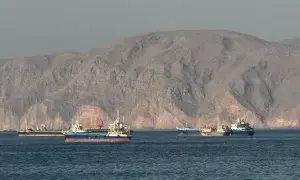
CEMB, University of Marine Biological Station Millport, UK and WWF-Pakistan, Karachi, are collaborating as implementing partners for the project on cetacean, which is the collective name for whales, dolphins and porpoises believed to be living off the coast of Pakistan, which is part of the Indian Ocean Sanctuary.
A UK-based agency, Darwin Initiative, is providing fund for the project with the support of the British Council, HEC Pakistan and Ocean Park Conservation Fund.
Under the project, development of a sustainable livelihood for fishermen has also been planned by non-destructive exploitation of the cetacean population through the WWF-Pakistan. The project will be underpinned by capacity building within Pakistan’s marine science community through training in field techniques and introducing a marine mammal module at the University of Karachi.
Referring to the launching of the project, the KU VC Dr Pirzada said that it was especially more glorifying that the UK and Pakistani scientists were launching a very prestigious and highly competitive project in the country on Cetacean conservation in the country.
The director of the British Council, Karachi, Marcus Gilbert, said that it was a good omen that the UK varsities were interacting with Pakistani institutions for research and development in the field of marine science.
Dr Mauvis Gore of Millport University said that there were 20 species of marine cetaceans off the coast of Pakistan, found alone or in groups, which were very valuable resources for the country.
She said that the project team had already begun their survey work off the coast of Sindh and produced a leaflet in English, Sindhi and Balochi to raise awareness of Pakistan’s marine cetaceans and of the project, and a printed species identification card as well.
Dr Rupert Ormond, director at the Millport marine biology university, who will also be providing expertise for the project in question, discussed how marine biodiversity maintained or influenced by the fluid nature of the marine environments.
Dr Pirzada Jamal of CEMB said that the cetacean conservation project would also help to find out whether the whale, dolphins and porpoises were relevant to local fresh water or belonged to several populations of cetaceans of Oman and some other parts and might be visiting Pakistan waters on regular basis.
Later, at the technical session of the seminar, KU Pro-Vice-Chancellor Dr Akhlaq Ahmad said that the Arabian sea had always attracted the attention of scientists for a number of reasons including up welling reversal currents and Indus deltaic mangroves, but those had never been fully explored and exploited.
Among others, Dr Shaukat Hayat Khan, director CEMB and Syed Ali Hassan of the WWF spoke on different issues pertaining to marine diversity and pelagic environment.