The dream of owning a home


 6
6

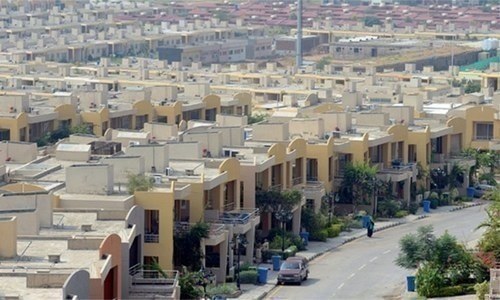
When Mera Pakistan Mera Ghar (My Pakistan, My Home) or MPMG was launched in October 2020, the government boasted that it would help millions of Pakistanis have their own homes. The ruling PTI party was confident that the low-cost housing scheme would also replenish its waning political capital.
But the scheme has taken off only recently which means the PTI’s electoral promise of providing five million low-cost housing units to Pakistanis may remain largely unfulfilled at the end of the party’s term in mid-2023. From October 2020, things started moving — but not fast enough to earn PTI the accolade its leadership was looking for. The pace of credit disbursement remained too slow in the beginning, obviously due to banks’ reluctance to participate in the scheme wholeheartedly. It began gathering some pace only after March 2021 when the government announced more relaxed features of the scheme in the light of the input from all the stakeholders.
Fresh financing under MPMG that stood below Rs600m began to grow rapidly and crossed the Rs18 billion mark on 18th October, according to the latest data released by the central bank. What has emboldened banks to offer housing finance under MPMG is that the State Bank of Pakistan (SBP) has allowed them under the relevant set of prudential regulations to treat those loans as a “loss” if they are not repaid after two years of the due date. (Corporate and commercial loans are treated as a “loss” if they remain unpaid for one year or more after the due date).
The key question is whether 100,000 new housing units will be constructed under Mera Pakistan Mera Ghar by end-December
Considering the fact that mortgage finance is long-term in nature the condition for treating it as a “loss” after two years makes sense. And, banks are seemingly happy with it.
Another thing that has encouraged banks to offer housing loans under MPMG is that the central bank has also allowed them to conduct real estate surveys (for credit appraisal purposes) on a half-yearly basis instead of a quarterly basis. This extension in the permissible time should enable banks to accelerate the processing of requests for loans under MPMG. This means the volumes of such loans would grow even faster in the coming months if other factors remain unchanged.
But the key question is will 100,000 new housing units be constructed under MPMG by end-December. The PTI government had decided to hit this mark in phase-I of the low-cost housing scheme when it reviewed the scheme and made it more workable back in March this year.
There is no official word on the total number of housing units so far completed under MPMG. But using a proxy one can have an idea of the pace of implementation of low-cost housing.
The central bank has informed the nation that as of 18th October banks had received housing finance loan applications for Rs202bn. Of that, banks had approved Rs78bn worth of applications — and actual disbursement till 18th October totalled only Rs18bn.
The huge gap between the number of loan applications and approved loans is very much understandable. Banks have to follow certain eligibility criteria before approving a loan. But the gap between approved loans (Rs78bn) and disbursed loans (Rs18) is too huge and betrays the level of seriousness of banks towards making the new housing scheme a real success. SBP Governor Dr Reza Baqir, according to an SBP press release, has “stressed the need to accelerate the pace of approvals by banks to match the requests for financing to ensure that people are not discouraged by the processing time.”
His advice is timely. But the central bank also needs to push banks for accelerating the disbursement of loans already approved as that actually will make a difference in people’s lives — and not just approval of loans.
With the start of this fiscal year in July 2020, the SBP has assigned mandatory targets to every bank for housing and construction credit. They are also required to bring their housing and construction credit to 5pc of their total domestic advances. Banks that were not much responsive to the central bank’s push initially finally went for increased lending to the housing and construction sector in July-September 2021.
During these three months, all banks met 94 per cent of their target set for such lending on a cumulative basis. And, that resulted in an addition of Rs48bn into the overall stock of loans for housing and construction. One should keep in mind that this addition includes not only loans made under MPMG but banks’ overall lending to this sector including out-of-MPMG loans offered to builders and developers of corporate, commercial and consumer housing structures.
Towards the end of August, the PTI government has also launched Roshan Apna Ghar housing finance scheme for overseas Pakistanis operating Roshan Digital Accounts. Prime Minister Imran Khan hopes that this would be a “game-changer” for the housing industry. Under this scheme banks would offer guarantees on behalf of overseas Pakistanis who have Roshan Digital Accounts for the purchase of land in Pakistan. These accounts, as we all know, are opened in banks operating in Pakistan by overseas Pakistanis while sitting abroad and they feed these accounts with foreign exchange. Banks would have no issue in offering guarantees to such account holders who have already put in over $2bn in them. Liquidating the guarantees — if and when the need arises — won’t be a problem for banks.
But this facility must be monitored carefully. Large pieces of land purchased with bank guarantees by ultra-rich (or politically connected) groups of overseas Pakistanis may be used for developing housing societies.
That may push up prices of land where demand for housing units is huge. This, in turn, would compel even those builders participating in MPMG to reprice their housing units, thus frustrating the very purpose of low-cost housing.
Published in Dawn, The Business and Finance Weekly, November 8th, 2021