Over 100 Pakistani women doctors offering telemedicine to people of Palestine



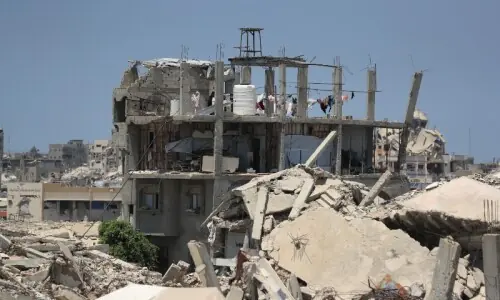
KARACHI: As the nation expresses anger through demonstrations against Israel and shares solidarity with the people of Palestine, more than a hundred Pakistani women doctors in over a dozen countries joined hands with their counterparts through a technology-driven initiative providing medical support and care to thousands of people under trauma in Gaza and other bombarded cities, officials and people attached with the project said on Saturday.
They said that the female doctors were brought back to the provincial health system through a technology-driven initiative by one of the oldest public sector medical universities in the country, Dow University of Health Sciences (DUHS), which has so far succeeded in bringing back to the profession hundreds of Pakistani lady doctors, who have resumed professional practice within the last two years after they had quit the profession due to family or social issues.
“Some two years ago a project named ‘eDoctor’ was initiated for around 35,000 female doctors who had completed their medical education at the expense of the state or privately but are no longer associated with the profession so that they could once again become part of the country’s medical workforce,” said an official.
“The project has successfully brought back hundreds of doctors into the health system. The concept was designed to use the innovative technological tools in reconnecting these out-of-work lady doctors on a single platform, provide them virtual-based teaching of new and updated medial education in the form of a reach programme covering all aspects required to be a general physician. Right now, the eDcotor project has hundreds of doctors working from home in Pakistan and different parts of the world offering their services to contribute in the health system,” the official said.
He said success of the project inspired the Sindh administration, which found it a best possible choice to engage these doctors for monitoring of thousands of Covid-19 patients who were not in touch with any physicians and require regular consultancy despite mild or no symptoms for better recovery, precautions and diet plan during the days of their isolation at home.
Telehealth services to Palestine
Moving forward under the fresh initiative, he said, the project had recently extended its telehealth services in Palestine mainly catering to the women and children in war-hit zones.
The officials said that after the Israeli aggression began, they contacted the humanitarian and aid organisations in the areas under attack and succeeded to build a platform for telemedicine to clinics in almost all major cities of Palestine.
“We are offering services in Gaza, Ramallah and West Bank,” said Abdullah Butt, the founder of Educast, the technology partner of the eDoctor project.
“We have more than 150 doctors for this particular cause based in different cities of Pakistan and around the world including Saudi Arabia, UAE, Oman, the United States, the United Kingdom, Ireland, Australia, New Zealand, etc. We took the initiative solely on humanitarian grounds just to contribute our part in the challenging time for Palestinians,” he said.
Language barrier
He referred to a challenge emerged soon after the system was put in place when the doctors attached with the platform in Pakistan and patients and aid workers in Palestine faced language barrier.
Most of the doctors offering their services were unable to speak Arabic while the patients and majority of aid workers and patients in Palestine couldn’t understand any other language, he added.
“So to remove this barrier, we explored our contacts in other countries,” said Mr Butt. “And finally we have succeeded to establish a broad-based system, which has solved this problem. We have taken Arabic speaking female doctors from Jordan, Saudi Arabia and Sudan onboard and connected them with our system. Now they are with our Pakistani doctors offering services to the people in Palestine.”
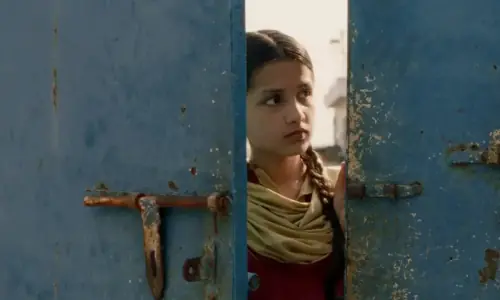
He said that the fresh and most common phenomenon there right now was the post-war stress and most of the people, mainly women and children, were in need of counselling.
Dr Sadia Khalid, a member of the project, said that eDoctor had helped her to develop a diverse skill set and felt honoured to be a part of the Palestine project.
“Under such traumatic circumstances this project will prove as a ray of hope for all the brave people of Palestine. I am humbled for being provided an opportunity to share my contribution and help the people who need it most,” she said.
Published in Dawn, May 24th, 2021