India imposes curfew in parts of occupied Kashmir ahead of Article 370 revocation anniversary



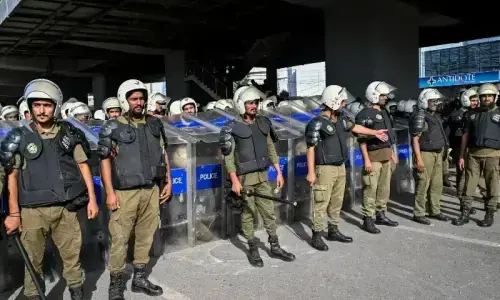
Indian authorities clamped a curfew in many parts of occupied Kashmir on Tuesday, a day ahead of the first anniversary of India’s controversial unilateral decision to revoke the area's semi-autonomy.
Shahid Iqbal Choudhary, a civil administrator, said the security lockdown was clamped in the region’s main city of Srinagar in view of information about protests planned by anti-India groups to mark August 5 as a “black day”.
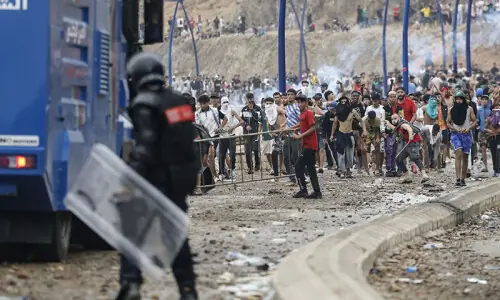
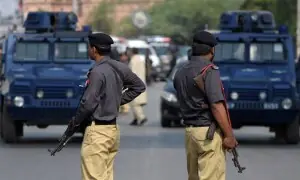
Police and paramilitary soldiers drove through neighbourhoods and went to people’s homes warning them to stay indoors. Government forces erected steel barricades and laid razor wire across roads, bridges and intersections.
The curfew will be enforced Tuesday and Wednesday, Choudhary said in a government order.
“A series of inputs have been received suggesting that separatist and Pakistan-sponsored groups are planning to observe August 5 as Black Day and violent action or protests are not ruled out,” he claimed. India has dubbed the Kashmiris' struggle as 'terrorism' abetted by Pakistan — a charge Islamabad denies.
Read: One year on, India's lockdowns ruin occupied Kashmir's economy
Last year on August 5, India’s Hindu-nationalist government led by Prime Minister Narendra Modi downgraded occupied Jammu and Kashmir's status and divided it into two federally governed territories. Since then, New Delhi has brought in a slew of new laws which locals say are aimed at shifting the demographics in the Muslim-majority region, many of whom want independence from India or unification with Pakistan.
The status of Kashmir has been a key dispute between Pakistan and India since the two split after the end of British colonial rule.
After the August 5 decision, Indian authorities enforced an information blackout and a harsh security clampdown in Kashmir for months. Thousands of Kashmiri youth, pro-freedom leaders and politicians who have traditionally supported Indian rule were arrested. Hundreds of them are still incarcerated.
Human Rights Watch asked that India reverse its “abusive policies” in the region and said it was dismayed India persisted with “its repression of Kashmiri Muslims” despite the pandemic forcing the world to address discrimination and inequality.
“Indian government claims that it was determined to improve Kashmiri lives ring hollow one year after the revocation of Jammu and Kashmir’s constitutional status,” said Meenakshi Ganguly, the global rights group’s South Asia director, in the statement made on Tuesday. “The authorities instead have maintained stifling restraints on Kashmiris in violation of their basic rights.”
Life remains hard
As few of the restrictions were eased, India enforced another harsh lockdown in March to combat the spread of the coronavirus, deepening the social and economic crisis in the region.
Life remains hard in occupied Kashmir, with hundreds of checkpoints still in place and internet coverage patchy and slow. The economic effect has been dire, with half a million jobs lost in the region by the end of 2019, the Kashmir chamber of commerce says.
Coronavirus lockdown measures have only added to the hardship, both for the economy and people's lives. Children have had barely any schooling for a year.
Security operations against Kashmiri fighters have accelerated, putting 2020 on course to be one of the bloodiest years for some time. India has also granted tens of thousands of people from outside the region the same rights as Kashmiris, meaning they can now buy land for the first time.
Critics say this is an attempt to change the demographic makeup of the region.
Companies from outside India have also been given a string of mining concessions, often riding roughshod over environmental rules in the region, critics say.