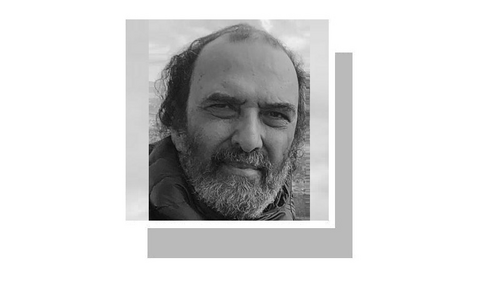
KARACHI: ‘Fatehyab’s City: Causes and Repercussions of Turmoil in Karachi’ was the topic of the fourth lecture in memory of late president of the Pakistan Mazdoor Kissan Party Fatehyab Ali Khan, on the occasion of his ninth death anniversary, delivered by architect and town planner Arif Hasan at the Pakistan Institute of International Affairs (PIIA) here on Thursday.
Beginning his lecture by paying tribute to Fatehyab Ali Khan, Arif Hasan said that they met as often as twice a week to discuss the issues faced by Pakistan. “Fatehyab was passionate in his arguments. He had leanings towards the Left but was not a Communist. And he was a product of Karachi’s city life,” he said.
He said that Fatehyab’s political activism started from student days. In university, he and his colleagues were often sent to prison where they also received beatings. They were a popular group of students who had been barred from entering the city, but they carried on with their activism and opposing Ayub Khan’s government.
“In the 1990s, Fatehyab took a stand on talks of separation of Karachi from Sindh as he strongly believed that Karachi was very much a part of Sindh,” he said.
He said that Fatehyab came to Karachi in 1949 as a 13 or 14-year-old from Bombay.
Lecture held to mark Fatehyab Ali Khan’s ninth death anniversary
“Political opportunism was changing the demography of Karachi,” he said. At first, there was a huge population of Sindhi, Baloch and Brahvi people in Karachi with a few Urdu-speaking people, and even fewer Punjabi-speaking folks with hardly any Pashto-speakers around as Hindus outnumbered Muslims.
“But by 1951 the population of the Sindhi, Balochi and Brahvi people dropped as Urdu-speaking people increased in numbers. The Hindus decreased from making up 51 per cent of the population to two per cent and Muslims who were 42pc made up 90pc of the city.
“Those who came to settle here are powerful. Their politics are subtle. They control a lot of resources,” he said, adding that Karachi is different from the other populated cities of the country.
Central planning authority
“Around 78pc of Sindh’s formal jobs are in Karachi. The federal government also has strong links with Karachi, with the Karachi Port Trust, Customs, Civil Aviation Authority, Port Qasim all having their headquarters here. Twenty-five per cent of GDP comes from here along with the best education institutions, the best health facilities all here as well,” he said, adding that the jobs, revenue, etc, can be controlled by the PPP government through a centralised system while the MQM controls the city through a highly decentralised system.
“The PPP has majority in the Sindh Assembly but it needs to build capacity in DMCs. For this it needs training institutions for development there in order to do away with the KMC,” he said. “But still, it will not solve the problems of the city. For that you need a central planning authority and research. Such things existed earlier but in a fragmented way. In 1989, we had proposed a central planning authority but were told that there were too many agencies and it would not be possible. But if it can work in places such as Mumbai and Bangkok, why not here?”
The problem here, according to the town planner, is that when it comes to creating working relationships at the middle and bottom levels, no one is willing to do that.
“A ticking time bomb, not to be solved even by the agencies in place is the land and housing issue in Karachi,” he said, adding that the demand for housing was falling short of the supply. “There is a demand for 120,000 units per year and the supply is 42,000 units per year.
“Earlier, katchi abadis used to make up the deficit but then they were also located within the city and had schools, hospitals, recreation areas, transport, etc, within reach. But now most katchi abadis are on the outskirts of the city where all kinds of facilities are out of reach and where the people don’t want to live. When they have no other choice, they sleep on roadsides and under flyovers on weekdays when they are working in the city and they only go home on Saturdays or Sundays to save on transport fare.
“The commercial sector has catered to this demand by building high-rises of six to seven floors on 50 to 80 square yard plots and creating dense and congested neighbourhoods with not enough toilets. The husbands and older boys sleep in parks to make room in their small homes, which is how the boys also join gangs,” he said.
“The government even passed a law, the Sindh High Density Development Board Act, where this board which has only nine people may label any place as ‘high-density’. They have also been known to call plots high-density and the law supports them. There is a need for reform or this city is going to get even worse as more and more housing schemes are launched to make money but no construction is happening there,” he said.
“Now even when the nullahs, which keep flooding, are cleaned there will still be no improvement as after plotting being done on the Mehmoodabad nullah by the DHA, the KPT Officers’ Society being created over the Soldier Bazaar nullah and due to reclamation over the other nullahs the outflow of sewage has been blocked. Garbage trucks dump garbage to fill land and create more plots in natural depressions. Hence, Karachi is an ecologically damaged city,” he announced.
“There is a need for urban land reform and urbanisation fee. No one should be allowed to own land more than 500 square yards in size,” he said.
Earlier, PIIA chairperson Dr Masuma Hasan spoke about Fatehyab Ali Khan, Rasheed Razvi, Mazhar Jamil and Arif Hasan’s struggle to retake control of PIIA from the government.
Published in Dawn, September 28th, 2019