Pakistan in midst of economic crisis, says UN body


ISLAMABAD: The ‘Trade and Development Report 2019’ released by the United Nations on Thursday says that Pakistan’s economic crisis has not been resolved despite the fact that support from China and Saudi Arabia and a large IMF loan have helped address the immediate problem.
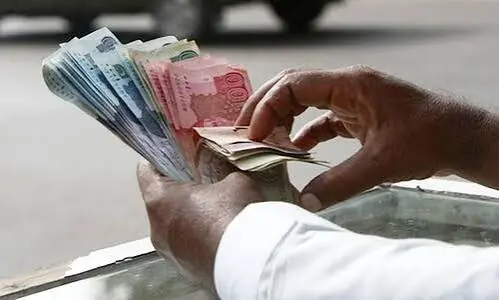
In a brief comment on Pakistan in the Asia section, UNCTAD’s annual flagship report went on to say that “Pakistan is in the midst of a crisis” as the growth rate has halved, the balance of payments is in poor shape, the rupee has depreciated significantly and external debt is large and rising.
According to the report, the slowdown observed in the rate of growth of the Chinese economy from 2017 onwards, is projected to intensify in 2019 because of the trade and technology tensions.
Together with a projected deceleration in the rate of growth in 2019 for India, where below-target collections from the recently introduced ‘Goods and Services Tax’ have combined with fiscal consolidation efforts to limit public spending, will further slow growth in the Asian region as a whole, the report pointed out.
The slowing of China’s trade growth has a major impact on other East Asian and South-East Asian economies, since it is likely that the integrated value chains spread across these economies and linked to China would be disrupted.
With the theme of ‘Financing a global green new deal’, the report says public banking should be given back its traditional, bigger role if the environmental and economic landscape is to be transformed by 2030. Efforts to leverage private finance by channeling public month through global banking giants or shadow banking will more likely introduce new costs and vulnerabilities than finance investments in cleaner and greener energy, jobs and development.
The report calls for banking to change its game, rejecting today’s financialised markets, which have consistently focused on speculative activities and under-served productive sectors. UNCTAD maintains that it is public banking that does the heavy lifting and hence public banking should be better supported for the future.
Public banks are designed to be different from private banks; to focus on long-term projects whose benefits exceed purely commercial returns and on sectors and locations that private finance ignores. And despite the constant ideological barrage, public banks in many countries are already doing this, especially in the developing world where Southern-led and Southern-oriented banks and funds have added hundreds of billions of dollars of loans to development.
Tax-motivated illicit financial flows of multinational enterprises (MNEs) are estimated to deprive developing countries of $50 billion to $200bn a year in fiscal revenues. These flows are facilitated by international corporate tax norms that consider affiliates of MNEs as independent entities and treat taxable transactions between the different entities of MNEs as unrelated.
To address this problem, the report recommends a move towards unitary taxation that recognises that the profits of MNEs are generated collectively at the group level. Unitary taxation should be combined with a global minimum effective corporate tax rate on all MNE profits set at around 20 per cent to 25pc, which is the average of current nominal rates across the world.
To distribute the revenues from such reformed corporate taxes across countries the report supports “formulary apportionment”, whereby the total taxes of an MNE group are allocated across countries according to an agreed formula, ideally one that prioritises employment and productive physical assets over total sales.
Published in Dawn, September 27th, 2019