0
0
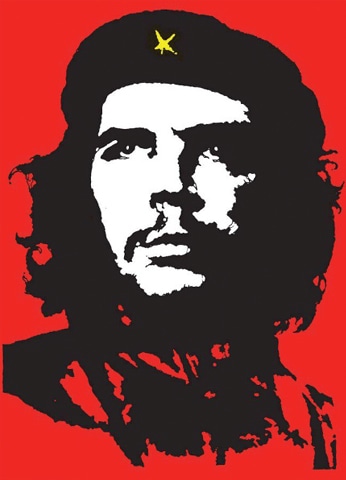
Photographer Alberto Korda captured an image of Che Guevara at a funeral of workers in Havana in 1960. Rejected by the editors of the Revolución, it hung in his apartment unnoticed for seven years. A few months before Guevara’s execution, the Italian businessman-turned-socialist Giangiacomo Feltrinelli requested Guevara’s picture. Korda gave him his favourite picture. Within days of Guevara’s death, Feltrinelli sold millions of his posters.
The following year (1968), the Irishman Jim Fitzpatrick designed the now iconic black-on-red Guevara poster.
A very average-looking man had been turned into a smouldering revolutionary legend, inspiring social activists across generations and nations from Bolivia to Balochistan.
Allen Ginsberg said, “Whoever controls the media, the images, controls the culture.” Marketing and advertising people are well aware of this and use it as the cornerstone of communication and campaign strategies. However, there are many images that were never intended to be influential or people had no idea of how far-reaching their influence would be. Leonardo da Vinci’s ‘Mona Lisa’ remained just one of many paintings for 300 years until it was stolen from the Louvre in 1911 not to be returned till 1913. Overnight, images were splashed across newspapers that had only recently grown in circulation with faster presses, improved transportation and growing literacy, coinciding with the birth of “hot-off-the-press” journalism. Today, it is one of the most well-known, referenced and used images. Could Michelangelo have predicted that, of the 5,000 square feet of frescoes he painted in the Sistine Chapel,
the most reproduced image would be hands from the image of the creation of Adam?
Most artists are remembered by their work and we rarely know the person behind the artwork. Pablo Picasso and Salvador Dali were the exceptions, whose own portraits were influential in establishing the myth of the artists, with Picasso as the “most photographed artist in history.” Philippe Halsman’s elaborately-staged portrait of Dali became an artwork itself.
The ’60s and ’70s saw the dramatic rise of the art of photography, both documenting and defining fashion, lifestyle, music, famous personalities, politics and war. While art remained in the gallery or private collections, photography went everywhere — via newspapers and magazines — into every home and across the world.
Many iconic moments were immortalised on camera: The Civil Rights and Hippie movements, the Vietnam War, political events, the music and film industry, as well as a new style of portraiture by photographers such as Richard Avedon, David Bailey and Annie Leibovitz — who continues to be a celebrated photographer.

Personalities themselves can become images — the fashion model Twiggy setting the trend of the skinny model; Brigitte Bardot’s rebellious sensuality; the electrifying Jimi Hendrix; Bob Dylan’s vagabond minstrel image. Mick Jagger’s lips were immortalised both in photography and the iconic rock “hot lips” logo. The visual impact of Michael Jackson is as influential as his music and is imitated across the world. The Sabri Brothers defined the public perception of the qawwal with long tresses, kajal-filled eyes and pan-stained lips. A whole generation of South Asians emulated Dilip Kumar’s hairstyle, Raj Kapoor’s moustache and Meena Kumari’s kiss curls. In our times, the Global Desi — “We are like this only”, Jiah Ali’s Chaiwala or the Pakistani grandmother of “bik gai hai yeh gormint” (this government has sold out) fame who now has her own Che Guevara style poster.
Universally accessible, the image is the most generous form of communication. The viewer is not directed by a text, but invited to interpret the image as they will, in the context of their own experiences.
Durriya Kazi is a Karachi-based artist and heads the Department of Visual Studies at the University of Karachi
Email: durriyakazi1918@gmail.com
Published in Dawn, EOS, November 18th, 2018