Book detailing story of Kabul hospital launched


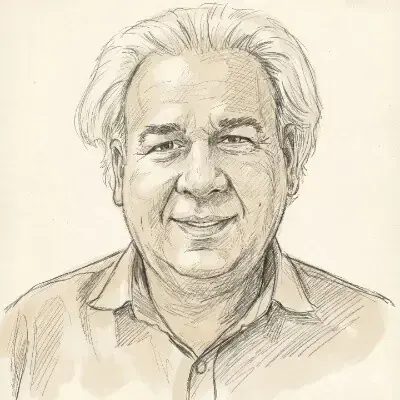
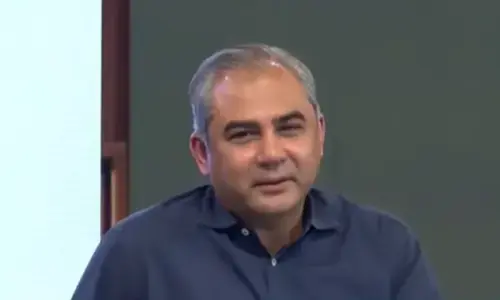
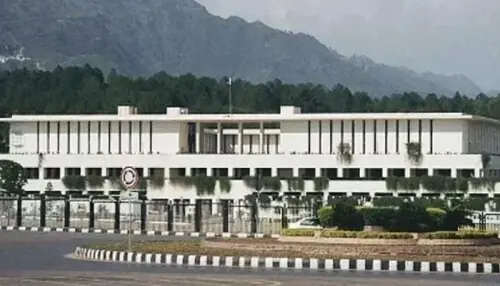
KARACHI: A book titled A Place of Miracles by Lee Hilling was launched at the Aga Khan University auditorium on Tuesday evening. The book is Mr Hilling’s account of his working days as chairman of the board of the French Medical Institute for Mothers and Children (FMIC), a hospital in Afghanistan.
Giving a presentation on the occasion Mr Hilling said the launch happened to be the 45th event related to the book which was written to tell a story [of the FMIC]. The hospital was one of Afghanistan’s most remarkable and successful social sector reconstruction stories. It deserved to be widely known. His was a book about ‘miracles’ because the things accomplished in it [FMIC] had never been accomplished before in Afghanistan.
Mr Hilling then narrated the story of a young boy Ismail who in 2006 suffered from oesophageal atresia. His family was advised by doctors to take the child to India but his condition didn’t allow him to travel. So he was brought to the FMIC where he was successfully operated upon. It was the first attempt at such a surgery. The success mattered because of the situation in Afghanistan, which was involved in one of the longest wars. The United States had spent more towards the development of Afghanistan than on the reconstruction of Europe after WWII, he claimed.
Mr Hilling told the audience that he had been to Afghanistan 70 times, and he’s chairman of the board since the hospital began in 2006. It was in June 2004 that he was contacted by the Aga Khan headquarters to visit Afghanistan. He was told that a French NGO La Chaine de I’Espoir with the help of the Aga Khan Development Network (AKDN) was thinking of building a hospital in Afghanistan. And it was in July 2004 that he first landed in that country. The destruction of Kabul at the time was “severe”. One of the leading hospitals was also damaged. It was not an easy task to construct a child and mother care hospital. After a great deal of hard work, in April 2006 the FMIC was inaugurated. It was a product of a public-private partnership. The private sector included the AKDN and the French NGO, and public sector meant the Afghan and French governments.
Mr Hilling showed with the help of pictures the various facilities available at the hospital. They included children’s play areas, diagnostic services, early childhood development programmes, and a day care centre.
After that he narrated another touching story. This time it was about a four-year-old girl named Frishta. He said he didn’t know that frishta meant angel, therefore it made the miracle part of his book all the more relevant. The girl had congenital ventricular septal. Her financially challenged family was from Bamiyan. After quite a bit of struggle the girl was brought to the FMIC. Her family was told that she needed an open-heart surgery. As far as the money went, it was taken care of through the hospital’s patient welfare programme. The surgery took place and it was a successful one. Also, the operation was performed by an all-Afghan team.
Mr Hilling said the following were the foundations of the hospital’s success: a unique public-private partnership, a well-crafted agreement among stakeholders, a good governance process and a commitment to quality. In the last part of his talk, he mentioned the next phase of the project in which they intended to make an adult medical care hospital in Kabul.
Earlier, Farhat Abbas introduced Mr Hilling to the audience. He said, apart from other jobs, the author had worked in the US Navy and served in Vietnam in 1966-67.
Nadeem Mustafa Khan also spoke.
Published in Dawn, November 7th, 2018