Once upon a time, a fearless daughter stood up against a powerful military dictator. The year was 1988.
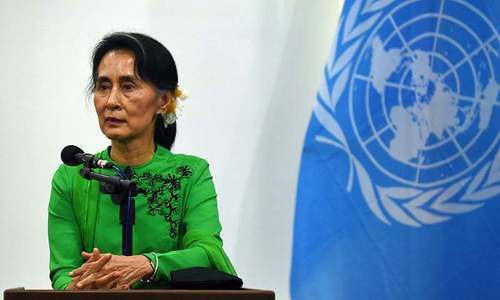
Aung San Suu Kyi had just returned to Myanmar in the midst of yet another military crackdown. The army had responded to an uprising by brutally killing around 5,000 protesters. As general secretary of the National League for Democracy, Ms Suu Kyi championed human rights and democracy. A year later, she was put under house arrest.
While she remained in captivity for nearly two decades, though released intermittently, the story of her struggle and her voice reverberated throughout the world. The woman with a slight built, with flowers in her hair, became a pop culture phenomenon, featuring in songs and music videos. She won awards and accolades, most notably, the Nobel Prize for Peace in 1991.
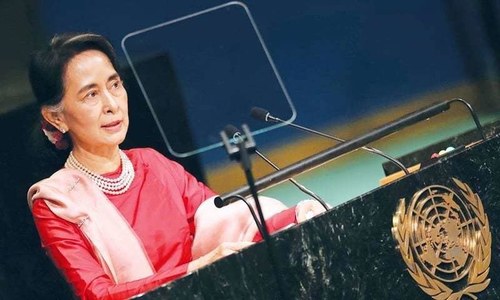
The world cheered on when she was finally released on November 2010; when her party dominated the parliamentary elections in 2015; and when she was declared head of state in 2016. Ms Suu Kyi had become a global icon, whose image would be adorned next to the likes of Nelson Mandela and other great advocates of peace.
That was until last year. The military launched another campaign — human rights groups termed it ‘genocide’ — against the country’s Rohingya Muslim population in August 2017.
As news of mass migration, murder, rape and the burning down of entire villages came to light, Ms Suu Kyi remained tight-lipped, even defensive. Her brand of ‘peace’ increasingly began to look like passivity and criminal indifference. So her latest comments, defending the arrest of two Reuters journalists who exposed the military’s crime, should not come as a surprise. Her mistrust of the media is well known. And the treatment against journalists and activists under her government is also documented.
It has become clear that Ms Suu Kyi is not the defender of human rights we once thought she was. In such a situation, the Nobel Prize for Peace, if it wishes to have any credibility left, should take back its distinction.
Published in Dawn, September 15th, 2018